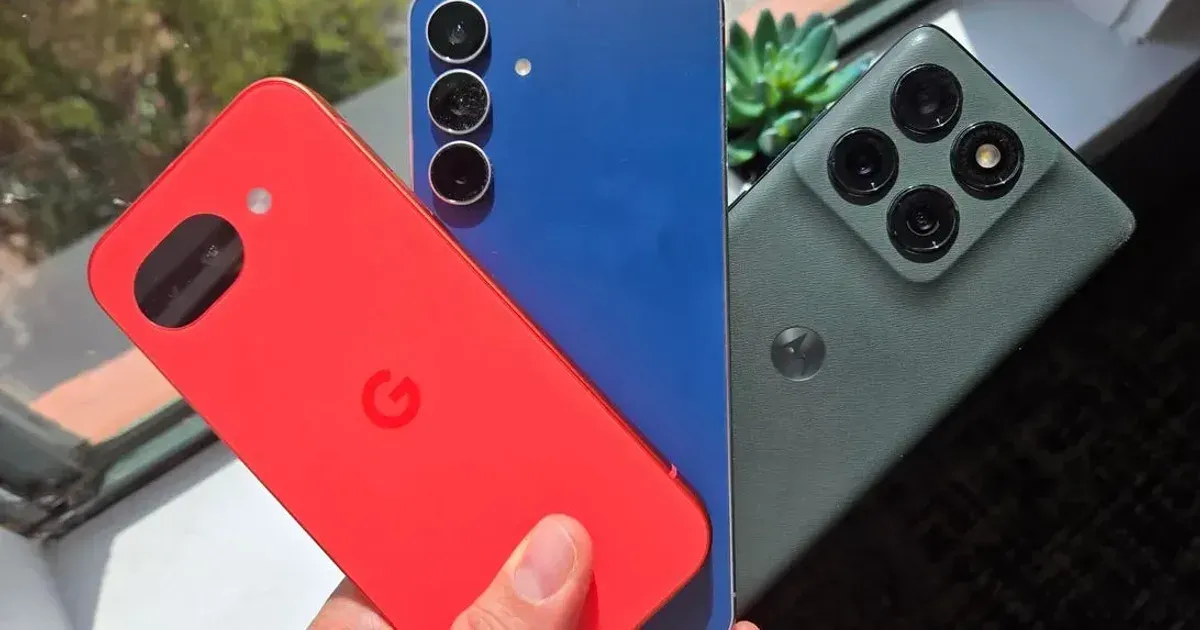
Seoul engineers prioritized public anxiety during the development of their 2026 flagship. Privacy has transitioned from a software toggle to a core hardware specification. Samsung released the Galaxy S26 Ultra into a consumer market increasingly wary of shoulder surfing and visual data theft. Commuters on the London Underground or the New York City subway often feel a sense of unease when accessing banking applications in tight quarters. Samsung and Google are entering the 2026 device cycle with sharply different bets: hardware privacy at the high end and price discipline in the mid-range market. Public spaces create a unique psychological pressure for smartphone users. Even trivial activities like playing Wordle or scrolling through social feeds can feel intrusive when strangers are nearby. This particular worry has simmered in the back of the collective consumer mind for years. Many users save sensitive tasks like mobile banking for the safety of their homes. Hardware innovation typically focuses on brightness or pixel density. Samsung took a different path with its latest panel technology. Relief from the feeling of being watched is the primary selling point of the new display. Performance metrics for the screen suggest a sharp reduction in off-axis visibility. Many users now admit they delay banking, messaging or document work in public because someone nearby might be watching the screen. Privacy has become a luxury good.
Samsung Turns Privacy Into Hardware
Engineers integrated a nanoscale optical filter directly into the 6.8-inch OLED stack. This technology functions similarly to a physical privacy protector but without the loss of touch sensitivity or clarity. Polarization layers restrict light emission to a narrow cone directly in front of the user. Strangers standing just two feet to the left or right see only a darkened panel. But the implementation of such a filter introduces technical hurdles. Narrow viewing angles traditionally frustrate users who want to share a video or photo with a friend. Software controls allow the user to widen the viewing cone when needed. Sensors detect the presence of a second authorized face to automatically adjust the light spread. The base model of the device carries a retail price of $1,299. Display brightness reaches a peak of 3,000 nits. High-frequency PWM dimming reduces eye strain during late-night usage. Efficiency gains in the new LTPO backplane offset the power draw of the privacy filter. Samsung claims the battery life exceeds 24 hours of mixed-use on a single charge. The impact on third-party screen protectors remains a point of contention among early adopters. Thick tempered glass can interfere with the narrow-angle light paths. Manufacturers have already begun shipping specialized accessories to combat this issue. The internal digitizer supports a polling rate of 480Hz.
Pixel 10A Keeps the Price Fight Alive
Silicon Valley giant Google continues to target the mid-range market with aggressive pricing.
Meanwhile, Motorola has gained ground in the North American market by focusing on battery longevity. Their latest Edge model includes a 5,000mAh cell capable of 68W fast charging. Google now limits the Pixel 10A to 18W wired charging speeds. Differences in charging infrastructure can influence purchasing decisions more than camera megapixels. The Edge includes a 144Hz refresh rate display.
The competitive field has become a battle of software support. Google promises seven years of security patches for the Pixel 10A. Samsung matches this commitment for its high-end and mid-range devices. Motorola typically offers two or three years of major Android updates. The discrepancy creates a major value gap over the life of the phone.
User behavior drives hardware design in the 2026 smartphone era. Market research indicates that 65 percent of users cite data security as a top three concern. Fingerprint sensors have moved from the rear to the side and finally under the display. Encryption at the chip level is now a standard requirement for all major manufacturers. Biometric data is stored in a dedicated secure enclave.
Hardware limitations often dictate software boundaries. Privacy filters represent the next step in physical data protection. While software can block hackers, it cannot stop a person sitting on a bus from reading a private text. Samsung has successfully commoditized this physical barrier. Other manufacturers are expected to follow suit in the 2027 product cycle. Production costs for these specialized screens are expected to fall by 15 percent annually.
The environmental impact of these complex displays remains under scrutiny. Recycling nanoscale filters requires specialized equipment that most facilities lack. Samsung has launched a pilot program to recover rare earth metals from the S26 Ultra panels. The program now operates in 12 countries. Each device contains approximately 0.5 grams of gold in its circuitry.
Privacy Should Not Become a Luxury Tax
Should we be celebrating we now have to pay Samsung a $1,300 premium just to hide our screens from the prying eyes of strangers? The move toward hardware-based privacy is not some philanthropic gesture by a tech giant. It is a cynical monetization of the crumbling social contract in our urban centers. We have reached a point where basic personal space has been so thoroughly eroded that manufacturers can market a restricted viewing angle as a revolutionary luxury feature. The Galaxy S26 Ultra is effectively a $1,300 blindfold for the person sitting next to you.
While Google recycles sensors from three years ago and calls it a bargain at $499, Samsung is selling us a solution to a problem that their own hyper-connected, attention-seeking devices helped create. If the future of mobile technology is simply building digital walls between individuals, we are paying a very high price for our own isolation. Hardware privacy is only a stopgap for a society that has forgotten how to look away. True innovation would be a device that doesn't demand our constant public attention in the first place. Instead, we get expensive filters and recycled mid-range hardware dressed up as progress.