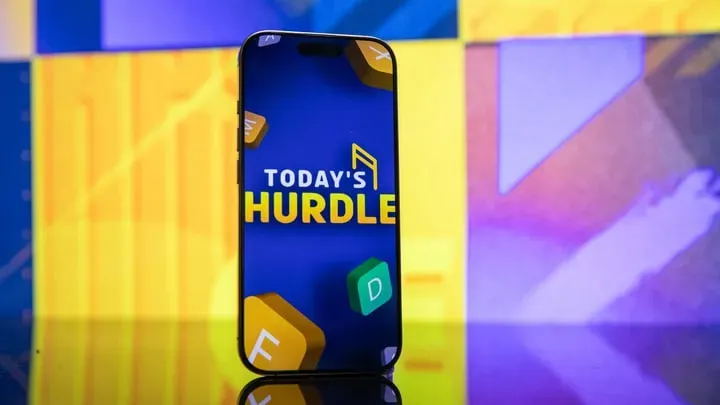
March 15, 2026, finds digital audiences more and more tethered to a specific rhythm of grid-based logic and vocabulary challenges. The daily puzzle, once a quiet corner of the morning broadsheet, has transformed into a high-stakes engine of engagement and revenue. While platforms like Mashable and CNET continue to provide roadmaps for the perplexed, the underlying architecture of these games reveals a complex tug-of-war between free accessibility and the growing necessity of paid media subscriptions.
Hurdle provides a primary example of how developers use iterative difficulty to maintain user attention across multiple sessions. Players must handle five distinct rounds, where each successive challenge builds upon the previous answer. Correct letters from the first hurdle carry over to the second, creating a cascade effect that rewards precision while penalizing early errors. For March 15, 2026, the specific answers follow a path that begins with the word FOCUS and ends with LORRY.
Hurdle Mechanics and Sequential Word Logic
Round-by-round progression in Hurdle demands a specific brand of linguistic agility. The first challenge today requires the word FOCUS, a hint described by observers as an instruction to draw attention. Successful players then move to CRANK, which serves as the entry point for the second stage. This sequential design ensures that a player cannot simply jump to the final puzzle without engaging with the foundational layers of the day's lexicon.
Mechanical constraints in Hurdle also include a specific rule regarding letter frequency. If a letter is highlighted from a previous guess, it does not necessarily indicate that the letter appears multiple times in the final hurdle word. The third and fourth words for today, SHIFT and MUDDY, lead the player toward the final solution. In this case, the fifth and final word is LORRY, a term often used for a truck in British English.
Even so, the path to the final answer is rarely linear. Players who struggle with the fourth word, MUDDY, often find themselves trapped by the repetitive use of the letter D. The transition from the fourth word to the final word is frequently the point where most players fail their daily streak. Statistics from the current cycle suggest that the leap from a murky hint to a vehicle-based solution requires a shift in phonetic categorization.
New York Times Strands and Award Season Content
Strands is a more selected approach to the word search genre by integrating thematic depth into its daily grids. Unlike Wordle, which relies on a single isolated word, Strands utilizes a "spangram" to anchor the entire puzzle. Today's spangram is Academy Award, which spans the grid horizontally and dictates the nature of the remaining words. The film-centric theme requires players to identify terms such as Director, Actor, Sound, Picture, Song, and Actress.
But the difficulty of Strands lies in its opaque hint system. Today's primary clue, "Best of all," offers little direction without a deep knowledge of cinema history or current events. Every letter in the grid must eventually be utilized, meaning that players often find the final word through a process of elimination rather than direct recognition. The grid layout today favors diagonal connections for the word Sound, which many players report as the most difficult to isolate.
Meanwhile, the spangram itself acts as a structural divider for the grid. By providing the horizontal anchor of Academy Award, the New York Times forces players to search for related entities within partitioned sectors of the letter field. This method increases the average time spent on the app compared to the rapid-fire nature of the Mini Crossword. Current data suggests players spend roughly ten minutes completing a standard Strands puzzle.
Wordle Ownership and Strategic Starting Words
Wordle remains the cultural centerpiece of the daily gaming routine despite its age and the proliferation of clones. Originally developed as a private gift, the game now is a significant funnel for the New York Times digital system. The strategy for success on March 15 involves selecting words that maximize vowel distribution and common consonants like S, T, R, or N. Today's solution is noted for its accessibility to the student population, a hint that narrows the semantic field sharply.
Originally created by engineer Josh Wardle as a gift for his partner, Wordle rapidly spread to become an international phenomenon.
Success in this format often depends on the opening gambit. Many veteran players utilize a starting word with at least two different vowels to eliminate vast swaths of the alphabet. For instance, an opening like ADIEU or STARE provides immediate feedback on the most frequently used letters in the English language. Josh Wardle designed the game to be simple, yet the acquisition of the platform by a major media conglomerate has shifted the focus toward long-term user retention.
Yet the simplicity of the interface belies the complex mathematics involved in solving a five-letter puzzle in six tries. Variations like Dordle and Quordle have emerged to satisfy those who find the single-word format too restrictive. These versions force players to manage multiple grids simultaneously, increasing the cognitive load and the time required for completion. The original game remains the standard by which all others are measured.
Subscription Barriers and Digital Archive Management
Access to previous puzzles has become a point of contention among the gaming community. Historically, the entire archive of past Wordle games was available for free via third-party websites. These unofficial repositories were taken down following a direct request from the parent company, which subsequently launched its own proprietary archive. This move restricted access to past content solely to paying subscribers of the gaming division.
For one, this shift illustrates the broader trend of the gamification of news subscriptions. Access to the Wordle Archive is now a primary selling point for the New York Times digital bundle. The strategy transforms a once-free cultural moment into a recurring revenue stream. Separately, the $300 discount currently available on certain hardware at Amazon, such as the M3 MacBook Air, suggests that the devices used to play these games are becoming more accessible even as the software moves behind paywalls.
In fact, the digital barrier extends beyond the archives. While the daily Mini Crossword and Wordle remain accessible for now, the more complex offerings like Strands and the full Crossword are more and more cordoned off. The tiered approach to content ensures a constant flow of new users who are eventually nudged toward a subscription. The March 15 Mini Crossword answers provided by CNET highlight the ongoing demand for external hints to bypass these internal hurdles.
The Elite Tribune Perspective
Why do we continue to play along with the systematic enclosure of the digital commons by a handful of media giants? The transformation of Wordle from a simple romantic gesture into a proprietary retention tool is an exercise in corporate cannibalism. We are not just "solving puzzles" in the morning; we are training ourselves to provide daily engagement metrics to a legacy newspaper that has successfully pivoted to a gaming-first revenue model.
The loss of the free Wordle archive was the opening salvo in a war against the open web, where our collective vocabulary is now rented back to us for a monthly fee. It is the dark side of the "gentle" morning routine. By centering our cognitive habits around these proprietary grids, we have allowed the New York Times to become the de facto landlord of the English language. If the goal were truly to encourage intellectual growth, these archives would remain public assets rather than being hoarded behind a paywall.
Instead, we are left with a field where even a simple word search is improved for maximum ad impressions and subscription conversion. The puzzle is not how to find the word, but how to escape the system that demands we pay for the privilege of using our own minds.