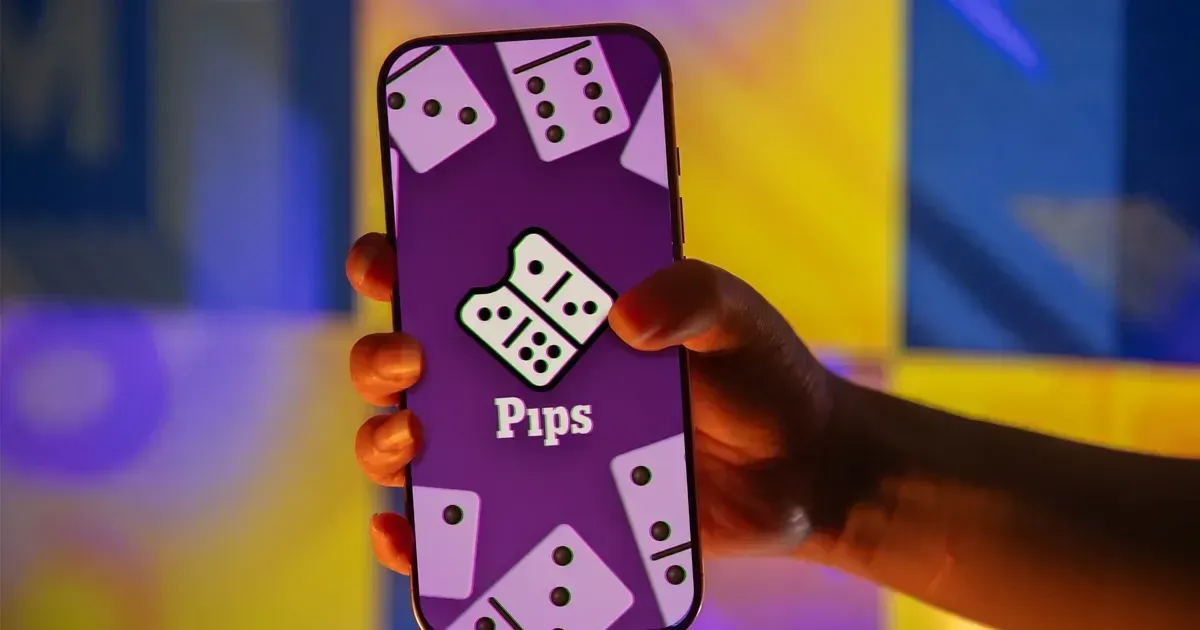
Success in the gaming sector now dictates the financial health of the legacy media giant as much as its investigative reporting. Pips, a domino-based logic game launched in August 2025, is the latest attempt to capture short-form attention spans. Unlike Wordle, Pips requires a deeper understanding of spatial constraints and mathematical inequalities. Complexity is the new currency for a publisher looking to increase the average time spent on its mobile application. Players face a board where tiles must be placed vertically or horizontally to satisfy color-coded conditions. Every side of a tile in a specific space must add up to the number provided in that zone. Some areas require tiles to be equal in value, while others demand that no two halves match. These constraints transform a simple game of dominoes into a rigorous exercise in deductive reasoning. Pips tiles often straddle two different zones, forcing players to account for multiple mathematical rules simultaneously. For now, the game provides no detailed hint system for those who find themselves at a standstill. If a player fails to solve the puzzle, the application only offers to reveal the entire solution. Choosing this option forces the user to abandon their current progress and move to a different difficulty level. Many players now rely on external guides to handle the logic gates of the harder daily grids. Mastery of the color-coded zones requires a patient approach to trial and error.
Games Keep Subscribers Returning
Pips strategy relies on identifying the most restrictive zones first to narrow down the possible tile placements. Zones labeled with a specific number offer the clearest starting point for seasoned players. If a space requires a total of 12 across two domino halves, the options are mathematically limited to high-value tiles. Zones marked as less than or greater than offer a wider array of possibilities that can distract from the core solution. These broader conditions often serve as traps for the unwary.
The main difference between a traditional game of dominoes and Pips is the color-coded conditions you have to address.
The introduction of mathematical inequalities marks a departure from the word-centric puzzles that built the brand. Logic and arithmetic have become central to the daily habit of the average subscriber. Pips bridges the gap between the casual gameplay of Wordle and the intense concentration required for the daily crossword. The game resets at midnight, providing a fresh set of numerical hurdles for its global audience. Connections: Sports Edition functions as a primary driver for cross-platform engagement with The Athletic. This version of the popular word-grouping game focuses exclusively on the trivia and terminology of the sporting world. Players must organize 16 words into four distinct categories based on hidden commonalities. For instance, a grid might include names of stadiums, retired jersey numbers, or obscure rules from the college football playoff system. Errors are costly, as players are only permitted four mistakes before the session terminates. Launched in late 2025, the sports variant uses the specialized knowledge of the newsroom at The Athletic.
Gaming revenue continues to outpace traditional advertising growth for the company's digital division.
Internal data suggests that the average user spends twelve minutes per day within the games section of the mobile app. The product team consistently iterates on game mechanics to prevent player fatigue. Pips was designed specifically to fill the void left by simpler matching games that lacked a sense of progression. The inclusion of varying difficulty levels allows the game to remain accessible while challenging the top tier of puzzle enthusiasts. Each new title added to the roster is vetted for its ability to encourage a daily ritual.
The rise of third-party hint sites has created an entire secondary economy around these daily puzzles. While some purists argue that these guides diminish the challenge, they actually increase the accessibility of the games for casual players. Providing a way for frustrated users to find a path forward keeps them engaged with the brand. The system of hints and community discussion reinforces the status of the puzzles as a cultural reference point.
Habit Is the Business Model
Does a newspaper still exist if its readers spend more time clicking on digital tiles than reading the front page? We are watching the steady transformation of the New York Times into a gaming company that happens to distribute news on the side. The pivot is not an accident but a calculated survival mechanism in a world where hard journalism rarely pays the bills. While critics might decry the gamification of a legendary news institution, the financial reality is undeniable. Puzzles provide the reliable, recurring revenue that funds foreign bureaus and investigative units.
Yet there is a hollow victory in this success. We have reached a point where a digital domino game like Pips carries more weight in a board meeting than a Pulitzer-winning expose on government corruption. The company has effectively built a high-end casino where the entry fee is an interest in current events. As long as the streaks continue and the grids remain unsolved, the subscribers will keep paying. The news has become the garnish for the gaming entree.