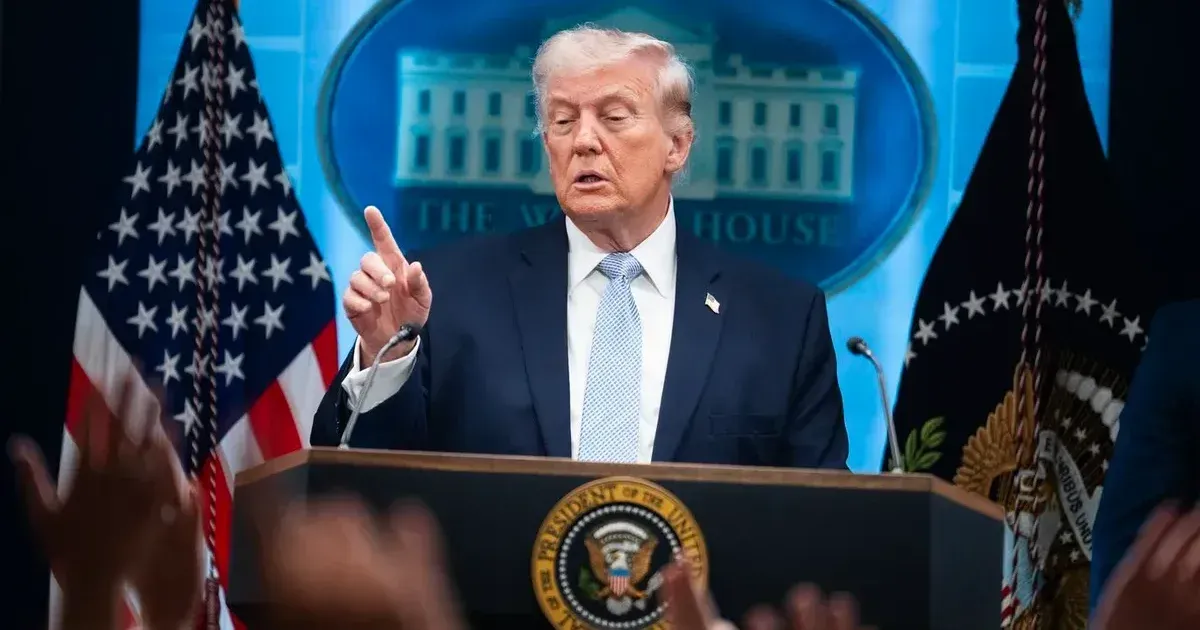
Democratic leaders moved to contain an impeachment push before it defined the caucus. Across the political map, from the coastal districts of Maine to the halls of the Rayburn House Office Building, Democratic leadership appears to be prioritizing legislative pragmatism over the performative politics of removal. This tension surfaced most visibly when Representative Madeleine Dean, a former impeachment manager, dismissed recent calls to remove the president through the 25th Amendment or a fresh impeachment inquiry. Chuck Schumer and Hakeem Jeffries confronted a deepening divide between their moderate incumbents and a restless activist base on April 10, 2026, as the party struggled to align its electoral priorities with grassroots demands for resistance. Dean argued that such efforts are not the primary fight for the current session.
Maine Senate Race Tensions and Schumer Strategy
In Maine, the friction has taken a personal turn between Janet Mills and the handpicked candidate of the Senate leadership. Governor Mills has launched a series of negative advertisements against Graham Platner, a candidate who enjoys the backing of the national Democratic establishment. Despite the intensity of these attacks, Platner continues to hold his ground in local polling. Chuck Schumer has so far declined to intervene on behalf of the governor, a move that suggests a cold calculation regarding the path to a Senate majority. National strategists view the Maine seat as essential for retaking the upper chamber, yet the internal bloodletting threatens to alienate independent voters who typically decide outcomes in the Pine Tree State.
Voters in Portland and Bangor have expressed confusion over the lack of a unified front. Mills has focused her critiques on Platner's policy record, yet these efforts have not moved the needle in her favor. Schumer's silence remains one of the most discussed topics in New England political circles. The Senate Minority Leader is managing a complex national map where every resource must be deployed with surgical precision. One veteran strategist noted that bailing out a sitting governor against a primary challenger is rarely a productive use of limited campaign funds. Platner's resilience despite gubernatorial opposition has surprised some local observers. The candidate has leaned into a populist message that bypasses the traditional state-level power structures. By aligning himself with national themes, he has successfully framed the race as a choice between the status quo and a new direction for the party. Mills, meanwhile, finds herself in the unusual position of an outsider within her own national organization. The primary contest is scheduled for mid-June.
Legislative Alternatives to Impeachment Tactics
While she previously supported such measures following the president's controversial social media posts regarding Iran, she now claims the party must focus on constitutional responsibilities. Dean insisted that Democrats should prioritize lowering prices and reducing anxiety for American families. Her shift reflects a broader realization within the House Democratic Caucus that pursuing impeachment in a Republican-controlled Congress is a futile exercise. The Senate requires a two-thirds majority for conviction, a threshold that is currently impossible to reach.
Representative Madeleine Dean told reporters that impeachment is currently a distraction, a view shared by several high-ranking colleagues.
Leadership aides confirmed that Hakeem Jeffries has given no indication of supporting a proactive impeachment effort. Jeffries is instead pushing a message of economic stability and legislative oversight. By steering clear of the impeachment trap, he hopes to protect vulnerable moderates in swing districts who fear that constant talk of removal will appear partisan to centrist voters. The strategy is designed to offer a contrast to what Democrats describe as the chaotic nature of the current administration. Focus groups in the Midwest have shown that voters are more concerned with grocery bills than with procedural battles in Washington. Impeachment and the 25th Amendment are tools in the drawer, but right now we have to end this war and reclaim our Constitutional responsibility to bring prices down for all Americans. Dean's district in suburban Pennsylvania is exactly the type of territory that the party must hold to reclaim the House. Her cautious approach is an indicator for the national strategy. Rather than engaging in a high-stakes constitutional standoff, she is advocating for a return to bread-and-butter issues. This pivot has frustrated the more progressive wing of the party, which views the president's recent actions as a direct threat to national security. The caucus remains split on how to manage these competing internal pressures.
Congressional Oversight and Iran War Powers Resolution
Recent hostilities involving Iran have triggered a flurry of activity on Capitol Hill. A group of House Democrats attempted to pass a war powers resolution to block the resumption of hostilities, though the effort was ultimately unsuccessful. The failure of this measure highlights the limitations faced by the minority party in a divided government. Republican leadership has consistently blocked attempts to cut executive authority in foreign policy matters. Despite these setbacks, lawmakers like Dean believe that legislative oversight is a more productive avenue than pursuing the 25th Amendment. They argue that documenting executive overreach creates a stronger case for the upcoming election cycle.
Judiciary Committee ranking member Jamie Raskin is scheduled to lead a virtual briefing on the 25th Amendment this Friday. While this move provides a nod to the activist base, it is largely seen as an educational exercise instead of a precursor to formal action. Raskin has long been a proponent of examining the constitutional mechanisms for presidential succession, yet he recognizes the political reality of the current Congress. The briefing is intended to provide members with a framework for discussing executive fitness without committing the leadership to a specific course of action. Party leaders hope this will satisfy the demand for a response without derailing their legislative agenda. Democratic lawmakers are essentially trapped between a base that demands sharp action and a reality that offers no path to success. Pay lip service to impeachment, and they risk being viewed as ineffective when it fails. Ignore the calls for removal, and they risk a primary challenge from the left. This dilemma is particularly acute for members representing deep-blue districts where the anti-Trump sentiment is most intense. The virtual briefing is a safety valve to release some of this political pressure. Attendance for the Friday event is expected to be high among freshman members.
Economic Priorities in a Divided Government
Stabilizing the domestic economy has become the unofficial mantra of the Jeffries leadership team. They believe that the path to victory in 2026 lies in proving that Democrats can govern effectively even from the minority. It involves a heavy focus on infrastructure, healthcare costs, and inflation mitigation. By centering the conversation on these issues, they aim to paint the administration as distracted and out of touch. The contrast between the president's social media activity and the party's policy focus is a central foundation of their communication strategy. Internal polling suggests that this approach is gaining traction with younger voters who are concerned about the cost of living.
Maine's political landscape continues to serve as a snapshot of these national debates. The conflict between Mills and Platner is not just about a Senate seat; it is about the soul of the regional party. If Platner wins the primary despite the governor's opposition, it will validate Schumer's hands-off approach. Alternatively, a Mills victory would suggest that state-level machines still hold significant power in the Northeast. Both sides are watching the fundraising numbers closely as the June deadline approaches. A total of $11 million has already been spent on television advertising in the state. Republicans have capitalized on the Democratic infighting to strengthen their own messaging. They portray the calls for impeachment as proof that their opponents are more interested in power than in policy. The narrative has been effective in rural districts where the president maintains a high approval rating. To counter this, Jeffries has instructed his members to stay on message regarding the economy. The ability of the party to maintain discipline will be tested as the election cycle intensifies. Consistency remains a rare commodity in the current political environment.
Democratic Strategy Under War Pressure
Democratic leadership is currently engaged in a high-stakes gamble that prioritizes institutional stability over grassroots fervor. By stifling impeachment talk and ignoring the pleas of state-level incumbents like Janet Mills, Schumer and Jeffries are betting that a sterile, policy-first approach will win over the mythical centrist voter. The strategy ignores the primary lesson of the last decade: passion drives turnout. While Madeleine Dean speaks of reclaiming constitutional responsibilities through war powers resolutions, the base sees only a party too timid to use the blunt instruments at its disposal. Leadership is essentially asking its most loyal supporters to accept a managed retreat in exchange for the promise of future gains.
The standoff in Maine further illustrates a growing disconnect between national strategists and local realities. Schumer is willing to leave a Democratic governor on an island if it means securing a candidate he believes can win a general election. The transactional approach to party building may yield short-term Senate seats, but it erodes the organizational tissue required for long-term governance. If the party continues to treat its governors as obstacles instead of partners, it will soon find itself with a hollowed-out infrastructure at the state level. The briefing on the 25th Amendment is a transparent distraction, a rhetorical bone thrown to a base that is increasingly hungry for a real fight. If Democrats do not find a way to bridge the gap between their rhetoric and their results, they risk a total collapse of enthusiasm come November. Calculated caution is just another word for paralysis.