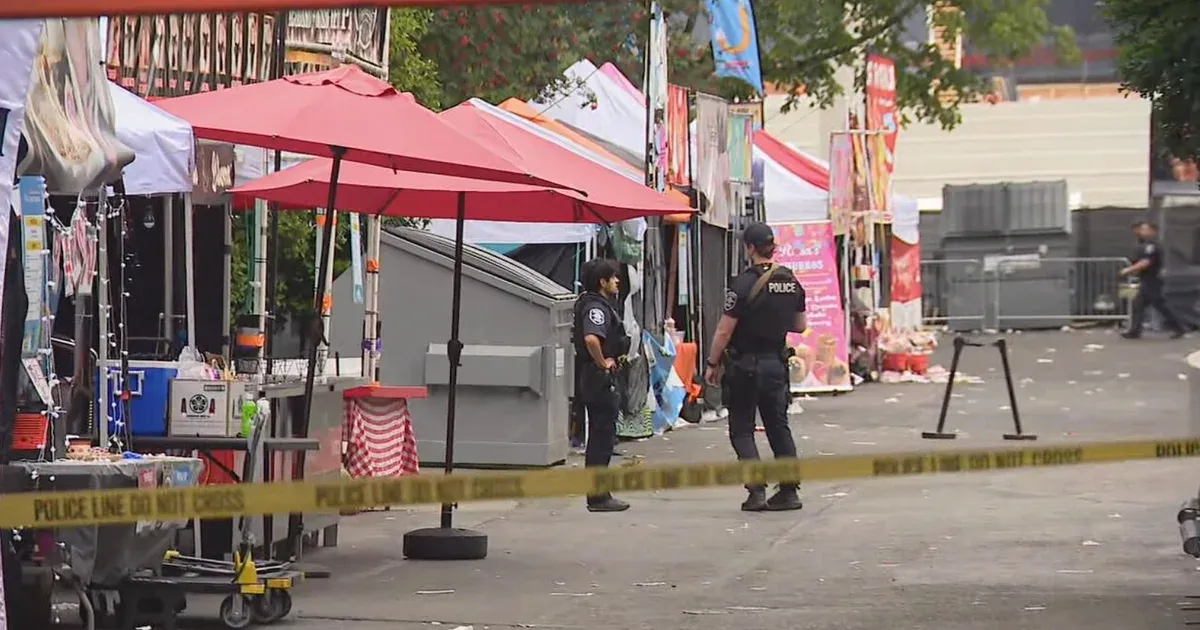
Gunfire at Seattle Center turned the final evening of a crowded food festival into a fatal emergency. Two people died and five others were injured while Bite of Seattle was under way near the Space Needle, according to fire and hospital officials. Crews were dispatched shortly after 6 p.m. local time on Sunday, July 26, 2026, and Mayor Katie Wilson said police had taken one suspect into custody.
Firefighters attempted to save two people at the scene, but both were declared dead. Four other patients were transported to Harborview Medical Center, the region's highest-level trauma hospital. A fifth injured person, a 40-year-old woman whose injuries were described as minor, declined an ambulance trip.
The first medical account left one patient in immediate danger. A 56-year-old woman was in critical condition and undergoing surgery, hospital officials told news outlets. The three other patients taken to Harborview were in stable or satisfactory condition: a two-year-old boy, a 23-year-old man and a 39-year-old woman. Those updates established a toll of two people dead and five injured, but officials had not publicly identified the dead.
Harborview Received Four Patients as the Festival Emptied
The shooting interrupted the last day of Bite of Seattle, a free, three-day event built around food vendors and live music. Organizers say the annual festival draws more than 350,000 people. Seattle Center also contains some of the city's busiest landmarks, including the Space Needle, the Monorail and Climate Pledge Arena, so the emergency unfolded in a space designed for large public crowds rather than an isolated venue.
Witness descriptions show how little information people had in the first seconds. Some said the shots initially sounded like fireworks or firecrackers. Recognition came when the crowd began running, people dropped to the ground and vendors took cover. The accounts help explain the sudden movement through the festival, but they do not establish where the shooting began or how the people involved were positioned.
Wilson credited the emergency personnel and civilians who gave aid and guided others away from danger. Her statement also addressed the wider cost of violence at a civic gathering.
“No one should have to weigh the risk of being shot before attending an event, gathering with friends, or experiencing their city,” Wilson said.
Seattle police remained the lead investigative agency and asked the public to avoid the area while officers and detectives worked. Agents from the Bureau of Alcohol, Tobacco, Firearms and Explosives went to the scene to assist, while the FBI said it was aware of the shooting. Washington Governor Bob Ferguson said the state SWAT team had been sent at the police department's request. The combined response secured specialist support, but none of those agencies had announced a motive or a detailed account of the gunfire.
The Scene Must Produce the Timeline That Witnesses Could Not
One person was in custody, according to the mayor, but that fact answers only the first operational question. Authorities had not released the person's name, announced charges or explained any relationship to the victims. They also had not said whether police believed another person fired a weapon. Treating custody as a completed explanation would move beyond the information investigators had made public.
The unresolved sequence matters because a dense festival crowd can produce many partial views of the same seconds. A witness near a booth may hear shots without seeing their origin; someone farther away may see the crowd react but not the event that caused it. Police must turn those fragments into one account that identifies when the shooting started, where it moved, and how each death and injury occurred. The dispatch time and hospital intake provide fixed points, but the public record still lacks the events between them. Until that work is released, the casualty and hospital records are firmer than any narrative about motive.
The immediate emergency ended with a suspect held, four people at a trauma center and a public venue converted into a crime scene. The measure of the investigation will not be the size of the law-enforcement presence. It will be whether investigators can account for the gunfire without filling the gaps left by frightened witnesses. Seattle Center can reopen; the case should not be treated as closed until that timeline is established.