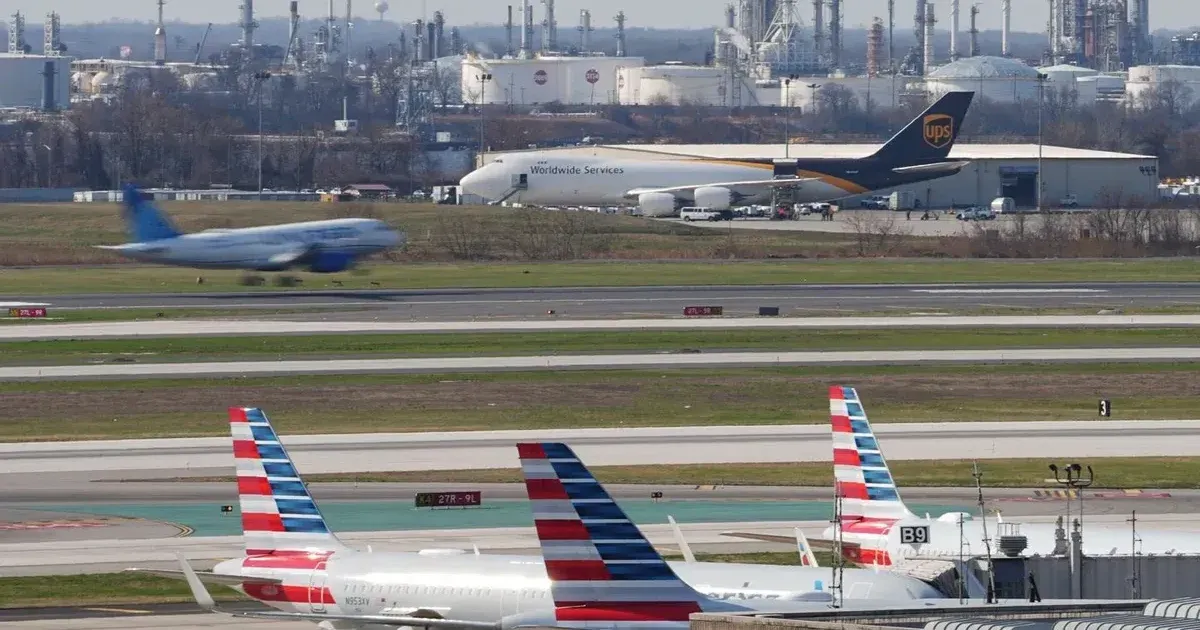
Secret Service agents converged on a secure area of Philadelphia International Airport on March 27, 2026, after a member of the protective detail for Jill Biden accidentally discharged a service weapon. Special agents typically operate with an aura of invisible precision, but the morning commute at one of the busiest transit hubs in the Northeast was interrupted by the sound of a single gunshot. Initial reports confirmed that the weapon belonged to a federal agent assigned to the former first lady, who was traveling through the facility at the time. Local law enforcement and airport security personnel immediately secured the perimeter while medical teams attended to the injured individual.

Special Agent personnel confirmed the employee suffered a non-life-threatening wound to the leg. Emergency responders transported the unidentified agent to a nearby hospital for treatment. Biden was not in the immediate vicinity of the discharge and remained entirely safe throughout the duration of the security event. Officials noted that no other travelers or airport staff were injured during the 8:30 AM incident. Security protocols remained in place for several hours while forensic teams examined the scene for evidence of equipment failure or human error.

Medical professionals at the hospital stabilized the agent, who is expected to recover from the injury. Preliminary findings suggest the discharge occurred while the agent was handling the firearm in a designated staging area. Public safety was never at risk, according to local police statements issued shortly after the shooting. This breach of protocol occurred in a restricted zone away from the general public. Federal investigators arrived on the scene by midday to begin a comprehensive review of the circumstances leading to the discharge.

Philadelphia International Airport Security Response

Philadelphia police worked alongside airport authorities to ensure that standard flight operations faced minimal disruption. But the presence of a high-profile protectee like Biden required a higher level of scrutiny than a standard accidental discharge might require. Security teams cordoned off the specific terminal area to preserve the integrity of the scene for the Secret Service Office of Professional Responsibility. Surveillance footage from the airport is currently under review to determine the exact sequence of movements made by the agent before the weapon fired. Airport staff reported that the secure perimeter functioned as intended during the brief period of uncertainty.

Witnesses in nearby corridors described a sudden burst of activity from law enforcement officers shortly after the shot rang out. And yet, the general flow of passenger traffic continued in other terminals with few people realizing a federal agent had been wounded. Security checkpoints remained open, though the presence of additional armed guards was visible near the executive lounges. This specific incident marks a rare public lapse for a detail that is often celebrated for its discretion and technical proficiency. Airport management issued a brief statement confirming their cooperation with federal authorities.

Yet the logistical challenges of managing a shooting in a post-security zone cannot be understated. Port Authority police maintained a visible presence near the ambulance bay as the wounded agent was moved. Biden departed the airport on schedule, according to travel logs, as her primary protective team determined the environment was secure. Security experts note that even in high-stress environments, a negligent discharge is considered one of the most serious internal infractions an officer can commit. The firearm involved has been taken into custody for ballistics testing.

Secret Service Weapon Handling Protocols

Training at the Federal Law Enforcement Training Centers emphasizes rigorous muzzle discipline and trigger finger placement. Agents are required to undergo regular qualification cycles to ensure they maintain mastery over their issued sidearms. For instance, the standard-issue Sig Sauer P320, which the agency transitioned to in recent years, has faced scrutiny in various law enforcement circles for its safety mechanisms. In fact, multiple police departments across the country have reported similar incidents of discharge without a trigger pull, though the agency has not yet linked this specific event to a mechanical flaw. Investigators will look for signs of holster interference or clothing snags that might have mattered.

Secret Service policy mandates that any discharge of a firearm outside of training or active engagement must undergo a formal investigation. These reviews determine whether the agent followed the strict safety guidelines outlined in the protective operations manual. Investigators will assess the condition of the agent’s holster and the state of the firearm at the time of the event. Separately, the agency will evaluate the agent’s recent training history and work schedule to identify potential fatigue factors. Negligent discharges often lead to disciplinary action or mandatory retraining for the personnel involved.

The Secret Service special agent suffered a “non-life-threatening injury” after they discharged their weapon at around 8.30am.

Safety procedures require agents to keep their weapons holstered unless they are cleaning them, securing them, or preparing for an engagement. For one, the discharge of a weapon in a public airport terminal is a nightmare scenario for federal planners. Tactical experts argue that the modern striker-fired pistols used by the agency require absolute adherence to safety fundamentals because they lack external manual safeties. And yet, the Secret Service maintains that its training is among the most elite in the world. The weapon will remain out of service until a master gunsmith can verify its mechanical integrity.

Protection Status of Jill Biden

Biden remains under the protection of the federal government as part of the Former Presidents Act and related security legislation. This protection extends to spouses of former presidents for their lifetime unless they decline the service. The detail assigned to the former first lady consists of highly vetted agents who manage her public appearances, travel logistics, and personal residence security. At the same time, the size and scope of these details have been a point of budgetary discussion in Washington. Protecting a former first lady involves complex coordination with local police departments and airport security managers in every city she visits.

Protection details for former officials are often smaller than those for the sitting president, but the standards of conduct remain identical. Biden was reportedly in a separate room when the agent’s gun went off. That said, any violence or gunfire in the vicinity of a protectee triggers an immediate defensive posture from the rest of the team. The remaining members of her detail successfully executed their evacuation protocols without further incident. Biden has not commented publicly on the shooting of her detail member.

As a result, the agency must now fill the vacancy on her team while the wounded agent recovers and the investigation continues. Temporary assignments from the Philadelphia field office will likely bridge the gap in her security coverage. Protection of a former first lady is a continuous, 24-hour operation that leaves little room for staffing shortages. Federal law ensures that the level of security provided to the Biden family remains strong despite the occasional internal mishap. The agency shifted its focus toward the hospital to support the wounded staff member.

Internal Investigation at the Secret Service

Investigators from the agency inspection division arrived within hours. These internal affairs officers are tasked with conducting interviews with the injured agent and any colleagues who were present during the shooting. According to agency sources, the investigation will follow a dual track focusing on both human performance and equipment reliability. The agency will also coordinate with the Department of Homeland Security to ensure all reporting requirements for the incident are met. Such transparency is required whenever a federal agent discharges a weapon in a public space.

Philadelphia police will likely play a secondary role in the probe, providing external context to the federal inquiry. By contrast, the Secret Service traditionally keeps its disciplinary matters closely guarded. If the investigation finds the agent was at fault, the consequences could include a suspension or a permanent removal from protective duties. Training protocols may also be updated if the inquiry reveals a recurring pattern of weapon handling errors. The agency is already under pressure from lawmakers to maintain a flawless record following previous high-profile security lapses. A final report on the incident is expected in the coming weeks.

The Elite Tribune Perspective

Forget the myth of the silent, infallible sentinel that the Secret Service works so hard to project. A special agent shooting himself in the leg at a major international airport is not just a tactical error; it is an embarrassing demonstration of professional rot. These agents are touted as the best in the world, yet a fundamental failure of firearm safety occurred in a setting where precision is the only acceptable standard.

While the agency will likely hide behind the shield of an ongoing investigation, the public deserves to know if this was a result of systemic training failures or individual incompetence. We are talking about a detail assigned to a former first lady, a position that requires the highest level of alertness. Instead, the biggest threat in the room at 8:30 AM was the very person carrying the badge. If an elite agent cannot manage the basic mechanics of a holstered weapon, the agency’s credibility regarding more complex threats is effectively neutralized.

It is a symptom of an organization that has become overstretched and under-disciplined. The Elite Tribune demands a full, unredacted disclosure of the investigative findings, as anything less is a disservice to the security of the officials they protect.