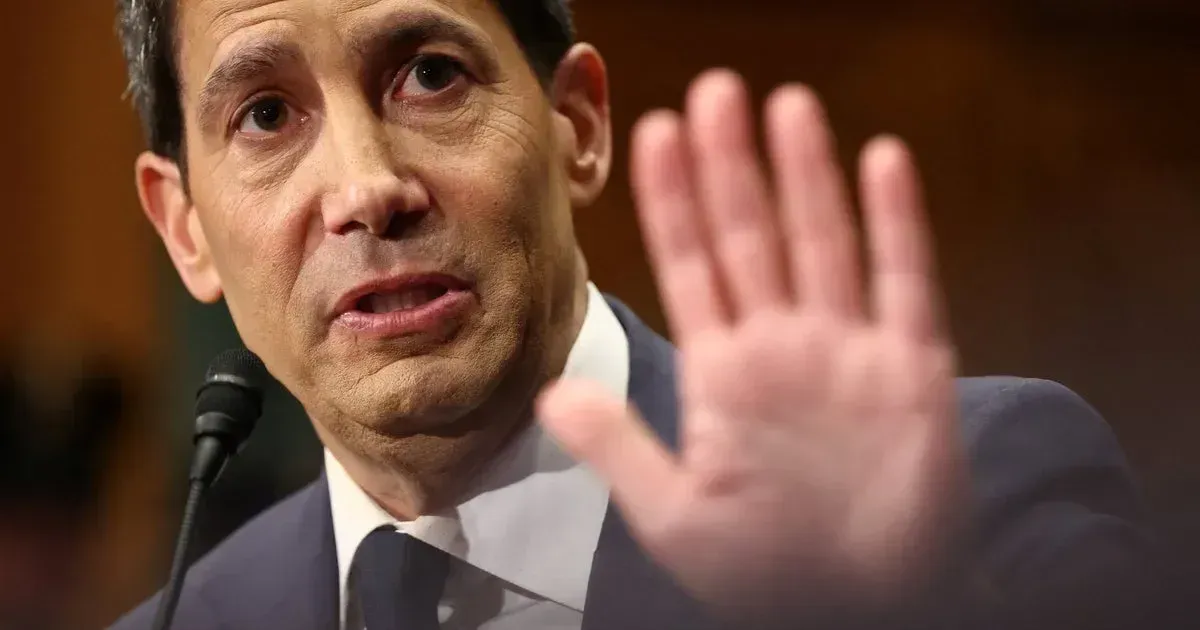
Senate lawmakers confirmed Kevin Warsh as the next head of the Federal Reserve following a tense legislative session. The vote gives markets a clearer signal about the central bank's direction after months of speculation. It also shifts attention from the confirmation fight to the first policy meeting under new leadership. Investors will now watch language as closely as rates. The confirmation arrived via a 54 to 45 vote on May 13, 2026, marking a major shift in the leadership of the world’s most powerful central bank.
Critics immediately raised alarms regarding the future independence of the institution. Warsh, a former member of the Federal Reserve Board of Governors, secured his position with narrow support that largely followed party lines. His arrival signals an end to the tenure of outgoing chair Jerome Powell, whose relationship with the White House had deteriorated over several years of public disagreements regarding monetary policy. Market participants watched the tally closely as the vote count remained uncertain until the final minutes of the session. Jerome Powell, though vacating the top seat, intends to remain a member of the Board of Governors. Sources indicate Powell aims to fulfill his remaining term on the board, which could create a unique dynamic of having a former chair serving alongside his successor. This arrangement persists because Federal Reserve governors serve fixed 14-year terms that do not expire when their four-year leadership designation concludes.
President Trump nominated Warsh earlier this year with the expectation of a shift toward more accommodative monetary settings. Warsh has frequently advocated for lower interest rates, a position that aligns with the administration’s stated economic goals. During his confirmation hearings, however, he faced intense questioning regarding whether his policy decisions would be influenced by executive pressure.
Independence Concerns and Legislative Scrutiny
Senate Banking Committee members focused heavily on the firewall between the central bank and the executive branch. Opponents of the nomination pointed to the controversial nature of the selection, citing fears that the Federal Reserve could become an arm of political strategy. These concerns grew as various lawmakers questioned if the new chair would prioritize political cycles over long-term price stability.
Warsh addressed these allegations directly during his testimony before the committee. He insisted that no specific policy promises were made in exchange for his nomination.
“The president did not make me pledge to cut interest rates to secure my nomination to head the Federal Reserve,” Warsh stated in response to direct inquiries about his private conversations with the White House.
Legal experts note that while the chair sets the tone for the Federal Open Market Committee, they only hold one vote among twelve members. The institutional structure of the Fed is designed to prevent a single individual from dictating interest rate paths. Still, the chair possesses substantial influence over the agenda and the framing of economic data presented to the board. Economic analysts at several major firms suggested that the confirmation might lead to a more dovish tilt in upcoming policy meetings. Warsh has historically leaned toward strategies that favor growth, though he has also cautioned against the risks of asset bubbles. His previous experience during the 2008 financial crisis provides him with a background in crisis management that supporters cited as a primary qualification for the role.
A Transition Under Pressure
The 54 to 45 margin reflects a growing divide in Washington over the role of the central bank. Past chairs often received overwhelming bipartisan support to signal stability to global markets. This narrower victory highlights the partisan friction surrounding the current administration’s approach to financial oversight and the Federal Reserve leadership.
Powell leaves a complex legacy defined by his navigation of post-pandemic inflation and high-interest rates. His decision to stay on the board ensures that a veteran voice of the previous era remains within the building. Some observers believe this could provide a check on any radical departures from established policy, while others see it as a potential source of internal friction.
Internal bank staff must now prepare for a change in management style as Warsh takes the oath of office later this month. The shift comes at a time when the domestic economy shows mixed signals of resilience and slowing consumer demand. Maintaining the dual mandate of maximum employment and stable prices remains the primary task for the incoming leadership team.
Financial institutions responded with cautious movements in the bond market as the vote concluded. Investors appear to be pricing in the possibility of an earlier rate cut than previously anticipated. The first meeting chaired by Warsh will be scrutinized for any changes in the language of the post-meeting statement, which usually dictates market direction for months. Records of the hearing show a concerted effort by the nominee to distance himself from suggestions of a pre-arranged deal on borrowing costs.
Market Credibility Test
The confirmation of Kevin Warsh creates an immediate tension between established central bank orthodoxy and the growth-focused economic agenda of the current administration. By securing a chair who has publicly questioned the speed of previous rate hikes, the White House has installed a leader more sympathetic to its preference for easier financial conditions. However, the institutional inertia of the Federal Reserve is powerful. The presence of Jerome Powell on the board acts as a structural anchor, potentially limiting how far Warsh can deviate from the consensus-driven model of the FOMC.
For investors, the primary risk is not a sudden collapse of independence, but a gradual erosion of the bank’s credibility if policy shifts appear too closely synchronized with the election cycle. The narrow 54-45 vote is a warning that future nominations will face even higher hurdles if the bank is perceived as becoming partisan. Global markets prize the predictability of the Fed; any sign that the chair is reacting to political pressure rather than consumer price data could trigger volatility in the Treasury market.
Success for Warsh will be measured by his ability to maintain the 2% inflation target while fending off the very executive interference that his critics fear most.