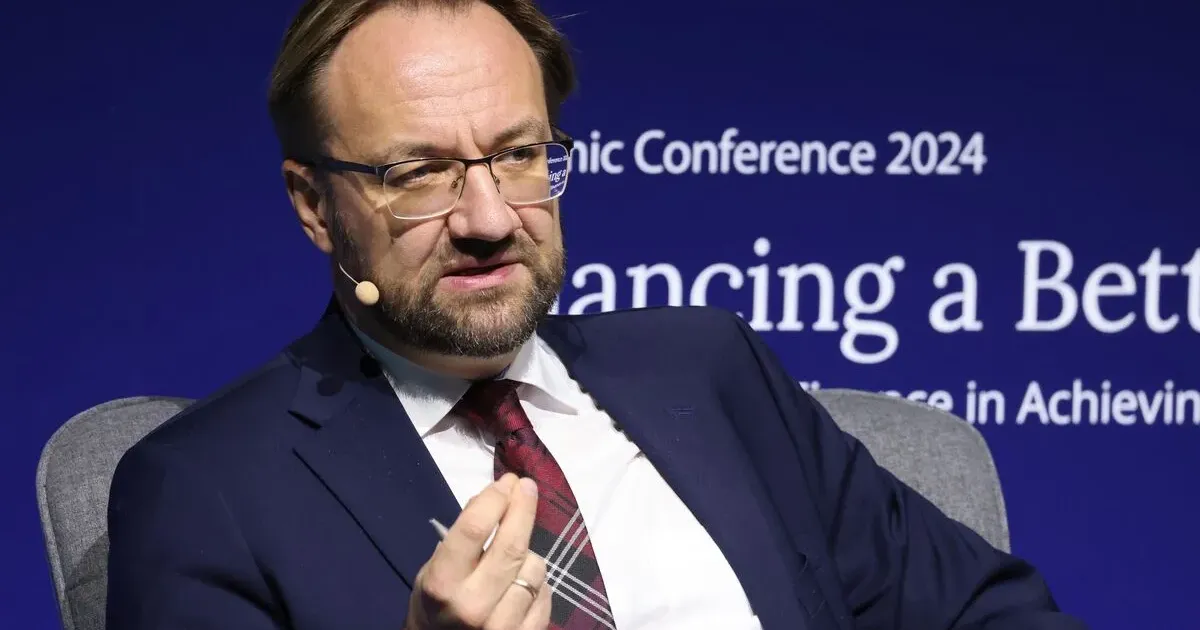
Gediminas Simkus's warning against locking in European Central Bank policy before the facts were clear has aged better than a neat April rate call would have. The Lithuanian central bank governor argued in the spring that the ECB should avoid deciding too early while the Iran war was pushing energy prices, shipping costs and inflation expectations around. The warning was not a call for passivity. It was a warning that a central bank can damage itself by pretending a shock is already understood.
The ECB's path since then shows why the caution mattered. The Governing Council held rates at 2% at the April 29-30 meeting as officials tried to judge whether the energy shock was temporary or persistent. By June, AP reported that the ECB had raised its key rate to 2.25% as inflation pressure from the Iran war proved harder to ignore. In July, with oil prices rising again after renewed U.S.-Iran escalation around Hormuz, the debate has shifted toward whether another move is needed or whether the June hike already bought enough credibility.
The April Debate Was About Timing, Not Comfort
Simkus's April caution should not be read as indifference to inflation. It was about timing. Central banks face two different mistakes during an energy shock. Move too soon, and they can tighten into weak demand on the basis of a price spike that later fades. Wait too long, and the shock can move into wages, services prices and long-term expectations.
Early guidance therefore became dangerous. A firm April signal would have boxed the ECB into a path before energy data, wage settlements, credit conditions and shipping risks had settled. A meeting-by-meeting approach sounded less satisfying to markets, but it preserved the council's ability to change its mind when the evidence changed.
Energy Prices Changed the Policy Arithmetic
The ECB does not target Brent crude or day-to-day gas prices. It targets medium-term inflation. Still, energy prices matter because they move through transport, industrial costs, food production, air travel, household bills and business expectations. The first impact can be temporary. The later effects are what the ECB cannot ignore.
The distinction between first- and second-round effects explains the shift from April caution to June action. If oil and gas pressure had faded quickly, holding at 2% would have looked sufficient. When the conflict kept disrupting the inflation outlook, the council had a stronger reason to raise rates and defend credibility. Simkus did not predict every move, but his refusal to pre-commit left room for the ECB to respond when the shock became more durable.
July Has Made Certainty Even More Expensive
The July environment is not calmer. Guardian and AP reporting described renewed U.S. strikes, Iranian threats to halt Middle East energy exports and a restored U.S. blockade posture around Iranian shipping. Barron's reported Brent moving sharply higher as markets repriced Hormuz risk. The July backdrop complicates any clean rate message.
At the same time, the eurozone is not an economy that can absorb unlimited tightening without cost. Growth remains fragile, energy-intensive sectors are exposed and higher borrowing costs still move through households and firms. The mixed outlook explains why a policymaker can sound hawkish on inflation credibility while still resisting automatic hikes. The ECB has to ask whether the next move would stop second-round effects or simply add pressure to an economy already carrying the shock.
Other Hawks Are Also Choosing Their Words Carefully
The careful tone is not limited to Simkus. Financial Times reporting on July 15 said Bundesbank president Joachim Nagel, normally seen as hawkish, argued that the ECB should not raise rates at this month's meeting despite the oil spike, describing the current level as appropriate. Austria's Martin Kocher also emphasized the absence of clear second-round effects and stable longer-term expectations.
Those comments do not mean the ECB has relaxed. They mean officials are trying to separate an oil-price shock from a broader inflation regime change. If wages, services prices or expectations start absorbing the energy move, the argument for more tightening strengthens. If they stay contained, another hike could look like overreaction.
Markets Want a Map the ECB Cannot Honestly Give
Bond investors want a rate path. Currency traders want a signal. Banks and companies want to know whether financing costs will rise again before year-end. The ECB cannot provide all of that certainty without taking on a different risk: being wrong in public while the war and energy market keep rewriting the assumptions.
Data dependency has an uncomfortable value. It is not elegant, and it can sound evasive. But in this case it protects the central bank from false precision. The ECB has to watch oil, gas, wage settlements, credit growth, inflation expectations and real activity together. No single speech can replace that full picture.
The Credibility Test Is Reaction Discipline
Simkus's core message now reads as a discipline argument. A central bank should not promise calm when the shock is still moving, and it should not swing policy mechanically with every oil headline. The harder work is to react only when the energy shock threatens the medium-term inflation path.
The approach leaves investors with a less tradable answer, but it is the more honest one. The ECB may still have to raise again if inflation expectations or wage behavior deteriorate. It may also have to hold if oil volatility stays painful but contained. Simkus was right about one thing: the cost of premature certainty is high when missiles, tankers and energy invoices are all feeding the same policy debate.