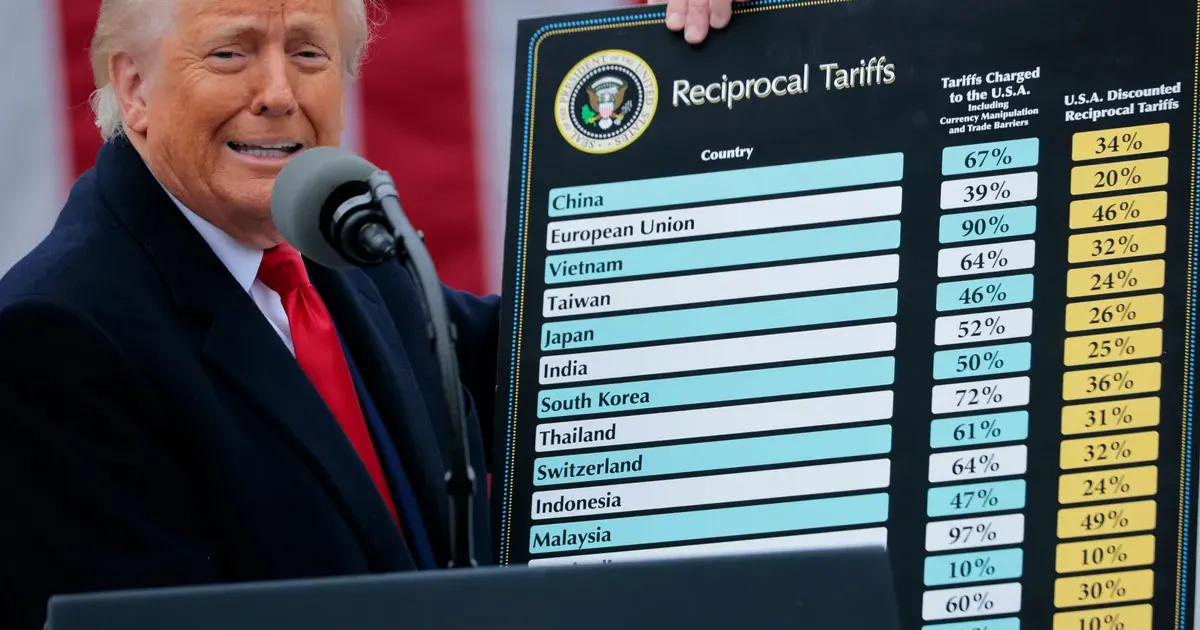
One year after Donald Trump's "Liberation Day" tariffs, the record is not clean enough for either a victory lap or a simple dismissal. The policy remade trade expectations, raised money for a time, forced companies and governments to negotiate, and put industrial policy back at the center of Washington politics. It also raised costs, failed to produce a clear manufacturing boom and ran into serious legal trouble that has forced refunds and new legal workarounds.
The mixed record is the story. Tariffs can create leverage. They can also function as taxes on importers, consumers and firms that rely on foreign inputs. The first year showed both sides, but the promised factory revival remains much harder to find than the disruption.
Manufacturing Did Not Deliver the Headline Win
The central political promise was a broad U.S. manufacturing rebound. One-year reviews from trade analysts and business groups found little evidence that the tariffs had produced the kind of revival Trump described. Some protected firms gained breathing room, and some foreign suppliers promised investment. The gains did not add up to a clear national manufacturing surge. One-year reviews also pointed to manufacturing employment losses, including reports of roughly 93,000 fewer factory jobs, which made the revival claim harder to defend.
The reason is structural. A tariff can make imports more expensive, but it does not instantly create domestic capacity, skilled labor, supplier networks, grid connections or permitting speed. Companies deciding whether to build in the United States need stable demand and stable rules. A tariff system that changes through announcements, exemptions and litigation can encourage caution rather than investment.
Higher Costs Reached Firms Before New Factories Arrived
Import-dependent manufacturers felt the policy first through inputs. Metals, machinery, electronics, parts and intermediate goods became more expensive for firms that were supposed to benefit from a stronger industrial base. Broad tariffs contain an internal contradiction: one factory's protection can become another factory's cost increase.
Consumers also carried part of the burden. Research cited by trade-policy analysts found substantial pass-through from tariffs into prices paid by Americans. The inflation effect was not always as dramatic as early panic suggested, but it was real enough to matter for apparel, vehicles, equipment and other import-heavy categories. A policy sold as a way to strengthen workers can lose support if households experience it as another price shock.
The Legal Reversal Changed the Fiscal Story
The revenue claim became weaker after the courts intervened. The Supreme Court ruled in February 2026 that the International Emergency Economic Powers Act did not authorize key tariffs, forcing the administration to rely on other trade-law tools and triggering refunds. July reporting described tens of billions of dollars being returned, including $81 billion in refunds tied to the invalidated duties.
The reversal matters because tariff revenue had been presented as a budget benefit. Refunds reverse part of that story and create administrative cost, business uncertainty and deficit pressure. Even where other tariffs remain in force, companies now have to model not only the rate but the legal basis underneath it.
Markets Can Price Tariffs, but Not Whiplash
Investors can adapt to protectionism if the rules are legible. They struggle when rates, country lists, exemptions and legal authorities shift abruptly. The "Liberation Day" period unsettled markets because it suggested U.S. trade policy could change by political instinct rather than by a predictable negotiating path.
The resulting reputation cost is difficult to measure but real. Allies, suppliers and foreign investors now have to ask whether U.S. market access can be repriced suddenly, even after agreements are signed. Washington may gain bargaining power from unpredictability, but it also charges itself a risk premium when companies delay investment or diversify away from U.S.-dependent supply chains.
Trade Deficits Are Harder Than Tariff Charts
Tariffs can reduce some imports by raising prices, but they do not automatically produce domestic substitutes. If U.S. firms lack capacity, buyers pay more, switch suppliers or delay purchases. Imports from China may fall while production shifts to other Asian economies rather than back to the United States. Supplier substitution can change the map without solving the industrial problem.
Retaliation adds another layer. Farmers, exporters, multinational manufacturers and consumer brands can all become targets when trading partners respond. A serious scorecard has to count protected jobs and damaged markets together. Counting only one side turns trade policy into campaign arithmetic rather than industrial strategy.
The Next Tariff Round Needs an Industrial Plan
Trump is still pursuing tariffs through other legal channels, including sector-specific and country-specific measures. The first-year lesson is therefore not over. The question is whether new rounds will be tied to a clearer industrial plan: infrastructure, workforce training, permitting, energy costs, supplier finance and predictable trade diplomacy.
The first-year record points to the same conclusion: tariffs are leverage, not reconstruction. They can buy time for domestic industry, punish unfair practices and force negotiation. Without the rest of the industrial system, they mostly reprice trade and move costs around. A year after Liberation Day, the United States has more tariff experience, more legal scars and more evidence that disruption is easier than rebuilding. The manufacturing case is still possible, but it has not been proven by the first year.