The case against Singapore watch dealer Dominic Khoo shows how quickly a luxury-asset story can become a legal and investor-protection problem. The allegations center on whether clients were promised returns and ownership interests that the available assets could not support.
The accusations were reported on April 8, 2026, as investigators and investors examined records tied to high-value watches. Because the case involves allegations, the central question is what documents, assets and payment flows can actually prove.
Singapore Police Investigate Dominic Khoo
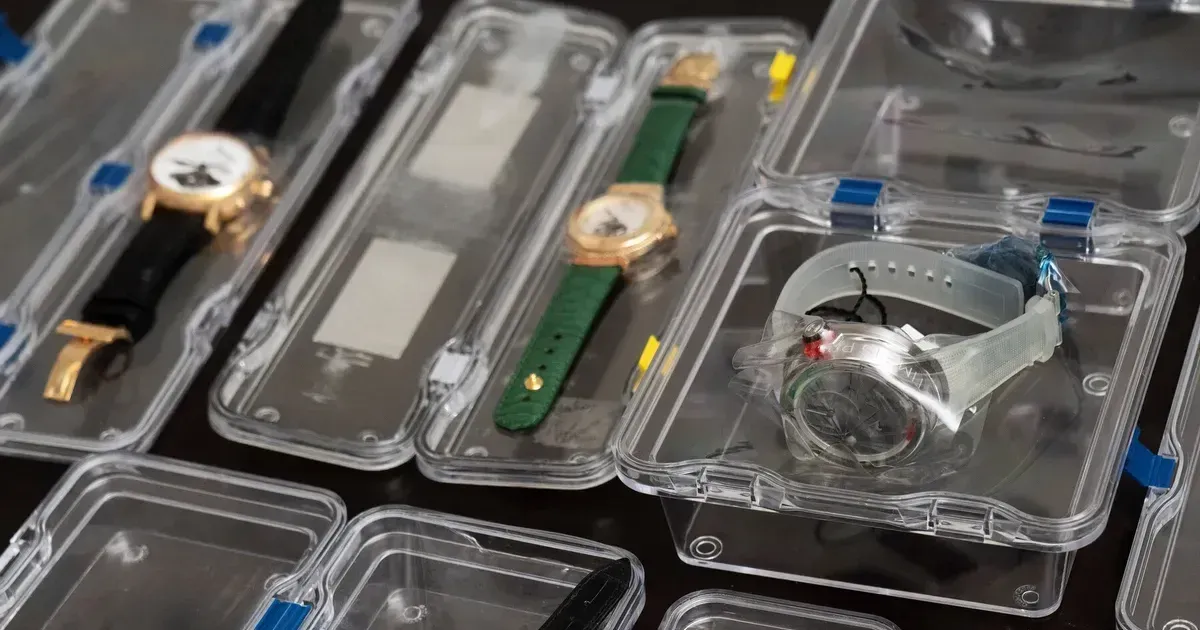
Officers from the Commercial Affairs Department conducted raids on offices associated with the watch investment group earlier this year. Detectives seized thousands of pages of financial ledgers and digital storage devices to trace the flow of capital through various shell entities. One primary focus of the probe involves the cross-border movement of funds to jurisdictions with less stringent financial oversight. Investigators found that a substantial portion of the money contributed by recent investors went toward paying promised returns to early-stage backers. This classic circular funding mechanism is the hallmark of a Ponzi structure. Police have seized more than 40 luxury timepieces as part of the initial sweep.
Investors trusted his expertise in a market that appeared to defy traditional economic gravity, only to find their capital allegedly vanished, according to a legal representative for the victims.
Secondary market prices for luxury watches experienced a historic surge between 2020 and 2022, creating a fertile environment for speculative investment schemes. Models from Rolex, Audemars Piguet, and Patek Philippe saw their valuations double or triple in a matter of months. This hyper-growth attracted amateur investors who viewed mechanical watches as a safe haven similar to gold or real estate. Khoo positioned himself as a gatekeeper to this exclusive world, promising double-digit annual returns with seemingly low risk. Rising interest rates eventually cooled the market, exposing the structural weaknesses of leveraged watch funds. Audemars Piguet Royal Oak values fell by 30 percent in six months.
Skepticism grew as the broader market corrected, yet Khoo continued to report gains that outperformed industry benchmarks. Professional dealers noted that the prices he claimed to achieve for sales were often 20 percent higher than actual transacted prices on global exchanges like Chrono24. Discrepancies between reported values and market reality were used to lure more capital into the system. High-end horology relies on scarcity, but the alleged scheme relied on an infinite supply of new cash. Most investors were unaware that their contracts lacked the specific serial numbers of the watches they supposedly owned. This lack of asset-level documentation made it impossible for clients to verify their holdings independently.
Regulatory scrutiny of alternative asset funds remains a central issue in the fallout of the Khoo investigation. The Monetary Authority of Singapore has been urged to tighten rules surrounding fractional ownership of luxury goods. Current loopholes allowed Khoo to operate without the same level of oversight required for traditional hedge funds or equity portfolios. Critics argue that the classification of watches as collectible items rather than financial instruments created a dangerous vacuum for investors. Legislative bodies are now reviewing the Financial Services and Markets Act to determine if collectible-backed securities require stricter licensing. Many victims were retail investors who put their life savings into what they believed was a regulated vehicle.
Records show that Khoo leveraged his social media presence to build a persona of unassailable wealth and expertise. He frequently posted images of himself with high-profile celebrities and politicians to strengthen his credibility among the elite. The social proofing technique effectively bypassed the due diligence processes that sophisticated investors typically employ. Victims reported that the professional appearance of his offices and the high-gloss marketing materials gave a false sense of security. Several international investors from the U.K. and the U.S. have joined the collective legal action. The legal process is expected to last several years given the complexity of the offshore transactions involved.
Alternative Assets Need Clear Proof
Luxury watches can be real assets, but investment programs built around them need transparent custody, valuation and resale terms. Without those safeguards, buyers may be relying more on reputation than proof.
That is the broader lesson from the Singapore case. Alternative assets can attract capital quickly, but confidence depends on records that survive scrutiny when the market turns or payments stop.