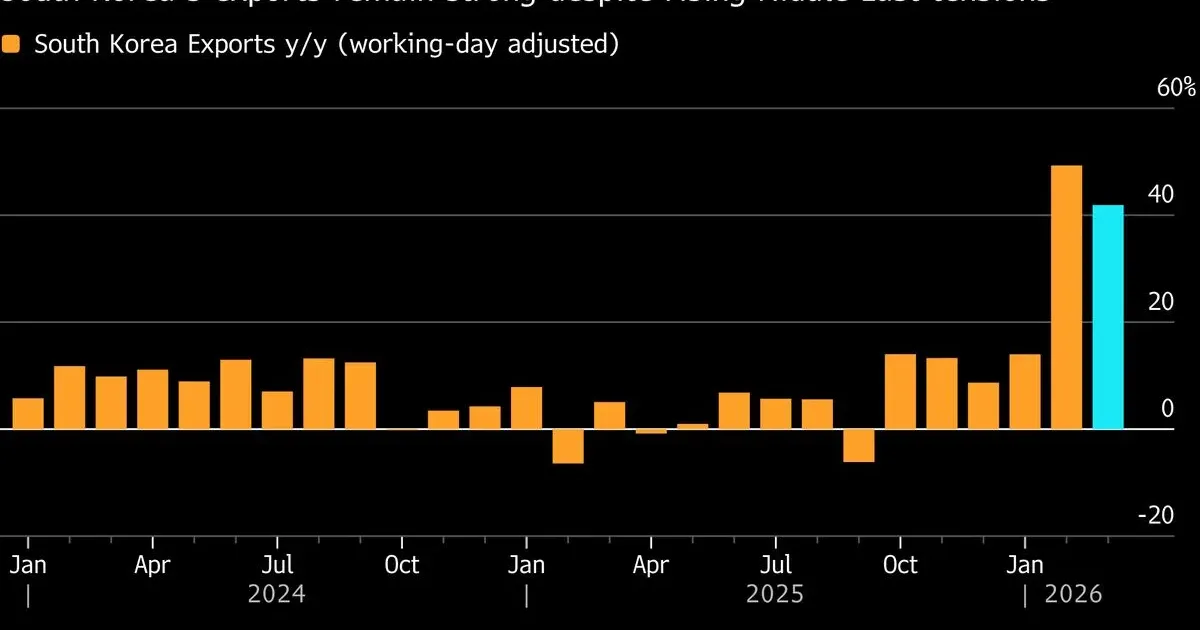
South Korea's export story has become one of the clearest examples of the global AI cycle working as macroeconomic armor. June shipments surged to record levels, powered by semiconductors and demand for memory used in data centers and AI infrastructure. Samsung Electronics, SK Hynix and the wider chip supply chain have helped Seoul outrun weakness that would otherwise be harder to hide.
The semiconductor armor is real, but narrow. The same week that investors celebrated chip-led export strength, Middle East escalation, oil-price spikes, Hormuz shipping risk and a selloff in AI-linked semiconductor shares showed how quickly the trade story can turn from triumph to stress test. South Korea is winning the silicon cycle. It still imports energy, pays freight and depends on fragile materials routes like everyone else.
Semiconductors Carry the Headline
Memory chips, high-bandwidth memory and other semiconductor products are doing the heavy lifting in the export data. AI data-center construction has turned Korean memory into a strategic input rather than a cyclical electronics component. When server demand is strong and prices rise, the national trade balance can improve dramatically.
The concentration makes the headline powerful but narrow. A chip supplier tied to AI infrastructure may be enjoying extraordinary pricing while exporters in chemicals, machinery, consumer electronics or smaller industrial categories face weaker demand or higher costs. The export number is national. The benefit is uneven.
The China Link Has Not Disappeared
Korean exporters remain tied to China through components, displays, intermediate goods, assembly networks and end-demand. Even when governments talk about de-risking, production geography changes slowly. Factories, customer qualifications, logistics routes and supplier relationships cannot be moved by press release.
Regional interdependence is useful when China and the wider region are buying. It becomes a vulnerability when Chinese demand softens, politics intervenes or supply chains are forced to reroute. South Korea can diversify at the margin, but its industrial base still has to operate inside the Asian network it helped build.
Iran Risk Hits More Than Oil
The Iran war and renewed tension around the Strait of Hormuz matter to Korea because energy is an input to nearly everything the country exports. Higher crude, LNG, petrochemical and freight costs hit refiners, steelmakers, automakers, chemical producers, shippers and manufacturers long before consumers see the full effect.
Chips are high-value and light, so they absorb transport costs better than bulk goods. But semiconductor plants are energy-intensive and globally connected. They need stable power, specialty gases, chemicals and predictable shipping. A trade boom built on chips is not insulated from energy shock. It only has a better cushion for a while.
Helium Shows the Hidden Supply Chain
The Middle East risk is also a materials story. Helium, used in semiconductor manufacturing and cooling processes, is tied to natural-gas production and LNG systems. Qatar is a major supplier, and conflict around Gulf shipping immediately raises concern for Korean chipmakers that rely on stable specialty-gas supply.
Samsung and SK Hynix have reasons to plan around these shocks, including stockpiles and supplier diversification. Those measures lower immediate risk. It does not eliminate the vulnerability. Semiconductor production looks clean from the outside because the finished chip is small. The supply chain behind it is full of energy, gas, chemicals, water and logistics dependencies.
Markets Are Testing the AI Trade
Recent market swings show that investors are no longer treating AI hardware strength as a one-way story. Korean chip shares helped lead the region earlier in the year, then sold off sharply when oil jumped and doubts over AI valuations returned. The reversal does not cancel the export boom. It shows that the boom is priced for perfection.
If AI data-center spending keeps accelerating, Korean manufacturers can keep benefiting. If capital expenditure slows, memory prices cool or energy costs stay high, the same concentration that helped Korea outperform can make the reversal sharp. Export strength and equity confidence are related, but they are not the same thing.
The Boom Is Real, But Not Broad Immunity
South Korea is being protected by one of the strongest semiconductor cycles in modern memory. The protection is valuable. It is not a national force field. Energy markets, Gulf shipping, Chinese demand, chip-material supply and AI investment sentiment all still matter.
Seoul's policy problem is therefore bigger than celebrating export records. It has to harden energy security, diversify materials, support non-chip exporters and avoid confusing one dominant sector with broad industrial health. The AI boom has given South Korea room to breathe. It has not removed the air supply problem.