A South Korean appeals court’s reduction of Aricell CEO Park Soon-kwan’s prison term renews the fight over executive accountability for a factory fire that killed 23 people. Suwon High Court judges in South Korea reduced the prison sentence of Park Soon-kwan on April 22, 2026, lowering his term to four years for his role in a 2024 lithium battery factory fire. The decision overturned a previous lower court ruling that had imposed a sharply harsher penalty on the chief executive officer of Aricell. This legal shift arrives after months of intense scrutiny regarding industrial safety standards in the electronics manufacturing sector. Evidence presented during the appeal suggested that Park had made efforts to provide financial restitution to the families of the victims.
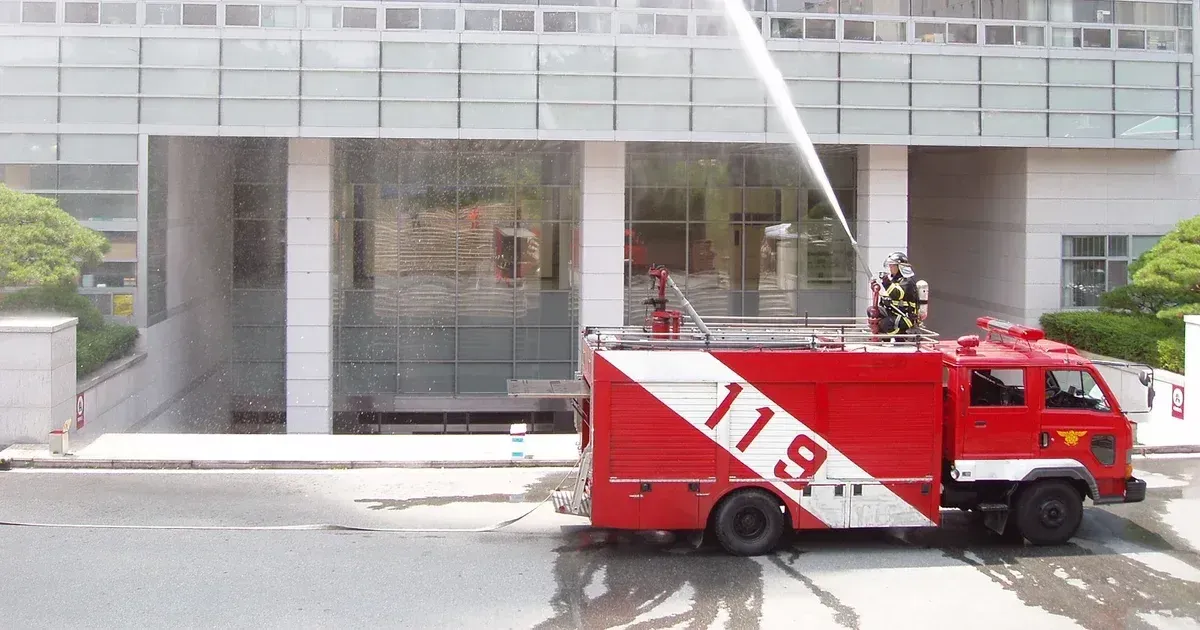
Technical reports from the Hwaseong fire department confirmed that 23 deaths occurred during the June 2024 blaze at the plant. Most of those killed were migrant workers from China and Southeast Asia who were trapped on the second floor of the facility. Firefighters noted that the intense heat of burning lithium batteries made rescue efforts nearly impossible. Thermal runaway reactions spread through the storage area within seconds of the initial spark. Investigators later determined that the factory lacked adequate emergency exits for the number of staff members present on that shift.
Prosecutors argued that Aricell executives ignored multiple warnings about the volatility of their storage methods. Safety inspectors had visited the Hwaseong site just months before the disaster and flagged improper containment of finished battery cells. Park, however, maintained throughout the trial that he was not aware of the specific daily operational lapses occurring on the factory floor. The defense focused on the complexity of maintaining safety in a high-demand production environment during a global supply-chain crunch.
Suwon High Court Overturns Initial Sentencing
Judges centered their reasoning on the distinction between direct criminal intent and systemic negligence. While the prosecution sought to uphold a longer sentence under the Serious Accidents Punishment Act, the appellate panel found that Park did not intentionally bypass safety protocols for profit. Legal analysts in Seoul noted that Korean courts often reduce sentences when defendants show remorse through monetary settlements. The court acknowledged that Aricell had finalized compensation agreements with several bereaved families since the original trial concluded.
Critics of the ruling claim that reducing sentences for top executives undermines the deterrent effect of industrial safety laws. Groups representing the victims gathered outside the Suwon High Court to protest the decision. They pointed out that the fire was the deadliest industrial accident in South Korea in several decades. Survivors described a chaotic scene where smoke blinded workers before they could reach the few available stairwells. Court records show that the alarm system failed to activate in several sections of the building.
Administrative oversight within the company appeared to be fragmented and inconsistent. Internal emails recovered from Aricell servers indicated that middle managers voiced concerns about battery leakage in May 2024. These reports did not result in a production halt or a thorough safety review of the assembly line. Park received copies of high-level production reports but claimed his focus was on securing international contracts. The court found that this disconnect between executive management and floor safety constituted a failure of leadership but not a premeditated crime.
Negligence and Safety Violations at Aricell Plant
Batteries manufactured by Aricell were intended for specialized military and industrial applications requiring high energy density. These specific lithium-thionyl chloride cells are known for their long shelf life but also for their extreme reactivity when damaged. Witnesses testified that workers frequently handled these cells without specialized protective gear. The warehouse layout placed the final packaging station dangerously close to the primary chemical storage vats. This proximity ensured that a small fire in the packaging area would quickly spark the entire inventory.
Migrant workers at the facility faced unique risks due to language barriers and a lack of formal safety training. The Suwon High Court reviewed evidence that safety manuals were only provided in Korean, despite a majority of the workforce being foreign nationals. During the initial orientation, some workers received only a fifteen-minute briefing on evacuation routes. The court determined that the company failed in its duty to ensure all employees understood emergency procedures. This failure directly contributed to the high death toll on the day of the disaster.
“While the defendant’s negligence led to a catastrophic loss of life, his recent attempts to settle with bereaved families and his clean prior record warrant a reduction in the initial sentence,” the court found.
Legal teams for the victims argued that financial settlements should not be a substitute for criminal accountability. They asserted that a four-year sentence sends a message that executive negligence is a manageable business expense. Labor unions across the country have called for stricter enforcement of the Serious Accidents Punishment Act to prevent similar tragedies. The Ministry of Employment and Labor has since increased the frequency of unannounced inspections at battery plants. These inspections have revealed widespread non-compliance with ventilation and storage regulations in the Hwaseong district.
Industrial Safety Law Challenges for Executives
Liability under South Korean law has become a central point of debate for multinational corporations operating in the region. The Serious Accidents Punishment Act, enacted in 2022, was designed to hold CEOs personally responsible for workplace fatalities. Park is one of the first high-profile executives to be sentenced under this framework. His legal victory in the appeals court suggests that the judiciary is still struggling with how to apply these stringent standards fairly. Corporations are now closely watching how the Supreme Court might handle a potential final appeal by the prosecution.
Aricell filed for bankruptcy shortly after the fire, leaving the future of its intellectual property and remaining assets in limbo. The company had been a rising star in the South Korean tech sector before the disaster. Its collapse is a case study for investors on the risks of ignoring ESG metrics in manufacturing. Market analysts suggest that the battery industry must pivot toward safer solid-state technologies to avoid the inherent dangers of liquid electrolytes. The transition requires substantial capital investment that many smaller firms like Aricell cannot afford.
International observers have linked the Hwaseong disaster to the broader pressures of the global energy transition. Demand for lithium-based storage has outpaced the development of global safety standards. Factories in China and Southeast Asia have reported similar incidents, though many go undocumented by state media. The Aricell case remains a rare instance where the internal failures of a battery manufacturer were laid bare in an open court. Despite the reduction in sentence, the financial and reputational damage to Park and his associates is total.
Aricell Sentence Tests Executive Accountability
The decision by the Suwon High Court to slash Park Soon-kwan's sentence is a predictable retreat into the cozy protectionism of the South Korean corporate elite. By allowing a CEO to trade cash for years of freedom, the judiciary has effectively placed a market value on the lives of migrant laborers. It is a cynical calculation that suggests the Serious Accidents Punishment Act is a tiger without teeth, easily pacified by a checkbook. The message to the manufacturing sector is clear: safety is an optional cost until it becomes a legal one, and even then, the price is negotiable.
Will this leniency embolden other executives to cut corners in the race for battery dominance? History suggests that without the threat of lengthy incarceration, corporate boards will always prioritize production speeds over the safety of those on the assembly line. The Aricell fire was not an act of God; it was the inevitable result of a system that treats workers as disposable inputs in a high-voltage game of profit. If four years is the standard price for 23 lives, the cost of doing business has never been cheaper. The ruling is a failure of justice.