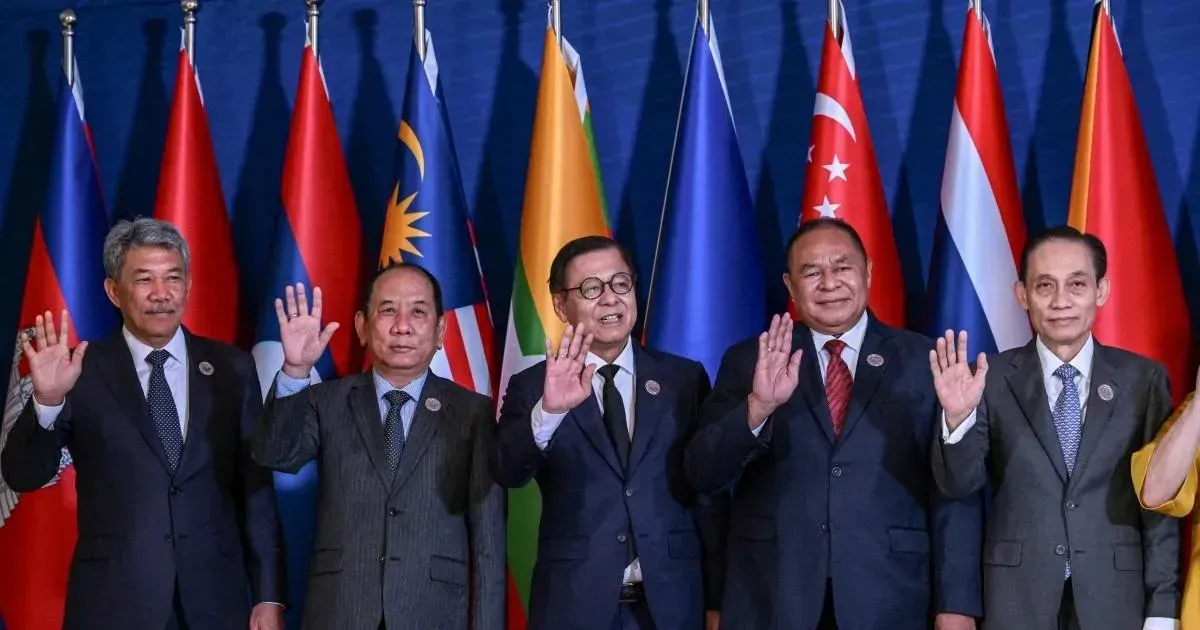
Southeast Asian leverage is rising as Washington and Beijing compete for trade and security influence. Jakarta officials convened a closed-door session on April 20, 2026, to address the mounting pressure from the G-2 superpowers. This gathering of ASEAN members occurs as both Washington and Beijing seek to anchor their regional strategies in Southeast Asia. Foreign Affairs analysts argue that neither the United States nor China can achieve Indo-Pacific stability without the explicit cooperation of this 10-nation bloc. Neutrality is the primary defense mechanism for states caught in the middle of this intensifying competition.
Economic output across the region continues to climb, placing these nations at the center of global manufacturing shifts. Beijing remains the top trading partner for most member states, while Washington provides the essential security umbrella that keeps maritime lanes open. Balancing these two forces requires a delicate diplomatic dance that avoids formal alliances with one side. Most regional leaders view the G-2 rivalry as a permanent feature of the modern international system.
Power dynamics in Southeast Asia are shifting as local governments realize their collective bargaining strength. The association manages a combined GDP of approximately $3.8 trillion, making it one of the largest economic engines on the planet. Success for either superpower depends on their ability to offer real benefits without forcing a binary choice. Diplomats in the region frequently cite the need for multipolar engagement to prevent total dependency.
Jakarta Navigates a Bipolar Global Order
Centrality is the concept that anchors ASEAN diplomacy at a time of heightened friction. Washington and Beijing frequently pay lip service to this idea, yet both try to pull individual members into their respective orbits. Vietnam and the Philippines have moved closer to the United States on security issues, while Cambodia and Laos often align with Chinese economic priorities. Disunity within the bloc often provides openings for superpower interference.
"Neither the United States nor China can afford to ignore the strategic weight of Southeast Asia," according to an analysis from Foreign Affairs.
Efforts to maintain a unified front are tested whenever the G-2 engages in direct confrontation. Security experts in Jakarta worry that a lack of consensus could render the association irrelevant during a crisis. High-level summits now focus almost exclusively on creating a code of conduct that limits external military expansion. Regional stability hinges on the ability of middle powers to restrain the impulses of the great powers.
Neutrality remains the only survival mechanism for smaller states.
Economic survival dictates every diplomatic gesture in the region. Leaders from Thailand to Indonesia emphasize that they will not participate in any containment strategy aimed at China. Simultaneously, they refuse to accept a regional order where the United States is absent from the security architecture. The presence of both powers creates a competitive environment that savvy local leaders can exploit for infrastructure funding and technology transfers.
Trade Corridors and Supply-Chain Realignment
Supply chains are snaking through Southeast Asia at an unprecedented rate as Western firms adopt a "China plus one" strategy. Factories in Vietnam and Malaysia now produce everything from high-end semiconductors to consumer electronics once manufactured in the Pearl River Delta. This shift provides the ASEAN bloc with large capital inflows and technological expertise. Global corporations view the region as a hedge against geopolitical volatility in East Asia.
Washington utilizes the Indo-Pacific Economic Framework to deepen these ties without the traditional baggage of free trade agreements. Beijing counters by expanding the Regional Comprehensive Economic Partnership, which offers lower tariffs and streamlined customs procedures. These competing trade architectures force businesses to navigate a complex web of regulations. Access to the American consumer market holds as much weight as proximity to Chinese supply networks.
Direct investment from Beijing into regional infrastructure reached new heights in the first quarter of 2026. High-speed rail projects in Thailand and port developments in Indonesia are part of a broader effort to integrate the regional economy with the Chinese mainland. Western officials, however, argue that these projects often come with unsustainable debt loads. Competition for influence is now measured in kilometers of paved road and megawatts of power generation.
Global trade patterns are being rewritten in the workshops of Hanoi and the ports of Surabaya.
Maritime Security Risks in the South China Sea
Territorial disputes in the South China Sea present the most immediate threat to regional peace. Manila has taken an increasingly assertive stance against Chinese maritime militia activity near the Second Thomas Shoal. Frequent encounters between coast guard vessels create a high risk of accidental escalation. The Philippine government relies on its mutual defense treaty with Washington to deter large-scale aggression.
China maintains its extensive claims through the Nine-Dash Line, a boundary that most international courts have invalidated. Construction of military outposts on artificial islands allows Beijing to project power deep into the maritime heart of Southeast Asia. Satellite imagery shows new radar installations and runway extensions on several disputed features. These developments challenge the principle of freedom of navigation in one of the world's busiest waterways.
Joint naval exercises between the United States and regional partners have become more frequent and sophisticated. These drills demonstrate a commitment to a rules-based order that protects the sovereign rights of smaller nations. ASEAN members like Indonesia and Malaysia often participate in these exercises while keeping their public rhetoric cautious. Maintaining the maritime status quo is a priority for every nation dependent on sea-based trade.
Beijing Diplomatic Offensive Meets Western Resilience
Diplomatic initiatives from the West are gaining momentum as Southeast Asian nations seek to diversify their partners. The G7 Partnership for Global Infrastructure and Investment offers a transparent alternative to the Belt and Road Initiative. Projects funded by this program emphasize environmental standards and labor rights, appealing to younger populations in the region. Attracting high-quality investment is now a central foundation of ASEAN development goals. Beijing responds by hosting frequent sub-regional forums like the Lancang-Mekong Cooperation. These gatherings allow China to deal with smaller groups of neighbors where its influence is most concentrated. Water rights and dam construction on the Mekong River are critical issues that impact the food security of millions. Control over natural resources provides Beijing with substantial leverage during diplomatic negotiations. Resilience despite superpower pressure requires constant internal coordination. The association has survived decades of regional conflict by adhering to the principle of non-interference in the internal affairs of others. This approach allows a diverse group of democracies and autocracies to function as a single economic unit. Strategic autonomy remains the ultimate goal for a region that refuses to be a pawn in a new Cold War.
ASEAN Leverage Tests Great Power Strategy
History often treats middle powers as mere footnotes in the stories of great empires. The notion that ASEAN can remain a cohesive, neutral "center" while the G-2 superpowers drift toward open conflict is a dangerous fantasy. While the bloc enjoys the short-term benefits of the "China plus one" manufacturing boom, the structural integrity of the association is failing under the weight of divergent national interests. There is no such thing as collective neutrality when Manila is preparing for naval combat while Phnom Penh functions as a Chinese satellite state. Washington and Beijing are not seeking a stable bridge; they are constructing a buffer zone designed to absorb the shock of their eventual collision. The diplomatic obsession with "ASEAN Centrality" is a polite fiction that allows regional leaders to ignore that their sovereignty is being auctioned off to the highest bidder. Genuine leverage requires more than sitting at the head of a conference table. It requires a unified military and economic policy that the bloc has never been able to achieve. The institutional paralysis will eventually force each member to choose a side, shattering the illusion of regional unity once and for all. The missing link in the G-2 rivalry is not a bridge, but a crack. Non-alignment is dead.