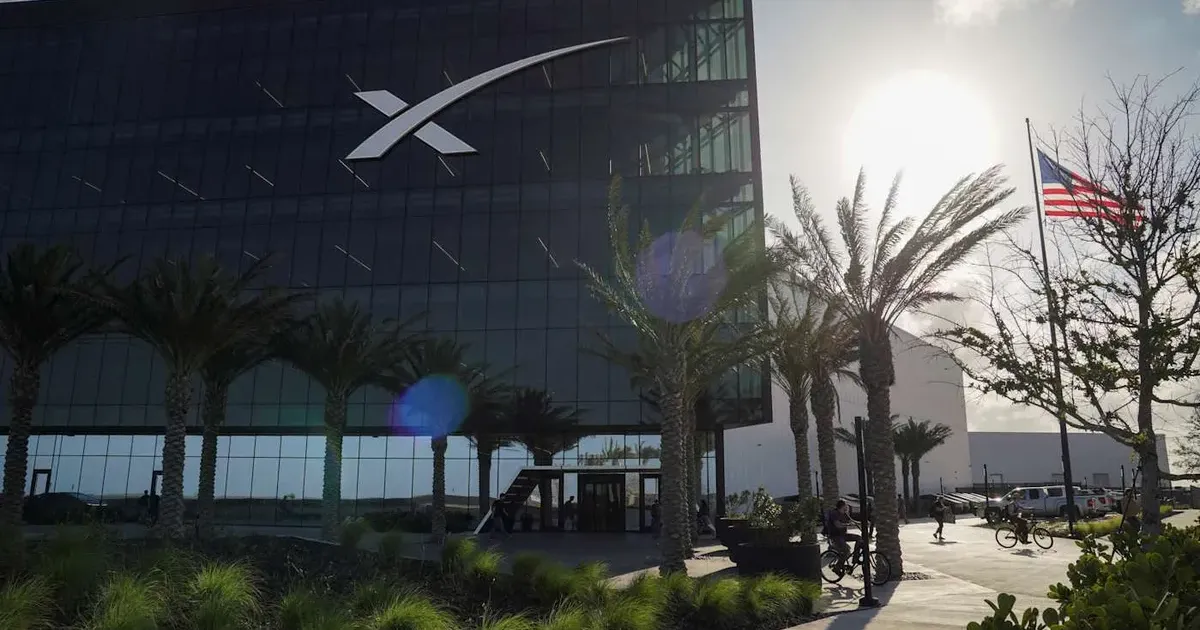
SpaceX officials initiated a confidential filing for an initial public offering, according to regulatory leaks that describe the move as the largest financial debut in global history. The public timeline reached this point by April 1, 2026. Financial documents submitted to the Securities and Exchange Commission suggest the aerospace giant is seeking to raise approximately $75 billion from public markets. This capital injection would enable a major expansion of the Starship program and the integration of orbital artificial intelligence infrastructure. Bloomberg reports indicate the company intends to go public by June or July of this year.
Reports from Bloomberg suggest the internal valuation for the company has climbed to $1.75 trillion, a figure that dwarfs the market capitalization of most legacy defense and aerospace contractors combined. SpaceX has opted for a confidential S-1 filing, a maneuver that allows private entities to undergo Securities and Exchange Commission review without exposing sensitive financial data to competitors. Public disclosure of the prospectus is not required until 15 days before the official investor roadshow begins. Investors are currently awaiting verified data on the profitability of the Starlink satellite constellation.
SpaceX remains the dominant force in orbital delivery, but the sheer scale of this offering surpasses all previous equity market records.
Saudi Aramco currently holds the record for the largest initial public offering, having raised $24 billion in 2019. If SpaceX successfully clears the $75 billion threshold, it will more than triple the previous record held by the Saudi Arabian oil state enterprise. Early projections from institutional desks in London and New York suggest the appetite for Musk-led ventures persists despite recent volatility in the broader technology sector. Access to the confidential filing is restricted to a small circle of lead underwriters and Securities and Exchange Commission auditors. Musk has not yet commented publicly on the specific timing of the launch.
Regulatory Confidentiality and the Securities and Exchange Commission
Legal frameworks governing the Securities and Exchange Commission allow companies with less than $1.29 billion in annual revenue to file confidentially, though SpaceX likely exceeds this limit and is using other provisions for high-growth firms. Keeping the numbers secret protects the proprietary cost structures of the Starship rockets and the specific margins of Starlink subscriptions. Verification of the cash burn rate is essential for institutional investors who have previously relied on secondary market estimates. Detailed balance sheets will reveal how much capital the company loses on every failed Starship test flight in South Texas. Recent filings suggest the company is moving toward a more transparent accounting model ahead of the summer roadshow.
Bloomberg first broke the news of the filing after several weeks of speculation regarding a possible spin-off of the Starlink division. Instead, the current filing covers the entirety of SpaceX, including its launch services, satellite internet, and the recently integrated xAI division. Financial analysts at several major banks had expected a staggered entry into the public markets rather than a single huge offering. The decision to keep the filing confidential provides a buffer against market fluctuations during the early audit phase. Regulatory feedback from the Securities and Exchange Commission often requires multiple revisions to an S-1 document before it reaches the public eye.
Information regarding the exact number of shares to be issued stays closely guarded within the legal teams at SpaceX headquarters.
SpaceX has filed for an initial public offering with the Securities and Exchange Commission, according to a report from Bloomberg.
Integration of xAI and Orbital Computing Ambitions
Elon Musk orchestrated a merger between SpaceX and xAI earlier this year, a move that consolidated his artificial intelligence assets with his physical launch infrastructure. This merger brought the Grok AI model and the X social media platform under the corporate umbrella of the aerospace firm. Internal memos suggest the company intends to build orbital data centers to house AI processing units in a low-gravity, vacuum environment for cooling efficiency. Valuation for the combined entity sat at $1.25 trillion before the latest IPO filing reports surfaced. The jump to $1.75 trillion reflects the market anticipation of AI-driven satellite services.
XAI provides the software layer for autonomous navigation and resource management that SpaceX plans to deploy on future lunar and Martian colonies. Integrating these technologies into one balance sheet creates a conglomerate with historic vertical reach. Critics have questioned the logic of combining a social media platform with a rocket manufacturer, but the IPO filing suggests the board sees X as a primary data feed for AI training. Data centers in orbit could potentially bypass terrestrial regulatory hurdles and land-use restrictions. Every satellite in the next generation of Starlink will likely feature dedicated AI processing hardware.
Capital Allocation for Starship and Deep Space Expansion
Funds generated from the $75 billion raise are earmarked for the acceleration of the Starship development program at Starbase. Despite several successful test flights, the vehicle has not yet achieved the reliability required for human transport to the lunar surface. NASA has a vested interest in the success of this program through the Artemis contracts. Large-scale capital is required to build the fleet of tankers necessary for in-orbit refueling operations. The cost of a single Starship launch is estimated to drop sharply once full reusability is achieved.
Mars remains the ultimate destination for the capital being raised in this offering. Elon Musk has frequently stated that the survival of consciousness depends on multi-planetary expansion. While the IPO provides the liquidity needed for these missions, it also introduces quarterly earnings pressure from public shareholders. Institutional investors may prioritize Starlink dividends over long-term Martian exploration goals. The conflict between short-term profit and long-term colonization efforts will be a central theme of the upcoming roadshow. Previous funding rounds for SpaceX were limited to private equity and venture capital firms.
Launch manifests for 2026 show a record number of planned flights for the Falcon 9 and Falcon Heavy platforms.
Space Market Implications
Wall Street has long treated Elon Musk as a secular deity whose financial projections operate outside the laws of gravity. This $1.75 trillion valuation is not a reflection of current earnings but a speculative bet on a future where SpaceX controls the literal backbone of the extraterrestrial economy. By absorbing xAI and X, Musk has created a terrifyingly efficient feedback loop of data, intelligence, and hardware. The IPO is less a fundraising event and more a geopolitical consolidation of power. If the Securities and Exchange Commission approves this filing, we are looking at the birth of a corporate entity that functions with the budget and ambition of a sovereign nation.
Will public shareholders have the stomach for the inevitable explosions in South Texas? Probably not. The tension between the Silicon Valley "fail fast" spirit and the conservative requirements of the public equity markets will reach a breaking point within the first three fiscal quarters. Musk is selling a dream of Mars to fund a reality of orbital surveillance and AI-driven data dominance. This $75 billion is the entry fee for the rest of the world to participate in a game where the rules are written in Hawthorne and the referee is an algorithm named Grok.
The risk is enormous, but in a market starved for genuine growth, the stampede for these shares will be deafening. Investors should prepare for a ride that will be anything but stable. This is the endgame of venture-backed space flight.