Peter Mandelson’s resignation turns a failed diplomatic appointment into a direct test of Keir Starmer’s judgment and authority. Keir Starmer struggled to contain a mounting diplomatic crisis on April 22, 2026, as his choice for ambassador to the United States resigned under intense public scrutiny. Revelations concerning the appointee's historical associations with a notorious criminal figure triggered the resignation. Peter Mandelson, a veteran of the Labour Party, stepped down after documents linked him to the deceased sex offender Jeffrey Epstein. The resignation gives Starmer a personnel problem, but the deeper risk is whether allies believe vetting decisions are being controlled.
Downing Street initially defended the selection of Mandelson, a former business secretary and European commissioner. Political allies argued that his deep experience in international trade and EU relations made him an ideal candidate to manage the post-Brexit landscape. Critics, however, pointed to his enduring friendship with Epstein, which had been a matter of public record for years. New files suggest the relationship was more extensive than previously acknowledged by the former diplomat.
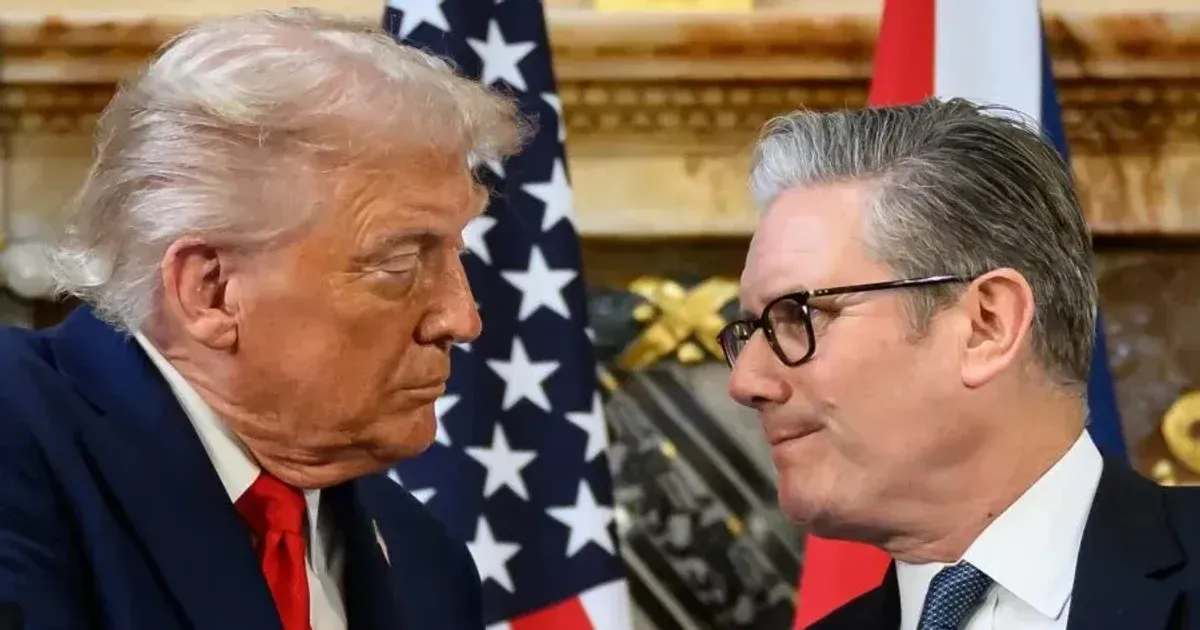
Donald Trump, the current President of the United States, intervened in the controversy with a public assessment of the British leader. Starmer has plenty of time to recover, the president stated while describing the initial appointment as a meaningful error. Trump emphasized that the choice of an ambassador is a primary signal of a nation’s priorities and ethical standards.
Prime Minister Keir Starmer of the United Kingdom acknowledged that he ‘exercised wrong judgment’ when he chose his Ambassador to Washington, Donald Trump stated in a public critique of the appointment.
Starmer admitted to the lapse in judgment during a brief press briefing outside 10 Downing Street. This admission came only after internal party pressure reached a breaking point. Several Labour members of Parliament threatened to withdraw their support for the government's upcoming budget unless the Mandelson issue was resolved. Opposition leaders called for an independent inquiry into the vetting process that allowed the appointment to proceed in the first place.
Diplomatic Vetting Failures in Downing Street
Vetting procedures within the Prime Minister's office have come under intense scrutiny since the resignation. Staff members responsible for background checks reportedly overlooked specific files that detailed Mandelson's interactions with Epstein during the early 2000s. These documents include travel manifests and correspondence that links the former diplomat to Epstein's private residences in New York and the Caribbean. Internal emails suggest that some aides raised concerns about the optics of the appointment months ago.
Reports from the Foreign Office indicate that the internal vetting team prioritized political loyalty over reputation risks. Senior advisors believed Mandelson's status as a party elder would outweigh potential scandals from his past. Recent disclosures proved this calculation to be dangerously optimistic. British intelligence agencies allegedly provided a restricted briefing on the matter, but the Prime Minister's inner circle chose to proceed regardless of the warnings.
National security protocols usually require a more rigorous review for high-level diplomatic posts. Washington requires all foreign ambassadors to undergo a level of informal clearance by the State Department before they are officially accepted. Officials in the U.S. government reportedly expressed private reservations about Mandelson long before the public fallout began. London ignored these quiet signals from its most important ally.
Impact on the Special Relationship
Transatlantic relations now face a period of uncertainty as the U.K. searches for a replacement. The vacancy in Washington leaves the British government without a top-tier representative during critical trade negotiations. Mandelson was expected to lead the effort to secure a new bilateral agreement on technology and defense cooperation. His departure leaves a vacuum that the opposition party has been quick to exploit.
White House officials have remained largely silent on the specific details of the Epstein links. Presidential comments suggest that the U.S. administration is willing to move past the incident if Starmer selects a more suitable candidate. Diplomacy requires a baseline of trust that the Mandelson affair has clearly shaken. Rebuilding this trust will require a nominee with an unblemished record and clear bipartisan appeal.
State Department sources indicate that the next ambassador must be prepared to address uncomfortable questions regarding the U.K. government's internal stability. Frequent changes in personnel within the British cabinet have led to concerns about policy consistency. Foreign diplomats often prefer a stable interlocutor to manage complex international crises. The current vacancy prolongs a state of flux in London's foreign policy apparatus.
Historical Context of Mandelson and New Labour
Peter Mandelson played a central role in the rise of New Labour during the late 1990s. He earned a reputation as a master strategist and was often credited with modernizing the party's image. Two separate resignations from the cabinet during the Tony Blair era previously stalled his political career. Both instances involved questions regarding his financial dealings and personal connections. This third high-profile exit may finally end his influence in British politics.
Supporters of the veteran politician highlight his role in the Northern Ireland peace process and his work at the Department of Trade and Industry. They argue that his contributions to the country are being overshadowed by his personal associations. Critics counter that his repeated involvement in controversies suggests a pattern of poor judgment that should have disqualified him from the Washington post. Mandelson continues to deny any wrongdoing regarding his relationship with Epstein.
Labour Party dynamics have shifted sharply since the Blair years. A new generation of activists and lawmakers is less willing to tolerate the scandals that defined the previous era. Younger members of the party feel that Mandelson represents a style of politics that is no longer compatible with modern transparency standards. His resignation is viewed by many as a necessary step toward party reform.
Public Reaction and Political Consequences
Voters in the United Kingdom have expressed frustration over the government's handling of the appointment. Recent polling data shows a sharp decline in Starmer's approval ratings following the admission of wrong judgment. The public appears particularly sensitive to issues involving Epstein, given the high-profile nature of his crimes and the wealth of leading figures involved. Many citizens view the appointment as a sign of an out-of-touch political elite.
Protests occurred briefly outside the Foreign Office on April 21, 2026. Demonstrators demanded greater accountability and a full release of the vetting documents. Starmer's administration has resisted these calls, citing national security concerns and the privacy of internal deliberative processes. This resistance has only fueled further speculation about what else the government might be hiding. Political analysts suggest that the Prime Minister must now perform a major cabinet reshuffle to restore confidence. Moving loyalists into key positions while removing those associated with the Mandelson vetting failure could buy the government some time. Failure to act decisively could lead to a vote of no confidence in the House of Commons. The next few weeks will determine the long-term viability of Starmer's leadership.
Mandelson Exit Tests Starmer Authority
Keir Starmer's decision to appoint Peter Mandelson was not a mere lapse in judgment; it was a symptom of a government blinded by historical nostalgia. By reaching back into the Blairite era for a diplomat, Starmer signaled a lack of fresh talent within his own ranks. The reliance on the old guard has backfired in the most public way possible, handing a political victory to Donald Trump on a silver platter. The British Prime Minister now appears amateurish on the global stage, a leader who cannot vet his own staff, let alone manage a complex international alliance.
Can a government truly claim to represent modern values when it rehabilitates figures with such deep, documented ties to the Epstein network? The excuse of political utility is no longer sufficient in an age where voters demand absolute transparency. Mandelson was always a high-risk asset, and the calculation that his expertise would shield him from his past was inherently flawed.
Starmer has effectively burned through his political capital to defend a man who was ultimately indefensible. Moving forward, the U.K. must prioritize competence over cronyism. The Washington embassy is too essential a post to be used as a retirement home for party elders with baggage. If Starmer fails to appoint a transformative figure to the role, the Special Relationship will continue to drift. The clock is ticking on his premiership. One more personnel disaster of this magnitude will be his last.