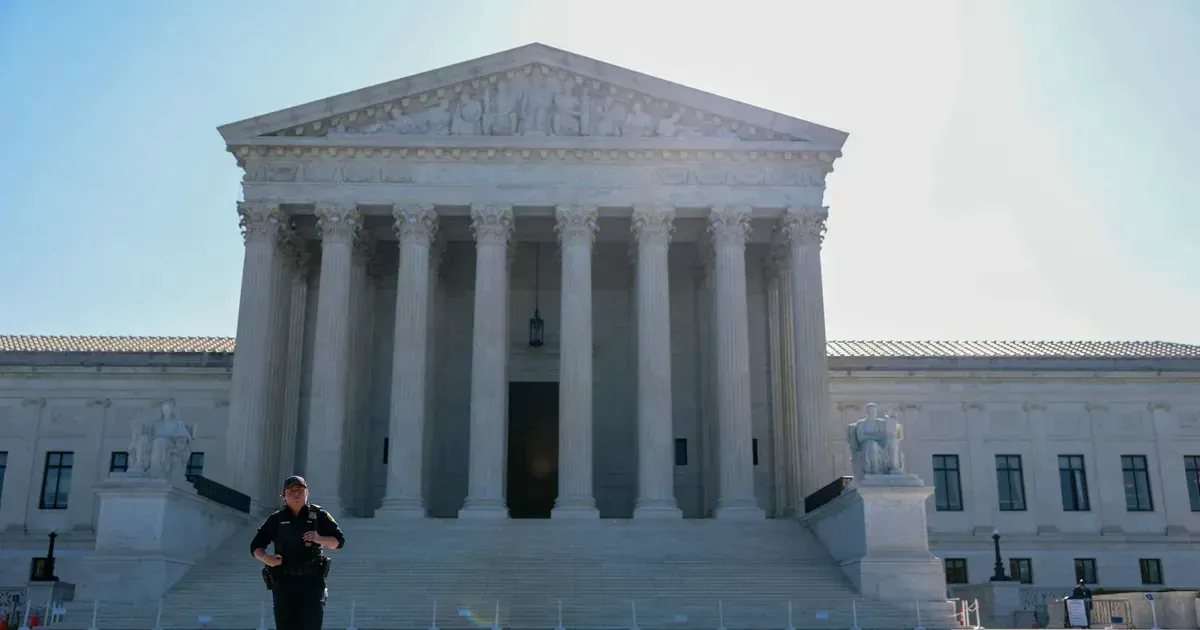
The Supreme Court refused to let Alabama move forward with the scheduled nitrogen gas execution of Jeffery Lee. The brief order keeps the execution on hold while litigation over the method continues. The lower-court finding remains central because it challenged the constitutionality of the specific protocol Alabama wanted to use. That timing matters because execution litigation often turns on narrow procedural records. The Supreme Court order came on June 11, 2026.
The court denied the request without issuing a full opinion. That gives the state a narrower problem than defending capital punishment in general: it must defend the equipment, procedure and safeguards at issue.
Supreme Court Leaves Stay in Place
The immediate effect is a Supreme Court execution stay. Lee remains on death row, but Alabama cannot use the challenged nitrogen protocol on the schedule it sought. Nitrogen execution cases have drawn attention because they emerged after years of litigation over lethal-injection drugs and botched procedures. Because execution protocols are usually controlled by state corrections agencies, courts often depend on technical records about masks, seals, gas flow and monitoring.
The case matters because nitrogen hypoxia is still a relatively new execution method in the United States. Alabama has argued that it is a constitutional alternative to lethal injection. States adopted the method in part because access to injection chemicals became legally and practically difficult. Those details can determine whether a method is treated as lawful procedure or unacceptable risk.
Lee's lawyers challenged that claim, arguing that the state's process risks unnecessary suffering and has not been justified with enough evidence. Opponents argue that changing the method does not remove the constitutional question if the new protocol creates its own risk of suffering. Until the record is clearer, the nitrogen gas debate will remain one of the most closely watched capital-punishment issues in the country.
“The application to vacate stay of execution presented to Justice Kavanaugh and by him referred to the Court is denied.”
Supporters of the state's position argue that prisoners should not be able to delay sentences indefinitely through repeated method challenges. The case also shows why emergency-docket orders can carry major consequences even when they are short.
Nitrogen Protocol Remains Contested
The court's order was narrow. It did not abolish the death penalty, vacate Lee's conviction or create a full nationwide rule against nitrogen executions. The Supreme Court's short order leaves both arguments alive, which is why the case remains important beyond Lee. A few lines from the court were enough to stop an execution and reset the timetable for state officials.
Even so, the refusal leaves Alabama's nitrogen hypoxia protocol under continued scrutiny. Other states that have authorized the method will watch the next stage closely. Corrections departments in other states will study whether Alabama revises its process, gathers more evidence or changes course. That is why both prosecutors and defense lawyers will read the next lower-court filings closely.
Justices Clarence Thomas, Samuel Alito and Neil Gorsuch dissented. Their position indicates that at least three members of the court were willing to let Alabama proceed. For victims' families, the ruling means another delay after years of litigation and scheduled execution planning. The fight is likely to continue through technical evidence rather than broad moral argument alone.
Alabama's Next Legal Options
The split reflects a familiar capital-punishment divide: how much deference states should receive when courts review execution procedures. For courts, it preserves time to examine a method that remains legally contested and still unfamiliar compared with older procedures. For Alabama, the practical problem is that every failed request narrows the calendar and increases scrutiny of the protocol.
Alabama's next decision is practical as well as legal. The state can keep defending nitrogen hypoxia, revise its protocol or seek to use another method allowed under state law. The lack of a full Supreme Court opinion also leaves lower courts with limited guidance for the next nitrogen-related challenge. For Lee, the stay keeps the case alive long enough for courts to examine whether the state can carry out the method as promised.
For defense lawyers, the order gives a template for challenging methods that are presented as alternatives to troubled lethal-injection systems. That uncertainty can produce more emergency litigation because each scheduled execution becomes a new test of the same unresolved protocol. The national significance is larger than one execution because other states are watching whether nitrogen can survive sustained review.
For state officials, it is a warning that new execution technology does not automatically avoid Eighth Amendment litigation. Alabama officials may argue that delay undermines finality, while defense lawyers will argue that finality cannot override constitutional method review.
The case now returns to a slower legal track. Until Alabama can satisfy the courts, the execution cannot proceed under the disputed protocol.