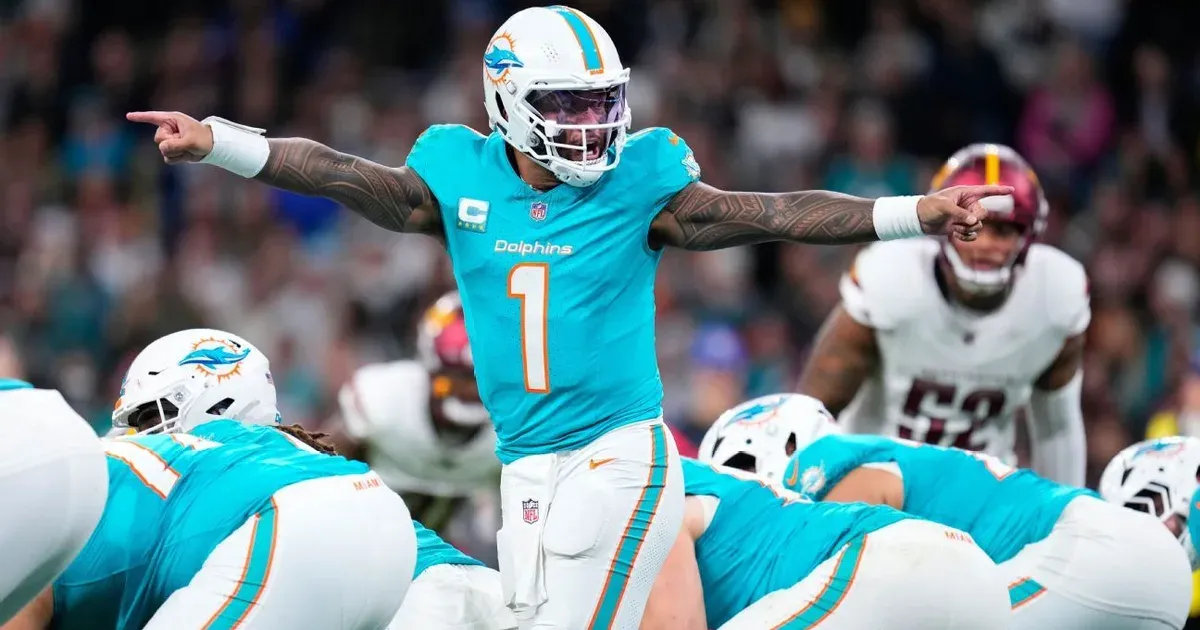
Tua Tagovailoa securing a prime landing spot has reshaped the NFL free-agency quarterback board, giving one team a short-term stability play while forcing others to reassess the market. The move was being read across the league by March 10, 2026, as teams sorted through veterans, bridge options and draft plans. Tagovailoa does not arrive without questions, but he changes the order of decisions. Quarterback markets move quickly because supply is always thinner than teams want to admit. Once a credible starter or high-end bridge signs, leverage shifts. Clubs that waited may face higher prices, weaker options or pressure to reach in the draft.
A Bridge With Real Upside
Tagovailoa's appeal is that he can be more than a placeholder if the system fits. His timing, accuracy and rhythm passing can stabilize an offense that does not want chaos at the position. The limitation is that his best football usually requires structure around protection, spacing and defined reads. Tua Tagovailoa also carries durability questions that will shape contract language and roster planning. Teams interested in him have to build insurance into the depth chart without treating him like a temporary afterthought.
The Signing Pressures Other Teams
Every quarterback agreement changes the board for everyone else. Veterans still looking for jobs can point to Tagovailoa's deal as a comparison. Teams without a starter may become more aggressive with remaining options. Agents will use urgency as leverage. The move also affects draft strategy. A team with Tagovailoa can avoid forcing a rookie into immediate action. That flexibility may allow a front office to draft for value rather than desperation.
Fit Will Decide the Outcome
The landing spot matters more than the headline. Tagovailoa needs an offense that values timing, quick decisions and yards after the catch. If he is asked to survive constant pressure or create outside structure every week, the concerns that followed him will return quickly. Coaching stability will be just as important. Quarterbacks on short deals often fail when teams treat them as placeholders instead of building a coherent plan. If the organization gives Tagovailoa a real system, the signing can outperform expectations. The free-agency board now looks different because one of the more credible options is gone. That is how quarterback markets work: one signature can make several teams feel late. Tagovailoa's next season will decide whether this was a bridge, a bargain or another temporary answer in a league constantly searching for certainty. Medical evaluation will remain part of the story because Tagovailoa's career has been discussed through health as much as production. Teams can admire the accuracy and still build contracts around availability. That is not personal; it is how front offices manage risk at the league's most expensive position. Receivers will matter too. Tagovailoa thrives when timing routes create defined windows and yards after catch. If the landing spot gives him slow-developing concepts without protection, the fit will look worse than the player. The move may also calm a locker room quickly because quarterback uncertainty can dominate an offseason, affecting free-agent recruiting and player confidence.
Still, the signing should not be oversold. It gives a team a plan, not a guarantee. The difference will show in December, when defenses have adjusted and the physical burden of the season is visible.
For now, Tagovailoa's deal gives the quarterback market a new reference point. Teams that waited must decide whether to pay, draft or settle. A club that missed on Tagovailoa may reassure its current starter publicly while privately revisiting the draft board. Free agency often produces that kind of double language.
For Tagovailoa, the opportunity is to change the conversation from risk management to offensive production. If he stays healthy and efficient, the landing spot can become more than a reset. It can become proof that the right structure still unlocks a high-level passer.
The first months will be about installation and trust. Timing quarterbacks need repetitions, not just playbooks. His new team will find out quickly whether the fit is real or merely attractive in March. The receiving corps and coordinator will decide how quickly that proof can appear.
The next step is therefore less about the announcement than the architecture around it. If the system is built to his strengths, Tagovailoa can give his new team more than temporary relief. A prime landing spot gives him the opening. The season will decide whether it becomes a durable second act or another temporary answer in a restless quarterback market.