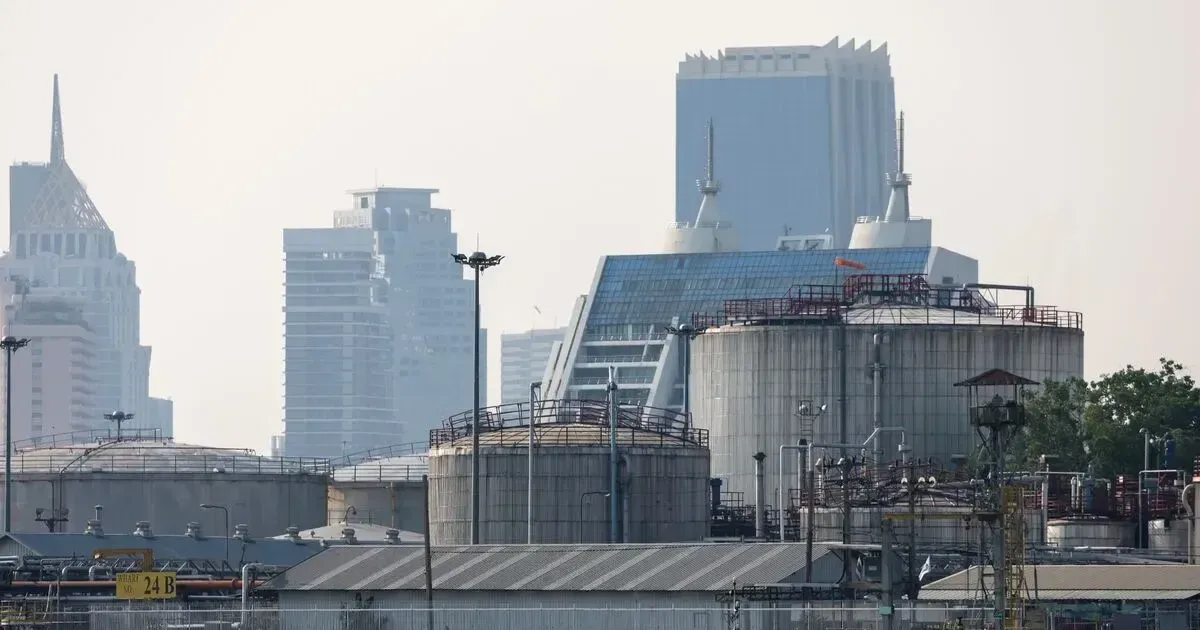
Thailand’s $2.5 billion spending shift shows how rising oil costs are forcing the government to choose between immediate subsidies and long-term investment. Thailand's Ministry of Finance initiated a total overhaul of national expenditure plans on April 22, 2026, to protect the federal budget from global energy price spikes. Government officials in Bangkok confirmed that the restructuring aims to keep the annual fiscal deficit within established targets. Recent volatility in crude markets, driven by intensifying conflicts in the Middle East, threatened to derail the primary economic objectives of the administration. Policymakers now face the difficult task of redirecting capital from long-term infrastructure projects to immediate fuel subsidies. Thailand relies heavily on energy imports, making its domestic economy uniquely sensitive to fluctuations in the Brent crude index.
Surging energy prices forced the government to act before the end of the current fiscal quarter. Finance ministers determined that the Ministry of Finance must absorb the rising costs of the state-run Oil Fund, which provides price caps on diesel and liquefied petroleum gas. These subsidies act as a buffer for the working class, yet they create a large hole in the public ledger. By reallocating funds from underutilized department budgets, the treasury hopes to avoid a sharp increase in sovereign borrowing. Initial estimates suggest the government will shift roughly $2.5 billion in planned spending to cover the energy gap.
Energy Subsidies Strain National Treasury
Diesel prices in Thailand are a foundation of the national logistics network. Because the country moves a vast majority of its goods by truck, any increase in fuel costs triggers immediate inflationary pressure across the food and retail sectors. The State Oil Fund, originally designed as a self-sustaining mechanism, has repeatedly required taxpayer infusions during periods of geopolitical instability. Current market conditions pushed the fund into a deficit that exceeds previous historical benchmarks. Bangkok must now decide which social programs to sacrifice to maintain these essential price controls.
Cabinet members met earlier this week to identify specific line items for elimination. They prioritized cutting administrative overhead and delaying non-essential hardware procurement for the military and police forces. Despite these cuts, economists warn that a prolonged oil shock could eventually exhaust the reallocated reserves. The current strategy relies on the assumption that energy prices will stabilize by the fourth quarter. If the Middle East conflict intensifies, the government might be forced to breach its self-imposed deficit ceiling.
Tax revenue from the tourism sector offers some relief, though not enough to offset the total cost of the subsidy program.
Thailand Adjusts Infrastructure and Social Spending
Large-scale construction projects across the Eastern Economic Corridor face immediate delays. These initiatives, intended to transform the nation into a regional tech hub, now take a backseat to the immediate necessity of keeping the lights on. Contractors have been notified that payments for certain development phases will be deferred into the next fiscal year. While this protects the current deficit target, it risks slowing the long-term growth of the Thai manufacturing sector. International investors often view such delays as a sign of fiscal fragility.
Thailand must prioritize the immediate welfare of its citizens over long-term capital investments during this period of extreme global energy volatility, according to an official statement from the Ministry of Finance.
Public health and education budgets remain mostly untouched for the time being. Analysts at the Bank of Thailand argued that cutting these essential services would cause irreparable damage to the social fabric. Instead, the focus remains on the capital expenditure budget, where large sums can be moved with less immediate impact on the daily lives of the population. This trade-off illustrates the unstable nature of managing a developing economy during a global resource crisis. The government plans to revisit these allocations every thirty days as market conditions evolve.
Logistics firms expressed concern that even with subsidies, the rising cost of international shipping will continue to drive up prices.
Fiscal Policy Response to Global Energy Volatility
Direct intervention in the energy market remains the preferred tool for the Thai administration. Unlike some neighboring nations that have moved toward market-based pricing, Thailand maintains a rigid system of price ceilings. This policy provides certainty for businesses but creates immense pressure on the national treasury when global prices deviate from the domestic cap. The current reshuffling represents the most aggressive fiscal response since the global energy crisis of 2022. Officials are also exploring new tax incentives for electric vehicle adoption to reduce long-term oil dependency.
Foreign currency reserves provide another layer of protection for the Thai baht. High oil prices lead to an increase in the trade deficit, as more currency flows out of the country to pay for fuel shipments. To prevent a rapid depreciation of the baht, the central bank may need to intervene in the foreign exchange market. Such a move would complement the fiscal adjustments made by the Ministry of Finance. Coordination between the treasury and the central bank is essential to maintain investor confidence in the Southeast Asian market.
Energy security has become the defining challenge for the current legislative session.
Tourism Sector Vulnerability to Rising Fuel Prices
Aviation fuel costs represent a substantial portion of the overhead for the national carrier and regional budget airlines. As these companies raise ticket prices to cover their expenses, the competitiveness of the Thai tourism industry may suffer. Thailand expects over 35 million visitors this year, a goal that depends on affordable travel options. If the oil shock persists, the cost of reaching the country from Europe or the Americas could become prohibitive for many travelers. The government is considering temporary tax breaks for the aviation sector to reduce these effects.
Hotels and resorts also face higher operating costs due to the increased price of electricity and transported supplies. Because many of these businesses are still recovering from previous global disruptions, they have limited capacity to absorb higher expenses. The wider effect of the oil shock extends far beyond the gas station pump. It fills every corner of the hospitality industry, from the cost of laundry services to the price of imported ingredients for high-end restaurants. Government planners are monitoring these data points closely to determine if further fiscal intervention is required.
Market participants expect the cabinet to finalize the remaining budget adjustments by early May.
Thailand Budget Tests Energy Shock
Thailand's decision to cannibalize its future growth for immediate price stability is a gamble that reeks of political desperation. By stripping the Eastern Economic Corridor of its funding to keep diesel prices artificially low, the government is essentially taxing tomorrow's prosperity to buy today's peace. This strategy assumes that the Middle East conflict is a temporary glitch rather than a permanent recalibration of global energy markets. If the price of crude stays elevated for more than twelve months, the Ministry of Finance will find itself with no more infrastructure projects left to cut and a public that has grown accustomed to subsidized fuel. Is the administration really protecting the deficit, or is it simply delaying a fiscal reckoning?
The reality is that Thailand cannot afford to be an island of low prices in a sea of global inflation. The state-run Oil Fund is a relic of an era where energy was cheap and geopolitics were predictable. Modernizing the Thai economy requires a move toward market-based pricing, regardless of the short-term political cost. Continuing to reshuffle the budget is like moving deck chairs on a sinking ship while the engine room floods with expensive crude. Bangkok's current path leads to a future of stagnant infrastructure and a hollowed-out treasury. The Ministry of Finance must stop treating the symptoms of energy volatility and start addressing the structural dependence that makes the country so vulnerable to foreign shocks. A nation that cannot pay its own way for fuel is a nation that has lost control of its economic destiny. The bill will eventually come due.