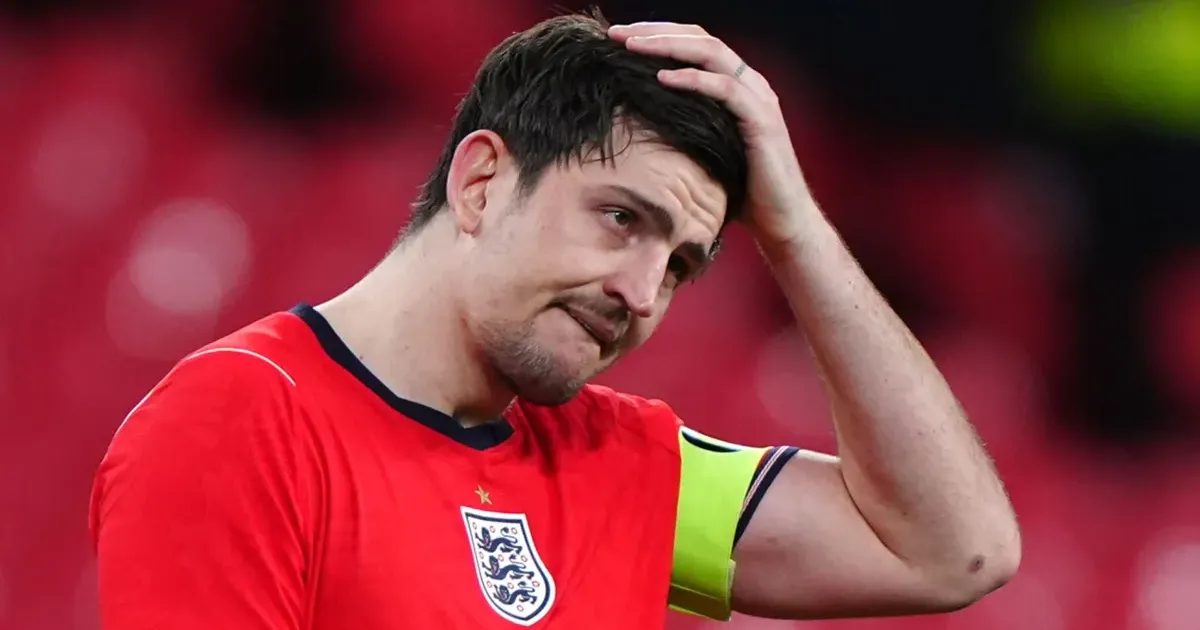
Thomas Tuchel's comments on Harry Maguire made clear that England's center-back race remains unsettled before the 2026 World Cup. The comment mattered because England depth charts can shift quickly before a major tournament. Maguire’s position also shows how reputation and recent form now pull in different directions. The issue sharpened around England's March 28, 2026, match window, when Tuchel described Maguire as useful from set pieces but still behind several defensive options in the pecking order. That phrasing was careful, but it carried a clear selection message: usefulness in one phase is not the same as overall priority. The point was not that Maguire had been formally discarded. It was that experience alone no longer guarantees a tournament place. Tuchel has been evaluating defenders for a system that asks for recovery speed, composure on the ball and the ability to defend space when the back line pushes high. That creates a different selection test from the one Maguire passed under previous England managers, when aerial dominance and tournament experience carried more weight.
For Maguire, that creates a familiar but difficult problem: he remains valuable in certain game states, yet the squad is moving toward a different athletic profile. Tuchel's comments therefore sounded less like a verdict than a warning. A veteran can stay in the picture, but he has to prove his strengths still match the manager's preferred way of controlling risk.
Selection Pressure Is Real
Maguire's England record still matters. He has played major tournament football, scored from set pieces and handled pressure that would overwhelm many defenders. Tuchel did not erase that history when discussing the depth chart.
But the manager's language suggested that the final squad will be built on current fit more than past loyalty. If other center-backs offer more speed, flexibility or club rhythm, Maguire may need injuries or a strong late run of minutes to climb back into the safest group. That is the uncomfortable reality of tournament selection: managers can respect a player's history while still choosing a squad shaped by the next opponent rather than the last campaign.
That is a hard place for any veteran to stand.
Tuchel's System Changes the Test
A high defensive line asks different questions than a deeper block, particularly for a center-back whose best work has often come when the play is in front of him. Center-backs must turn, recover and defend wide channels when full-backs advance. Maguire is strongest when he can attack aerial balls, organize the box and play with the game in front of him.
That does not make him obsolete. It does mean his usefulness depends on the match plan. Against opponents who rely on crosses and set pieces, he can still be a weapon. Against teams built around pace and transition, Tuchel may prefer quicker defenders.
Selection is therefore less about reputation than matchup risk, squad balance and the manager's tolerance for carrying a defender whose best use may be situational. Maguire can help England defend a lead, attack set pieces and deal with direct opponents. The question is whether Tuchel wants to use a valuable squad slot on that specialist profile when knockout football can also demand long recovery runs, quick restarts and aggressive buildup under pressure.
World Cup Squad Readout
The next England camps will decide whether Maguire is a specialist option or a core squad member. For a defender in his position, even small details can matter: the timing of a club run, the fitness of rivals, the opponent profile in warm-up matches and Tuchel's willingness to carry a set-piece weapon who may not start. Club minutes will matter because tournament football leaves little time for players to regain rhythm. Tuchel has little incentive to carry a defender who is not sharp enough for immediate use.
There is also a human side to the decision, because a long-serving international can remain respected by teammates and supporters while slipping into a less secure tactical category. Maguire has often been a public symbol in debates about England loyalty, mistakes and resilience. Tuchel's job is colder: identify the group most likely to survive knockout football. That includes leadership and dressing-room reliability, but it also includes repeat sprints, recovery angles, passing choices under pressure and the ability to hold a line against elite forwards. Maguire's experience keeps him relevant; the physical and tactical demands of the role keep the argument open. That balance is why Tuchel's comments landed with force: they did not close the door, but they made clear that Maguire has to walk through it again on current evidence.
For now, Maguire remains in the conversation, but no longer above it. That is the message Tuchel's depth-chart comments sent. The next few months will show whether he can turn experience into evidence again through club form, fitness and sharper distribution. Without that, his England case may depend less on what he has done for the national team and more on what Tuchel believes the 2026 version of England must become. The depth-chart message also gives Maguire a clear incentive: club form has to force the national-team conversation back open.