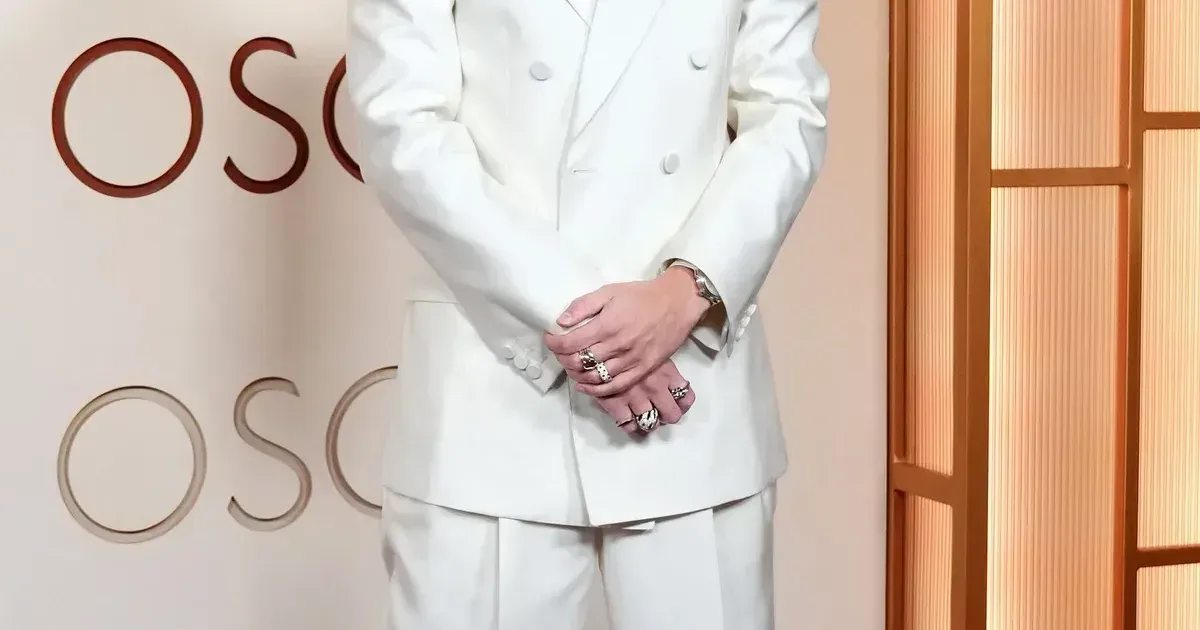
Timothée Chalamet arrived at the 98th Academy Awards in Los Angeles on March 15, 2026, wearing a brooch that would eventually become a lightning rod for criticism from his most dedicated supporters. The actor chose a vintage ensemble that strayed far from the experimental tailoring that defined his early career. He appeared distant during his red carpet interviews, often giving one-word answers to journalists from major fashion outlets. Critics observed that the playful energy of his previous appearances had been replaced by a calculated, almost cold, professional veneer.

The era of the untouchable heartthrob is over.

Style watchers immediately noted the prevalence of jewel-tone gowns among the other attendees, creating a lush visual backdrop that made the choice of Chalamet to wear dark, heavy fabrics seem out of step. Emerald greens and deep sapphire blues dominated the arrivals line, with many actors opting for structured silhouettes that focused on classic elegance. These gowns often featured intricate beadwork and heavy trains that required multiple assistants to manage. One specific velvet dress in a rich amethyst hue took over 400 hours to construct.

Meanwhile, the trend of bumblebee brooches emerged as the surprise motif of the evening. These small, diamond-encrusted insects appeared on lapels, collars, and even pinned into elaborate updos. The jewelry house behind the trend reported a surge in inquiries within minutes of the first broadcast images. Each piece featured yellow sapphires and black diamonds set in 18-karat gold. One particular brooch, worn by a best supporting actress nominee, was valued at $140,000.

Jewel Tone Gowns and Bumblebee Brooches

Yet the primary conversation on social media did not linger on the high-end jewelry for long. Fans began to dissect the demeanor of Timothée Chalamet, comparing his 2026 appearance to his more vibrant showings in years past. They pointed to the lack of interaction with the crowd and a perceived arrogance in his walk. This perceived shift in personality caused immediate friction within digital fan communities. Many users claimed they no longer felt the same connection to an actor who seemed to be distancing himself from his roots.

For instance, the sartorial risks of the night included more than traditional evening wear. A small group of younger actors arrived in high-fashion overalls, a move that split the fashion police into warring factions. These garments were crafted from silk and wool blends, often paired with sheer shirts or nothing at all. The overalls trend signaled a move toward utilitarianism in a space usually reserved for the decadent. One brand representative stated that the goal was to challenge the rigid gender norms of the red carpet.

Fans of the actor were not impressed by the subversion of expectations. They had spent months campaigning for his latest film, creating digital art and hosting streaming parties to boost his profile. When he appeared to ignore the very people who built his modern mythos, the reaction was swift. Digital threads were filled with screenshots of his lukewarm responses to fan-led questions during the pre-show. Several prominent supporters began to delete their archives of his filmography.

In fact, the most significant blow came from the online community known as Club Chalamet. This group has long been the epicenter of his digital defense force, often mobilizing thousands of users to support his projects. After the Oscars, the account posted a message indicating a cooling of their relationship with the actor. They cited a rocky Oscars campaign that felt disconnected from the fans. The administrators of the account noted that the actor’s team had become increasingly restrictive and ungrateful.

Club Chalamet Withdraws Celebrity Support

Style without substance is still a hollow currency.

Still, the logistical failures of the campaign went beyond simple fashion choices. Separately, the marketing team for his film had been accused of being overly aggressive with Academy voters while ignoring the general public. This strategy created a vacuum where only the most elite insiders felt included in the narrative. By the time the 2026 Oscars actually began, the public had grown tired of the constant, polished messaging. Many viewers tuned out during his category entirely.

The connection felt severed long before the first envelope was opened in the Dolby Theatre, representing a massive disconnect between his team and the people who actually buy the tickets.

According to social media metrics, the engagement rates for the actor fell by nearly 40% in the 24 hours following the ceremony. The decline is particularly steep given the usual post-Oscars bump that most nominees enjoy. Data analysts pointed out that the loss of favor with Club Chalamet was the primary driver of this trend. Without the core fan base to amplify his presence, the actor’s digital footprint shrank sharply. The group had previously been responsible for millions of weekly impressions.

Even so, the fashion industry continued to push the jewel-tone aesthetic throughout the week. Luxury retailers in London and New York reported a 200% increase in searches for emerald silk and sapphire velvet. The bumblebee brooches also sold out at several high-end boutiques within the first forty-eight hours. Manufacturers are now rushing to create more affordable versions for the spring season. The $450,000 original pieces remain the standard for the ultra-wealthy.

Red Carpet Fashion and Overalls Trend

In turn, the debate shifted toward the sustainability of the overalls trend. Critics argued that the look was too casual for a prestigious event, while others praised it for its practical pockets and comfortable fit. These debates provided a brief distraction from the escalating drama surrounding the Chalamet campaign. One designer claimed that the overalls represented a new era of democratic fashion. The materials used were sourced from recycled textile factories in Italy.

By contrast, the actor’s representatives have remained silent regarding the backlash from his fans. They have not issued a statement addressing the concerns of Club Chalamet or the general decline in his popularity. The silence has only fueled further speculation about the internal state of his management team. Some insiders suggest that a major rebranding effort is already in the works. The goal would be to return to the more accessible persona of his early career.

For one, the financial implications of losing a dedicated fan base are substantial. Brands that pay for celebrity endorsements look closely at engagement and sentiment analysis before renewing contracts. If the actor’s favorability continues to slide, he may lose several lucrative partnerships in the fragrance and watch industries. These deals are often worth millions of dollars per year. One luxury brand is reportedly already looking for a replacement for their summer campaign.

And the shift in fan loyalty is not isolated to a single actor. Several other nominees at the 98th Academy Awards faced similar scrutiny for their perceived elitism. The public is becoming increasingly weary of the carefully selected images that stars project on social media. They are looking for authenticity, even if that authenticity is as manufactured as the gowns they wear. The fashion choices of the night were merely a mirror of the deeper cultural tensions at play.

So the legacy of the 2026 awards season will likely be defined by this fracture between the star and the supporter. While the jewel tones and the brooches provided the visual spectacle, the real story was the crumbling of a digital empire. The actor may find that reclaiming his lost ground is more difficult than winning a golden statuette. His next public appearance will be under more intense scrutiny than any previous film premiere.

The Elite Tribune Perspective

Has the cult of personality finally hit its debt ceiling? For years, we have allowed celebrities like Timothée Chalamet to exist in a vacuum of unearned adoration, fueled by parasocial addicts who mistake a red carpet smize for a personal connection. What we saw at the 2026 Oscars was the inevitable collapse of a brand that forgot its own customer base. It is not merely that he wore the wrong brooch or looked bored during an interview; it is that he broke the unspoken contract of the modern influencer-actor.

You cannot harvest the labor of a group like Club Chalamet to build your status and then treat them like an annoying nuisance when you finally reach the summit. The rejection of the fan base is a symptom of a deeper malaise in Hollywood, where the elite believe they are immune to the laws of supply and demand. If an actor is no longer liked by the people who make him famous, his value to the industry is exactly zero.

We should stop mourning the loss of these manufactured idols and start celebrating the audience finally has enough self-respect to walk away from a bad deal. The era of the groveling fan is dying, and honestly, it is about time.