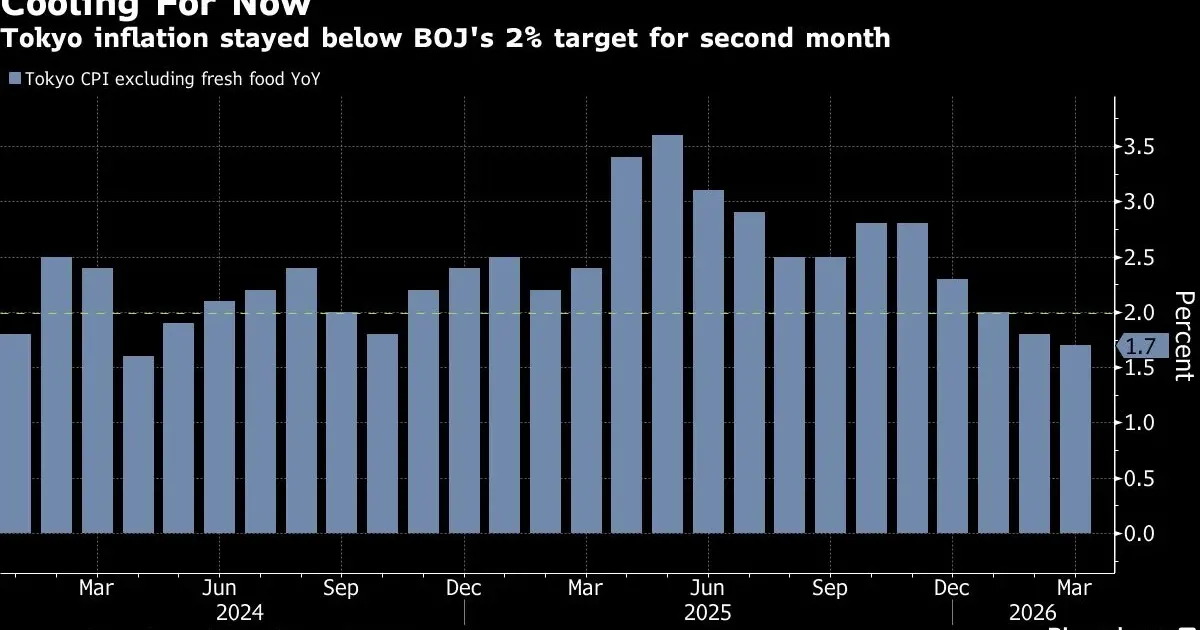
Japan's softer inflation data gave the Bank of Japan a quieter headline, not an easy policy answer. Tokyo's prices and the following national readings showed inflation cooling below the BOJ's 2 percent target on key measures, helped by government energy subsidies and easing food pressure. That looked like relief after years of imported-cost strain. It did not remove the risk that energy and the yen could push prices higher again.
The BOJ's problem is that Japan's inflation story has two layers. One is domestic: wages, services prices, household demand and whether firms can raise prices without crushing consumption. The other is external: oil, liquefied natural gas, food inputs, shipping and currency movements. A soft CPI print can calm the first layer while leaving the second one exposed.
Subsidies Lower Bills But Blur The Signal
Energy subsidies helped pull measured inflation lower by reducing utility bills. The relief matters for households because electricity and gas are not abstract categories. They shape monthly budgets and consumer confidence. If bills ease, families feel some relief even when grocery prices remain high in level.
For policymakers, the signal is messier. Subsidies can suppress the reported inflation rate without eliminating the underlying exposure. If oil or LNG prices rise, or if subsidies expire, the pressure can return quickly. The BOJ has to decide whether lower inflation reflects real easing or policy cushions that may fade.
Food Inflation Still Shapes Public Mood
Food prices had been one of the clearest signs of Japan's inflation shift. Slower food gains help, but households do not experience inflation as a clean year-over-year statistic. They remember the level of prices after repeated increases. A lower inflation rate means the squeeze is growing more slowly, not that old prices have returned.
Wage growth therefore remains central. If pay rises enough to cover higher living costs, Japan can move toward a healthier inflation cycle driven by domestic income and spending. If wages lag, consumers cut back and the BOJ faces a weaker economy with prices still vulnerable to imported shocks.
The Yen Keeps Import Risk Alive
The yen is the bridge between global shocks and Japanese households. A weaker yen raises the local cost of imported energy, food and raw materials. That can revive inflation even when domestic demand is not strong. It also creates political pressure because currency weakness makes everyday imports more expensive.
Governor Kazuo Ueda cannot target the yen directly in the way the Finance Ministry can intervene in currency markets. But BOJ rate decisions shape yield differentials and investor expectations. If the central bank stays too cautious while other risks rise, yen weakness can undo some of the relief from softer CPI data.
Middle East Oil Risk Changed The Forecast
The Middle East conflict makes Japan's inflation outlook more fragile because the country depends heavily on imported energy. BOJ projections in the spring acknowledged that higher crude prices could push down corporate profits and household real income while lifting inflation pressure. That is a difficult combination: weaker growth and higher input costs.
The mix explains why a single soft inflation reading did not settle the debate. The BOJ later held its benchmark rate while raising inflation expectations, a sign that officials saw both cooling data and renewed cost risk. The central bank was not free to ignore either side.
Normalisation Is Still A Narrow Path
Japan is still moving away from an era of ultra-low rates and emergency monetary settings. That makes each CPI release more important than it would have been a decade ago. If underlying inflation is fading, hiking too quickly could weaken consumption and investment. If energy and the yen reignite prices, waiting too long could leave the BOJ behind the curve.
The right policy path depends on whether inflation is becoming self-sustaining through wages and services or remains vulnerable to imported costs. Those are very different forms of inflation. One can justify normalization. The other can punish households without proving domestic strength.
Cooling Is Not Comfort
The March and spring data gave the BOJ room to avoid overreacting. They did not give it permission to relax. Japan's inflation rate can fall below target while the next shock is already visible in oil markets, shipping routes or the exchange rate.
Planning therefore remains difficult for households and firms. Consumers want stable bills and wage gains. Companies want to know whether energy and currency costs will force another round of price increases. The BOJ has to read all of that through data distorted by subsidies and geopolitical risk. Softer inflation is useful. It is not the same as a stable inflation regime.