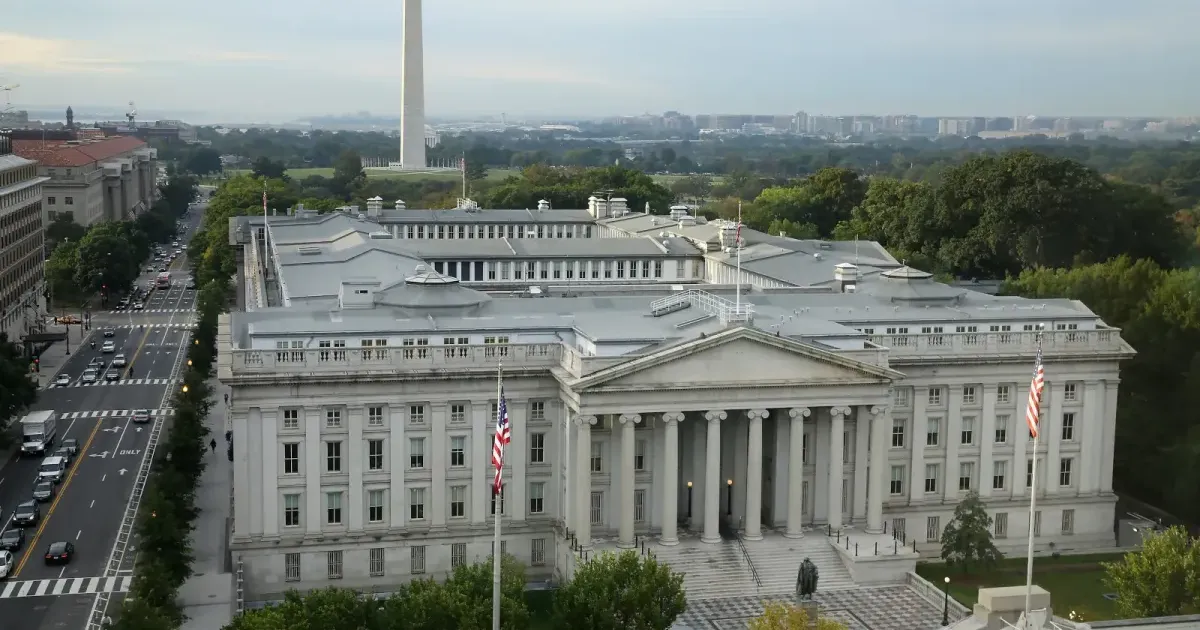
Treasury Department officials initiated a structural overhaul to absorb the federal student loan portfolio from the Education Department in a move targeting administrative efficiency. The operational migration begins with the transfer of defaulted accounts before expanding to the broader collection of outstanding federal debt. Federal authorities indicate that the multi-phase transition aims to leverage existing tax and debt-collection infrastructure to stabilize a system plagued by servicer errors and bureaucratic delays. Treasury's student-loan role shifted the management debate. Andrew Gillen, a prominent higher education researcher, argues that shifting responsibility to the Treasury Department makes sense for both students and taxpayers. Bureaucratic overlap between the two departments often created friction in income-driven repayment plans, which required borrowers to prove their income through Internal Revenue Service documentation. Direct oversight by the agency already possessing that data removes the need for complex inter-agency verification processes. Separately, the move indicates a broader political strategy to diminish the administrative footprint of the Education Department. Supporters of the transfer contend that the core competency of the education agency should be pedagogy and policy, not the management of a massive banking operation. By stripping away the lending function, the government effectively narrows the scope of the education agency, potentially simplifying its eventual dissolution or restructuring. Initial efforts will focus on the most problematic segment of the $1.7 trillion portfolio. Debtors currently in default will see their accounts moved to the Bureau of the Fiscal Service, an arm of the Treasury specializing in delinquent debt recovery. This entity already handles most other types of federal debt, from unpaid taxes to small business loan defaults. Management under a single roof allows the government to apply a uniform set of collection protocols rather than relying on a patchwork of private contractors.
And the shift comes at a time when the previous servicing model faced near-total collapse. Private companies like Nelnet and Mohela have struggled to manage the volume of borrower inquiries since the resumption of payments in late 2023. Customer service wait times reached record highs, and processing delays for debt forgiveness applications resulted in numerous lawsuits against the federal government. Treasury officials believe their centralized systems can handle these volumes with fewer errors. Meanwhile, the financial scale of the transition remains staggering. Managing such a vast sum requires the integration of disparate data systems that have operated independently for decades. Treasury analysts are currently auditing the education agency records to ensure that borrower balances and interest accruals match existing documentation before the final data migration begins. The transfer of the first 100,000 defaulted accounts is scheduled for next month.
Operational Capacity of the Internal Revenue Service
In turn, the Internal Revenue Service will play a central role in the new repayment architecture. Most modern student loan programs rely on income-driven formulas that adjust monthly payments based on a borrower's annual earnings. Under the legacy system, borrowers had to manually provide tax returns or grant permission for the education agency to pull specific data from the tax bureau. This manual step led to thousands of borrowers being dropped from favorable plans due to missed paperwork deadlines.
Yet the Treasury Department can automate this entire process by linking loan accounts directly to tax filings. If a borrower loses their job or sees a salary decrease, the system can theoretically adjust the payment amount in real time without requiring a new application. The level of integration was impossible while the two functions remained in separate cabinet-level departments. The automated approach reduces the risk of technical defaults caused by administrative hurdles.
Still, critics of the plan worry about the potential for aggressive collection tactics. The Treasury possesses powers that the Education Department lacks, including more direct avenues for wage garnishment and the seizure of tax refunds. While these tools ensure higher recovery rates for taxpayers, they may also lead to harsher outcomes for vulnerable borrowers who find themselves in financial distress. Treasury officials have not yet released a new borrower bill of rights to address these concerns.
Education Department Portfolio Transfer Efficiency
Education Department leadership has historically struggled to oversee the private companies it hired to manage the loan system. These third-party servicers were often encouraged by volume rather than accuracy, leading to widespread reports of borrowers being steered into expensive forbearance options instead of subsidized repayment plans. Treasury officials intend to bring more of these administrative tasks back into the federal fold to eliminate the profit motive from debt management.
The U.S. Department of the Treasury plans to take operational responsibility for defaulted loans before eventually managing the entire $1.7 trillion portfolio.
For instance, the consolidation of these functions could save the federal government billions in administrative overhead. The current system pays out hundreds of millions of dollars annually to private loan servicers to perform tasks that the Treasury could theoretically handle using existing software. Reducing the number of vendors simplifies the oversight process and makes it easier for the Government Accountability Office to track performance metrics. Cost savings would likely be redirected toward the general fund or used to offset the costs of lending.
But the logistical challenge of moving the entire $1.7 trillion balance sheet cannot be overstated. It is one of the largest financial migrations in the history of the federal government. Technicians must ensure that the transition does not trigger accidental interest capitalization or credit reporting errors for millions of Americans. One small coding error in the migration script could result in widespread financial damage to individual credit scores. The project is estimated to take at least three years to complete in its entirety.
Financial Oversight of the Federal Debt
By contrast, the Treasury is far better equipped to manage the impact of student debt on the overall national deficit. Because the Treasury handles all federal borrowing and debt issuance, it has a clearer view of how the student loan portfolio affects the federal balance sheet. Integrating the assets allows for more sophisticated treasury management and better forecasting of federal cash flows. The portfolio is currently one of the largest assets held by the United States government.
Even so, the ideological implications of the move remain a point of contention in Congress. Lawmakers who favor a more centralized federal government see this as a logical consolidation of power. Those who prefer a decentralized approach view the transfer as a dangerous expansion of the Treasury Department's reach into the lives of private citizens. The move effectively strips the education agency of its most significant financial leverage over American families.
To that end, the legal framework for the transfer relies on a series of executive orders and updated memoranda of understanding between the two departments. Constitutional scholars are already debating whether such a massive shift in departmental authority requires explicit congressional approval. Several states have already threatened to sue to block the transfer, citing concerns over the protection of borrower data. The transition remains the centerpiece of the current administration's fiscal reform agenda.
Why Borrowers Cannot Be Lost in the Transfer
The takeover may make administrative sense, but borrowers will judge it by errors, wait times, payment accuracy and how quickly disputes are fixed. If Treasury gains efficiency while creating harsher collection outcomes, the reform will look like a balance-sheet exercise imposed on households. If it pairs cleaner data with clear rights and fast corrections, the move could repair a system that has frustrated borrowers for years. The danger is that a technical migration becomes a human problem at national scale.