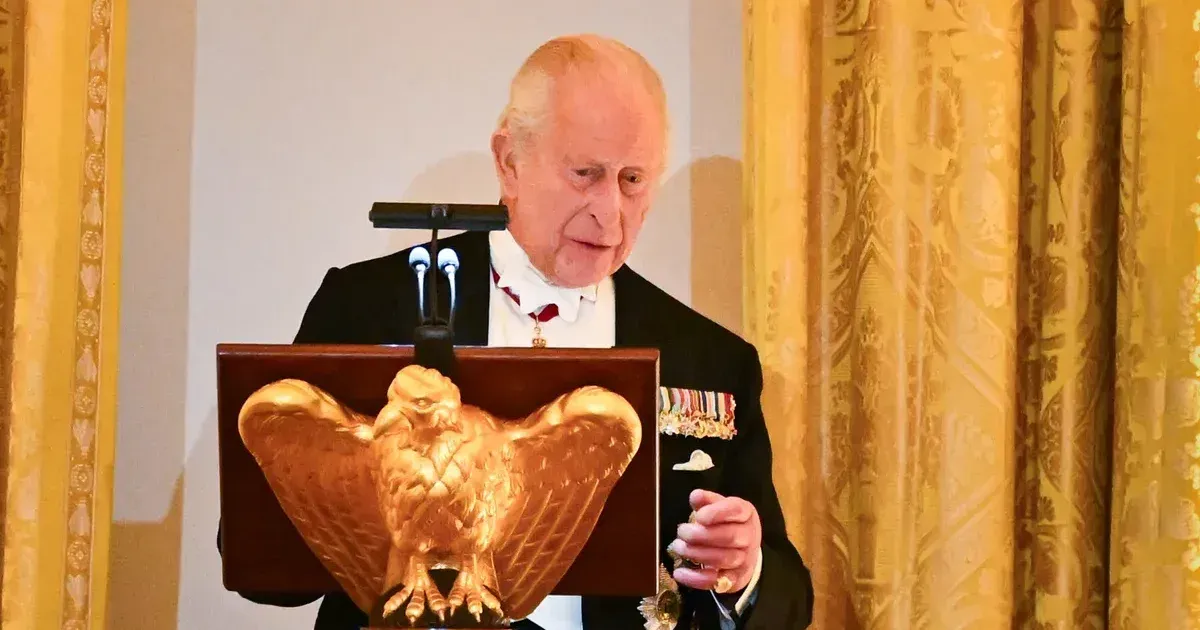
Trump used the royal visit to frame Iran as both a diplomatic and nuclear test. The remark also pulled King Charles into a debate normally kept away from palace protocol. Donald Trump told guests at a White House state dinner that King Charles III agreed with him that Iran must never obtain a nuclear weapon. On April 28, 2026, the event unfolded during a formal reception for the visiting British monarch and Queen Camilla. Trump made the remarks during his toast after a day that included an Oval Office meeting with the King. He framed the Middle East crisis as a central subject for the United States and said Charles shared his view on preventing Tehran from gaining nuclear arms. Such a public attribution of policy views to the British Crown is highly irregular because the monarch is expected to remain politically neutral.
White House guests watched as the president described his private bilateral talks with the King. Trump said Charles agreed with him "even more than I do" on the need to block an Iranian nuclear weapon. Royal observers immediately questioned the remark because British monarchs normally avoid public alignment with a specific government's foreign policy line. While the King often meets world leaders and discusses security issues, his role requires caution when those talks touch partisan or military disputes.
Trump Claims Royal Support on Iran Policy
President Trump spoke with his characteristic lack of hesitation when describing the King's supposed endorsement. He claimed the two men had discussed global security risks before the evening festivities began. Iran has remained central to Trump's criticism of previous diplomatic agreements with Tehran and to his current handling of the Middle East crisis. London has historically maintained a more cautious, multilateral approach to Iranian diplomacy, making the president's claim of a unified front particularly striking.
Protocol within the British monarchy demands restraint on partisan geopolitical matters.
Aides to the King usually work to ensure that no single political leader can claim the monarch as an ally for a specific legislative or diplomatic agenda. By saying Charles "agrees with me," Trump pulled the monarch toward a heated American foreign policy debate. Buckingham Palace had not issued a formal clarification by the time the remarks began circulating, leaving the tension between royal neutrality and presidential rhetoric unresolved. Foreign policy analysts may read the King's comments as a broad statement about global stability rather than an endorsement of a specific American policy. Trump, however, presented the exchange as backing for his own strategy.
HMS Trump Bell Marks State Dinner
King Charles III added a lighter note to the evening by presenting Donald Trump with the original bell from HMS Trump, a Royal Navy submarine launched in 1944. Reports said the King delivered the gift with a flash of British wit. Charles described the bell as a personal gift from the president's "valiant namesake" and linked it to the two countries' shared wartime history. Charles then joked that if Trump ever needed to reach the royal family, he should give the bell a ring.
"If you should ever need to get hold of us, well, just give us a ring," King Charles III said.
Diplomatic gifts often communicate subtle messages that formal remarks cannot express. Marked "TRUMP 1944," the large gold bell symbolized the historic military ties between the United States and the United Kingdom. Senior officials, diplomats and prominent guests from both countries attended the dinner, keeping the ceremonial side of the visit in full view. Despite the lighthearted gift-giving, the earlier assertions regarding Iran continued to circulate among the diplomatic corps. By the end of the evening, two stories sat side by side: a carefully staged celebration of the special relationship and an unusually blunt presidential effort to attach royal prestige to a disputed foreign policy position.
Trump’s Iran Claim Forces the Crown Into an Unwanted Political Choice
How does a constitutional monarch handle an American president who publicly describes private bilateral talks? The challenge for King Charles III is maintaining the Crown's impartiality while navigating the boisterous political style of the current White House. Presidential rhetoric often prioritizes immediate domestic impact over the delicate details of international protocol. By claiming the King's support on Iran, Trump attempted to use the prestige of the British monarchy to validate his own foreign policy. That puts the King in a difficult position where any correction might look like a public spat, while silence could be interpreted as tacit agreement.
Future interactions between the two leaders will likely be characterized by even stricter adherence to prepared scripts. Diplomats in London and Washington now face the task of smoothing over any perceived policy shifts that Trump's claim might imply. Success in the special relationship often depends on the ability to manage these moments of friction without damaging the underlying alliance. International observers will be watching to see if Buckingham Palace subtly distances the monarch from Trump's remarks in the coming days. Bilateral cooperation on security remains a priority for both nations, but the rules of engagement for their leaders have clearly shifted. The Crown stays above the fray, even when the president pulls it toward the center.