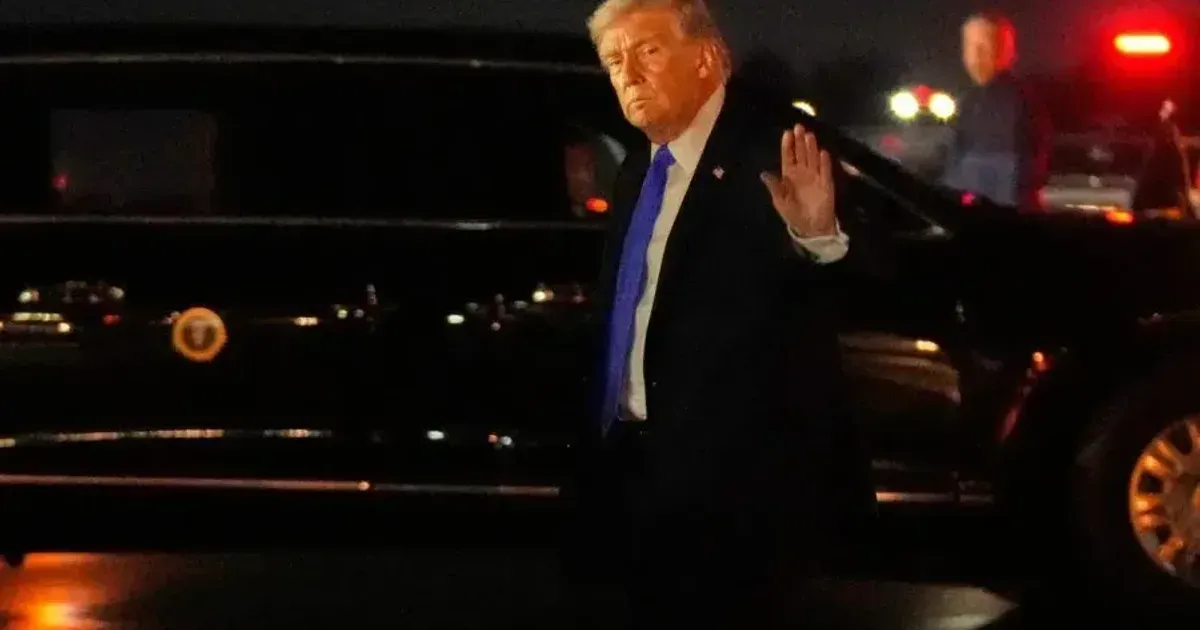
President Donald Trump declared the total defeat of the Iranian state late Friday, asserting that the Islamic Republic is now desperate for a diplomatic exit. Military actions conducted by the United States and Israel have fundamentally altered the regional power structure over the last two weeks. Trump is now claiming Iran wants a new nuclear deal after two weeks of U.S.-Israeli military pressure and the removal of its top leadership. These operations culminated in the assassination of former supreme leader Ayatollah Ali Khamenei, an event that sent the clerical government into a state of visible disarray. White House officials now believe the path to a comprehensive weapons agreement is clearer than at any point in the last five decades. Reports from the capital suggest the administration is already looking beyond the current conflict. Trump used his preferred communication channels to bypass traditional media outlets, characterizing the current state of Iran as one of absolute capitulation. He insisted that the leadership in Tehran is actively seeking a deal to prevent further destruction of its remaining infrastructure. The administration has yet to release a timeline for negotiations, though the president maintains that the terms will be dictated entirely by Washington. Defense officials at the Pentagon have confirmed that the combined air campaign crippled the majority of the IRGC command centers. But the internal collapse of the Iranian government has created a political vacuum that the White House is already attempting to fill. Contact between the administration and the exiled heir to the Iranian throne has intensified since the removal of Khamenei. Reza Pahlavi, the son of the last shah, confirmed on Friday that he has been in direct communication with the Trump team. Pahlavi remains a polarizing figure among the Iranian diaspora, yet his historical ties to the pre-revolutionary government offer a potential blueprint for a post-clerical state. His involvement suggests a strategy that goes beyond simple disarmament toward a complete restructuring of the Iranian political identity.
Trump Declares Iran Defeated
Washington launched its coordinated strike with Israeli forces exactly fourteen days ago, focusing on the core leadership nodes within Tehran. The sudden removal of the Supreme Leader left the Guardian Council without a clear succession plan, leading to reported infighting among the remaining clerics. Pentagon sources indicate that the precision strikes used a combination of stealth technology and cyber warfare to blind Iranian air defenses. This technological superiority ensured that the primary objectives were met with minimal losses to coalition hardware. Intelligence reports indicate that several high-ranking generals fled to the eastern provinces in the hours following the initial barrage. Meanwhile, the language from the Oval Office has focused on the finality of the military victory. Trump dismissed reports from international observers who claimed that pockets of resistance remain active in the rural highlands. He claimed that the fake news media refuses to acknowledge the scale of the victory achieved by American military personnel. The administration is now framing the conflict as a necessary precursor to global stability. The White House has issued a series of demands that include the immediate cessation of all enrichment activities. Any delay in meeting these requirements will result in a continuation of the aerial campaign.
The Fake News Media hates to report how well the United States Military has done against Iran, which is totally defeated and wants a deal.
the logistical reality on the ground remains complex. Ground forces have not yet been deployed in large numbers, but the threat of a full-scale occupation remains on the table. Trump has signaled that he is willing to commit resources to the region for an indefinite period. He stated that the goal is not just a temporary ceasefire, but the total removal of the Iranian nuclear threat. This approach is a departure from the more restrained strategies favored by previous administrations. The current posture assumes that only overwhelming force can secure lasting diplomatic concessions from the remaining Iranian leadership.
Regime Change Talk Returns
Pahlavi has operated from exile since the 1979 revolution that saw his father ousted by the supporters of Ayatollah Khomeini. His sudden emergence as a diplomatic partner for the White House indicates a preference for a secular, pro-Western restoration in Tehran. During his Friday statements, Pahlavi emphasized the need for a transitional government that could manage the country's vast energy resources.
Oil Politics Complicate the Claim
American consumers are feeling the immediate impact of the war at the fuel pump.
The domestic political pressure is mounting as the war enters its third week. Congressional leaders from both parties have expressed concern about the potential for a prolonged trap. While the military victory appears decisive, the task of state-building is notoriously difficult and expensive. Trump's insistence that Iran is totally defeated is seen by some as an attempt to manage expectations before the economic fallout worsens. Public opinion polls show a growing divide between those who support the decimation of the Iranian regime and those who fear the cost of another Middle Eastern war. The administration must balance these competing pressures while maintaining its military momentum.
Tehran remains a city in the grip of uncertainty. Communication lines are frequently cut, and the state media apparatus has largely ceased to function in its traditional capacity. Reports from the ground suggest that civil unrest is spreading to major urban centers as the local economy collapses under the pressure of sanctions and strikes. The lack of a central authority has led to the emergence of local committees that are attempting to manage basic services. If a deal is not reached quickly, the country could descend into a multi-sided civil war. The scenario would complicate the administration's efforts to secure the nuclear sites.
Regional powers like Saudi Arabia and the United Arab Emirates are watching the developments with a mixture of relief and anxiety. A weakened Iran removes their primary rival, but the instability could spill across borders. The Trump administration has been in constant contact with regional leaders to coordinate a post-war security structure. These discussions have included the possibility of a new defensive alliance that would include Israel and several Arab nations. Such a coalition would be designed to contain any remnants of the IRGC and prevent the rise of new militant groups. The White House believes that this regional cooperation is essential for a permanent settlement.
Washington remains committed to the destruction of the ballistic infrastructure. Oil markets reacted with immediate instability to the president's Friday night remarks.
The Trump administration's strategy relies on the assumption that the clerical regime cannot survive the loss of its ideological and military leadership. The death of Khamenei was intended to be the killing blow that forced an immediate surrender. Even the remnants of the bureaucracy are proving more resilient than some planners anticipated. The president's declaration of total victory may be premature if a credible successor emerges to lead the resistance. For now, the focus remains on the leverage gained through two weeks of intense military pressure. The coming days will determine if that leverage can be converted into a lasting treaty.
Victory Claims Need Evidence
Historical precedent suggests that decapitation strikes rarely deliver the clean, surgical conclusions that politicians promise. By declaring a total defeat just two weeks into the campaign, the administration is indulging in a dangerous brand of triumphalism that ignores the lessons of the last twenty-five years. Decimating the clerical leadership does not erase the deep-seated religious and nationalist fervor that has sustained the Islamic Republic since 1979. We are looking at a scenario where the vacuum of power will almost certainly be filled by the most radical elements of the IRGC rather than a convenient, Western-friendly monarch.
The pivot to Reza Pahlavi is a nostalgic fantasy that underestimates the Iranian public's distaste for inherited power. The administration's dismissal of the economic pain felt by Americans at the gas pump shows a callous disregard for domestic stability in favor of a neoconservative regime-change agenda. If the goal was truly the elimination of nuclear threats, the path of maximalist military force is the least efficient way to achieve it. The strategy invites a long-term insurgency that will drain American coffers and lives long after the headlines of victory have faded from the news cycle.
The White House is not winning a war; it is inviting a decade of chaos.