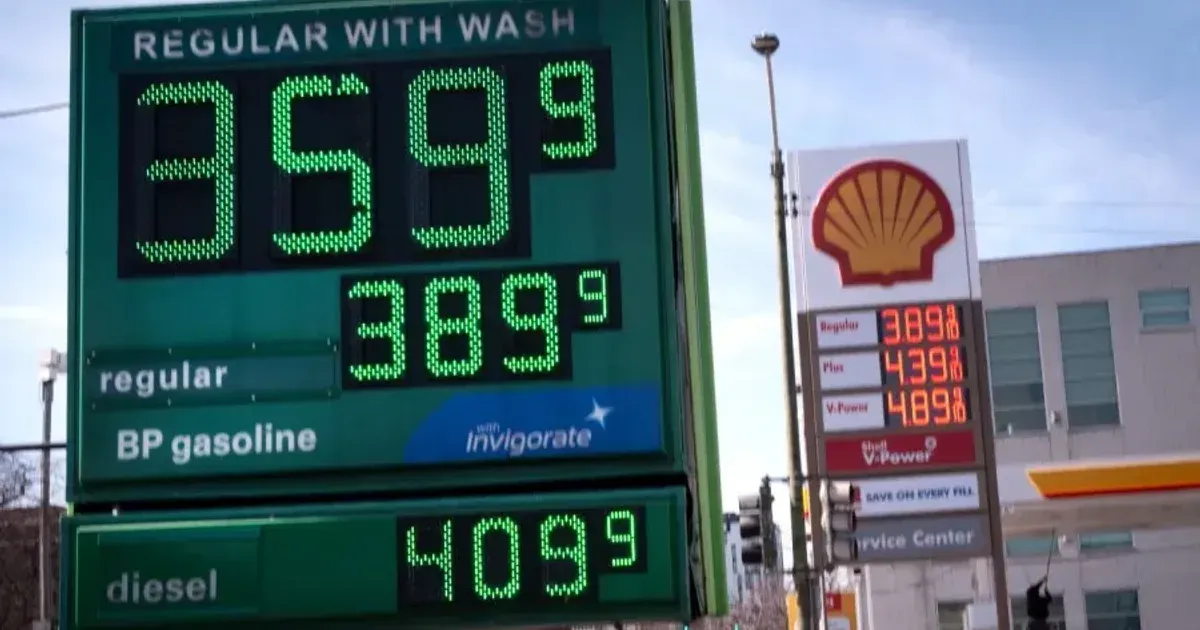
Donald Trump signaled a willingness to bypass century-old shipping regulations Friday. He confirmed that Jones Act waivers are under review to reduce surging gas prices. The Jones Act waiver debate intensified after Trump said he was reviewing options as costs spiked following a military offensive in Iran that tightened global oil supplies and restricted tanker movements in the Persian Gulf. During an interview on a podcast hosted by Brian Kilmeade, the president identified the maritime law as a specific hurdle to domestic energy distribution. Maritime regulations now prevent foreign-flagged vessels from transporting cargo between two American ports. This includes the movement of crude oil from the Gulf of Mexico to refineries in the Northeast. Historically, the 1920 law intended to strengthen the domestic merchant marine for national security purposes. But critics argue the law is now a bottleneck that inflates the cost of domestic fuel. Shipping costs for US-flagged vessels can be three times higher than those of international competitors. These vessels must be built in American shipyards, owned by American citizens, and crewed by American mariners. Fewer than 100 tankers in the global fleet meet these stringent criteria. The result is a logistical bottleneck that favors foreign imports over domestic production.
Jones Act Becomes a Gas Price Tool
Senator Wesley Jones drafted the legislation more than a century ago to ensure the United States maintained a strong fleet after World War I. The law mandates that any vessel transporting goods between domestic ports must be US-built and US-flagged. Supporters, including shipbuilding lobbies and labor unions, contend this protects high-paying jobs and maintains a secondary navy. They argue that eroding these protections would leave the country dependent on foreign vessels during times of war. Opponents point to the immediate economic burden on consumers. Oil producers in Texas often find it cheaper to ship crude to Europe than to refineries in New Jersey or Pennsylvania. Foreign tankers operating under flags of convenience maintain sharply lower overhead. An American-built tanker can cost four times as much as one built in a South Korean or Japanese shipyard. High capital expenditures for vessel owners translate directly into higher freight rates for oil companies. Refiners in New England frequently purchase liquified natural gas from Russia or the Middle East because no US-built LNG tankers exist in the current fleet. This paradox forces American energy consumers to rely on international markets while domestic resources remain trapped in regional hubs. The shipping industry remains one of the most protected sectors in the American economy.
Waivers Could Shift Fuel Logistics
Gulf Coast refineries operate at near-maximum capacity, but delivering their finished product to the Atlantic coast requires either pipelines or Jones Act-compliant tankers. Pipelines like the Colonial system carry the bulk of this load. When these pipelines reach capacity or face outages, tankers must fill the gap. But the limited number of eligible American vessels means that supply often cannot meet sudden shifts in demand. This scarcity drives up the price at the pump for commuters in high-density corridors. Energy analysts suggest that a temporary waiver could allow a flood of international tankers to move fuel from the Gulf to New York and Boston. It would bypass the need for expensive rail transport or long-haul truck routes. Shipping a barrel of oil on a foreign vessel from the Gulf to the East Coast costs roughly $2.00. Using a Jones Act vessel can push that cost toward $6.00 per barrel. These margins are passed directly to the consumer at gas stations. "It's a very difficult thing because of the shipping, because of the Jones Act, which I'm looking at very strongly," Trump said during the interview.
Waivers are not without precedent. Previous administrations issued short-term exemptions during natural disasters like Hurricane Katrina or the aftermath of Superstorm Sandy. In those instances, the government determined that the domestic fleet could not meet the emergency needs of the affected populations. The current administration is evaluating whether the Iranian conflict constitutes a similar national emergency.
Unions and Shipbuilders Push Back
Military operations in Iran have effectively closed portions of the Strait of Hormuz. The maritime chokepoint handles nearly 20 percent of the global oil supply. Shipbuilding advocates argue that the United States Maritime Administration must prioritize long-term readiness over short-term price relief. They claim that waiving the act once makes it easier to do so again, eventually killing the domestic industry. They point to the decline of the British merchant marine as a cautionary example of what happens when protectionist measures are removed. The American Maritime Partnership, a major lobbying group, spent millions last year to keep these regulations intact.
Labor organizations also hold significant sway in this debate. The Seafarers International Union and other maritime guilds represent thousands of workers who depend on the Jones Act for their livelihoods. These workers are a vocal constituency in several swing states with active ports. Any move to deregulate the industry faces stiff opposition from both sides of the political aisle in Congress.
Political resistance to maritime deregulation remains a bipartisan fixture in Washington. While some free-market Republicans favor a full repeal, many others view the merchant marine as a critical component of national defense. Democratic lawmakers often align with maritime unions to protect domestic labor standards and safety regulations. These alliances make a permanent change to the law unlikely despite the president's language. A temporary waiver issued through executive authority is the more probable path forward. The Department of Homeland Security holds the power to issue these waivers if they are deemed necessary for national defense. In particular, the Secretary of Homeland Security can bypass the usual requirements if the Department of Defense confirms a lack of available US vessels. Donald Trump has used executive orders to bypass legislative gridlock on previous occasions. The White House is now coordinating with energy and defense officials to build a legal case for the waiver.
Supply chain experts believe that even a 90-day waiver could provide the relief needed to stabilize the market. The window would allow enough time for international tankers to reposition and begin shuttle runs between American ports. Even the immediate benefit to consumers might be blunted by the time it takes for these logistics to reset. Retailers often lag in lowering prices even after their wholesale costs drop.
Shipping Rules Have Pump-Price Consequences
Protecting a ghost fleet while Americans bleed at the pump is a peculiar form of patriotism. The Jones Act is a protectionist dinosaur that holds the American consumer hostage to a handful of shipbuilders and union bosses who have failed to modernize for half a century. We are told that this law is essential for national security, yet we are now witnessing a military offensive where the lack of affordable domestic shipping is our primary strategic weakness.
If the law were truly effective, we would have a flourishing fleet of thousands of vessels instead of a dwindling collection of aging tankers that can barely service our own coasts. The administration should not only look at a temporary waiver; it should drive a stake through the heart of this 1920 relic. Genuine national security comes from economic agility and energy independence, not from propping up a non-competitive industry through state-mandated monopolies.
The lobbyists in Washington will scream about the loss of jobs, but they never mention the millions of families who pay an invisible tax every time they fill their tanks. It is time to stop prioritizing the profits of a few shipyards over the economic health of the entire nation. If American shipbuilders cannot compete with the rest of the world, they do not deserve a government-guaranteed market at the expense of every driver in the country.