President Donald Trump confirmed that US special operations forces recovered a downed American pilot from central Iran. Initial reports indicate the airman is in stable condition at an undisclosed military facility outside the country. The April 5, 2026 announcement turned a successful extraction into a broader test of US deterrence. Confusion surrounding the exact location of the incident persisted throughout the weekend. While the F-15E Strike Eagle was shot down over southwestern Iran on Friday, the rescue mission occurred considerably further east in the central part of the nation. Intelligence suggests the pilot evaded capture by traversing rugged terrain toward more sparsely populated areas. Movement through these desert corridors allowed the extraction team to operate with a reduced risk of detection by Iranian ground forces.
F-15E Strike Eagle Downed in Southwest Iran
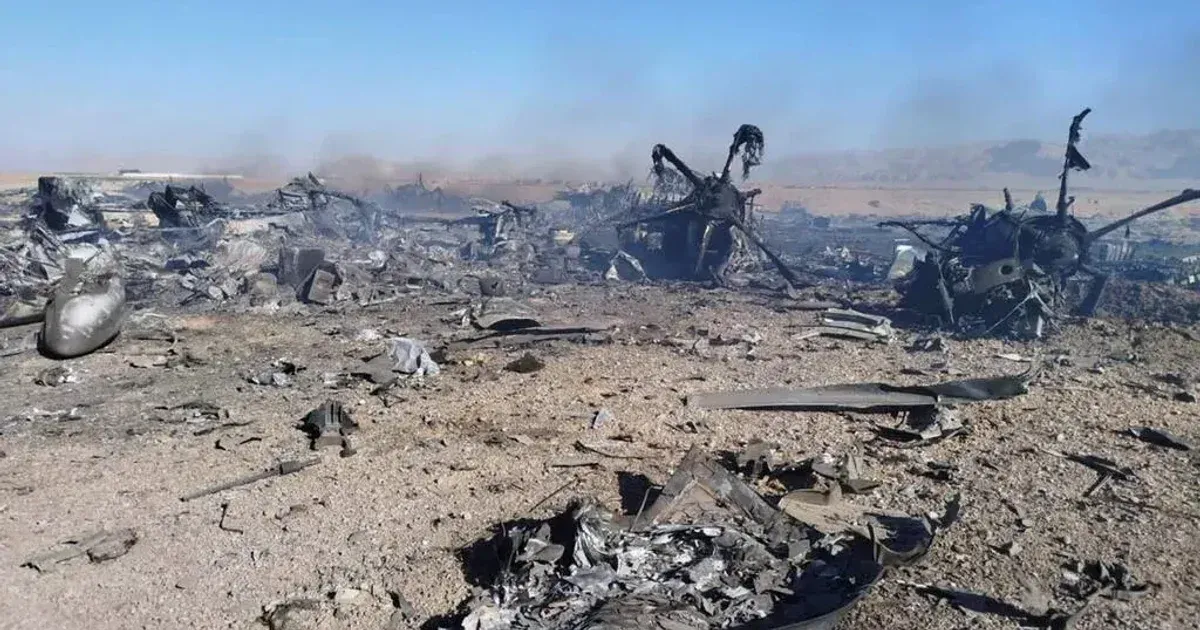
Islamic Revolutionary Guard Corps units claimed responsibility for the intercept near the Khuzestan border. Surface-to-air missile batteries active in the region launched multiple projectiles at the American jet during a routine patrol. Evidence suggests at least one missile impacted the rear fuselage of the aircraft. Total destruction of the $100 million airframe occurred upon impact with the ground. Tehran maintains that their air defense systems functioned exactly as intended. Iranian state media broadcast footage of what appeared to be burning wreckage scattered across a salt flat. Military analysts at the Pentagon spent Saturday morning verifying the tail numbers visible in these videos. Confirmation of the loss marks the first time a US combat aircraft has been destroyed inside Iranian borders during this current cycle of hostilities.
Pentagon officials have not yet confirmed the status of a potential second crew member. The F-15E typically carries both a pilot and a Weapon Systems Officer. Public statements from the White House focused exclusively on the recovered airman. Search operations for additional personnel might still be underway in the mountainous regions bordering the initial crash site.
Conflicting Accounts From Washington and Tehran
Disparate narratives emerged immediately from the opposing capitals. Tehran insisted that their security forces foiled the American rescue attempt before it could reach the objective. Official statements from the Iranian Ministry of Defense claimed that US helicopters were forced to retreat under heavy fire. State television news anchors described the American operation as a failure of planning and execution.
Washington tells a different story. President Trump described the recovery as one of the most daring missions in the history of the US military. Special operations commandos reportedly touched down in a high threat environment and extracted the pilot within minutes. Communications intercepts from the region suggest Iranian ground units were scrambling to locate the pilot while he was already airborne and heading for the border.
President Donald Trump on Sunday hailed a daring rescue of a downed US airman in central Iran, but Tehran insisted the mission was “foiled”, leaving the world to sift fact from fiction.
Propaganda from both sides has flooded social media platforms. Viral images showing a man in a flight suit surrounded by Iranian soldiers began circulating on Saturday evening. White House press officials dismissed these photos as staged fakes intended to demoralize the American public. Verification of the images remains impossible because of the strictly controlled information environment within the Islamic Revolutionary Guard Corps operational zones.
Operational Challenges in Central Iranian Terrain
High temperatures and thin air in the Iranian interior complicated the flight physics for the extraction helicopters. Delta Force and Night Stalker pilots frequently train for these conditions in the American Southwest. Success required flying at extremely low altitudes to avoid detection by Iranian radar networks. Satellite surveillance provided real-time tracking of Iranian troop movements to guide the rescue craft through gaps in the defensive perimeter.
Resource allocation for this mission involved multiple carrier strike groups positioned in the Persian Gulf. Electronic warfare aircraft provided a suppression curtain to blind regional early warning systems. Coordination between the different branches of the military proved essential for the timing of the extraction. Small windows of opportunity opened when Iranian patrol shifts rotated at dawn.
Ground conditions in central Iran are notoriously difficult for evasion. Lack of water and extreme temperature fluctuations pose a lethal threat to any pilot operating behind enemy lines. Tactical gear carried by the airman included a beacon that allowed the rescue team to pinpoint his coordinates with meter-level accuracy. This technology shortened the time the extraction team spent on the ground to less than ninety seconds.
Geopolitical Impact of First US Aircraft Loss
Loss of a frontline fighter jet changes the calculus for US air operations in the Middle East. Command structures must now account for the proven capability of Iranian air defenses to target modern fourth generation aircraft. Future sorties will likely require increased support from stealth assets and long-range standoff weapons. Pressure is mounting on the administration to explain why the aircraft was operating within range of Iranian batteries.
Diplomatic tension has reached a level not seen in decades. Both nations have positioned themselves as the victors of the weekend engagement. Tehran uses the wreckage as a symbol of domestic strength and technological parity. Washington uses the successful rescue to emphasize its commitment to never leaving a service member behind. These competing claims satisfy domestic audiences but do little to deescalate the regional standoff.
Financial markets reacted with volatility to the news of the shoot-down. Oil prices spiked as traders weighed the possibility of a full-scale military response from the United States. President Trump has not signaled an immediate retaliatory strike. Instead, the administration appears focused on the political benefits of the pilot returning home. Retaliation remains a possibility once the full intelligence report on the incident is finalized.
Rescue and Deterrence Test
National pride often obscures the cold reality of tactical failure. While the successful extraction of a downed pilot is a victory for special operations, the underlying reality is that the United States has lost its veneer of aerial invincibility over Iran. Losing a Strike Eagle to Iranian missiles is not a minor mishap. It is a signal that the qualitative edge once held by Western air power is narrowing as Tehran integrates advanced sensor networks and missile technology into its defense grid.
The administration’s focus on the rescue is a calculated distraction from the vulnerability of US hardware. Focusing on the bravery of the commandos allows the Pentagon to avoid difficult questions about the failure of electronic countermeasures on the F-15E. If a standard interceptor can be plucked from the sky by the IRGC, the entire strategy of containment via air superiority is now in doubt. This incident proves that Iranian territory is no longer a permissive environment for American pilots.
Expect Tehran to exploit this event for years. The wreckage will become a museum piece and a tool for reverse engineering. Washington must now decide if the cost of continued patrols outweighs the risk of losing more airmen. The pilot is home, but the strategic damage is done. Tactical success cannot compensate for a shifting balance of power.