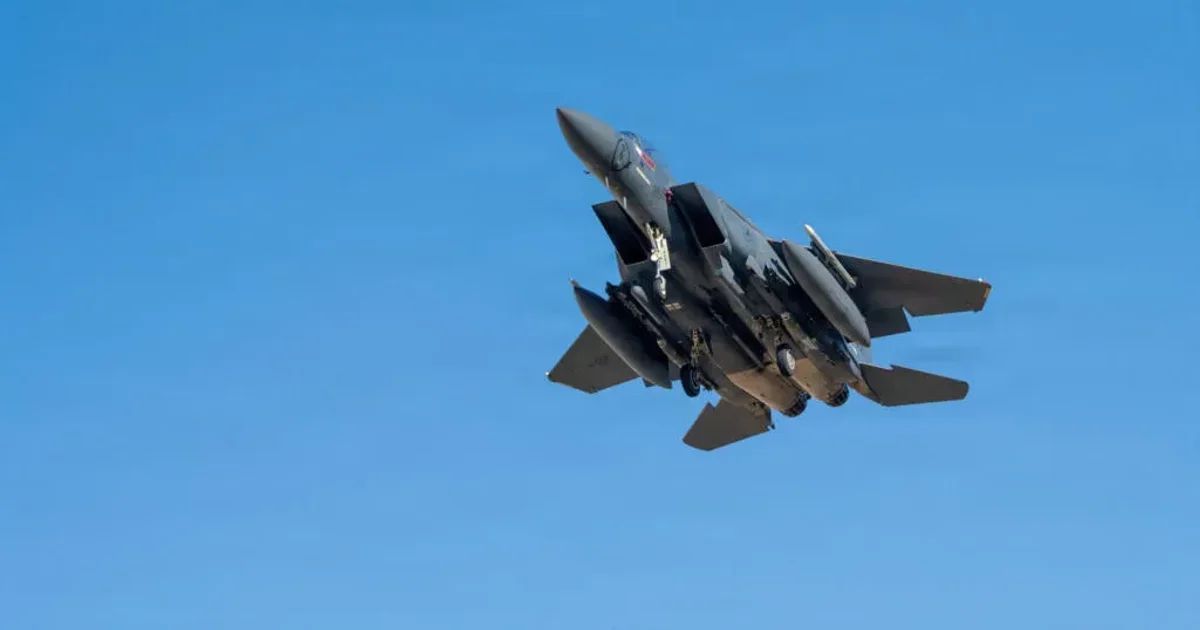
U.S. forces rescued a second airman from Iranian territory after an F-15E Strike Eagle was brought down during a dangerous regional escalation. President Donald Trump announced the recovery on April 5, 2026, saying the service member had been found after an intense search. The rescue closed the most urgent personnel crisis from the shoot-down, but it did not settle the larger military question. A successful extraction prevents a hostage scenario; the loss of the aircraft still raises hard questions about Iranian air defenses and U.S. flight operations. The episode also gives military planners another reason to examine rescue staging, aerial coverage and communications discipline before any wider operation over Iranian territory.
Second Airman Found After Search
Search teams had to move quickly because Iranian units were also believed to be looking for the downed crew. Rugged terrain, hostile radar coverage and uncertain ground control made the operation more dangerous than an ordinary recovery mission. Combat search-and-rescue missions depend on timing. Aircraft must suppress threats, locate the survivor, move extraction teams into position and leave before enemy forces can concentrate. The longer a pilot remains on the ground, the more complicated the rescue becomes.
Trump wrote, "WE GOT HIM," while announcing that the missing airman had been recovered.
Iranian Air Defenses Change the Calculation
The downing of an F-15E matters because it suggests Iranian batteries were able to threaten a sophisticated U.S. aircraft in contested airspace. The Pentagon will study whether the jet was tracked by radar, hit by a mobile system or exposed by mission patterns. Iran will likely use the incident for domestic messaging, arguing that its air defenses can challenge U.S. power. Washington will emphasize the rescue and the safe return of the airman. Both narratives can be true at the same time. For commanders, the operational concern is immediate. If the threat environment has changed, future missions may require different routing, more electronic warfare support or strikes against launch sites before manned aircraft enter the area.
Rescue Avoids a Hostage Crisis
The political importance of the rescue is obvious. A captured U.S. airman inside Iran would have created a prolonged diplomatic confrontation and enormous pressure for retaliation. Recovery gives the White House more room to decide its next move. That room may not last. Calls for a stronger response will grow if investigators conclude that Iranian forces deliberately targeted the aircraft during a mission the United States considered lawful. Allies in the region will also watch how Washington reacts. The rescued airman will now face medical checks and debriefing. Those accounts, combined with telemetry and surveillance data, will help reconstruct the shoot-down and the evasion period.
Regional Risk Remains High
The tactical success of the rescue should not obscure the strategic danger. U.S. aircraft are operating in a theater where one mistake, one missile launch or one misread radar track can widen the conflict quickly. Iran has an incentive to show it can impose costs. The United States has an incentive to show it will not be deterred from protecting forces or allies. That combination makes the next set of military decisions especially sensitive.
For now, the administration can point to the recovery as a success. The harder question is whether future missions can continue under the same rules after a high-value aircraft was lost and two airmen had to survive behind hostile lines.
The rescue also gives military investigators living witnesses to compare against sensor records. The airman's account of radar warnings, ejection timing, terrain movement and enemy search patterns can help commanders understand where the mission became vulnerable. That testimony may be as important as the wreckage itself.
Iran's next move will matter. If Tehran treats the shoot-down as a deterrent message and avoids further escalation, both sides may step back. If it uses the incident to threaten more aircraft or allied bases, Washington will face stronger pressure to respond militarily.
Allied governments will read the rescue through their own security needs. Gulf states want reassurance that U.S. forces can still operate effectively, but they also fear being pulled into a wider exchange. The successful recovery buys time; it does not remove the strategic problem created by a U.S. jet falling inside Iranian territory.
The shoot-down also complicates deterrence messaging. The United States wants to show it can recover its personnel and keep operating. Iran wants to show that U.S. aircraft can be hit. Neither side needs to seek full war for the risk to grow; repeated demonstrations of capability can narrow the room for restraint.
The recovery is therefore only the first chapter. The next briefings will reveal whether commanders see the aircraft loss as an isolated tactical event or evidence that mission planning must change. If routes, escort packages or rules of engagement shift, the rescue will have altered the broader air campaign even without a public declaration.