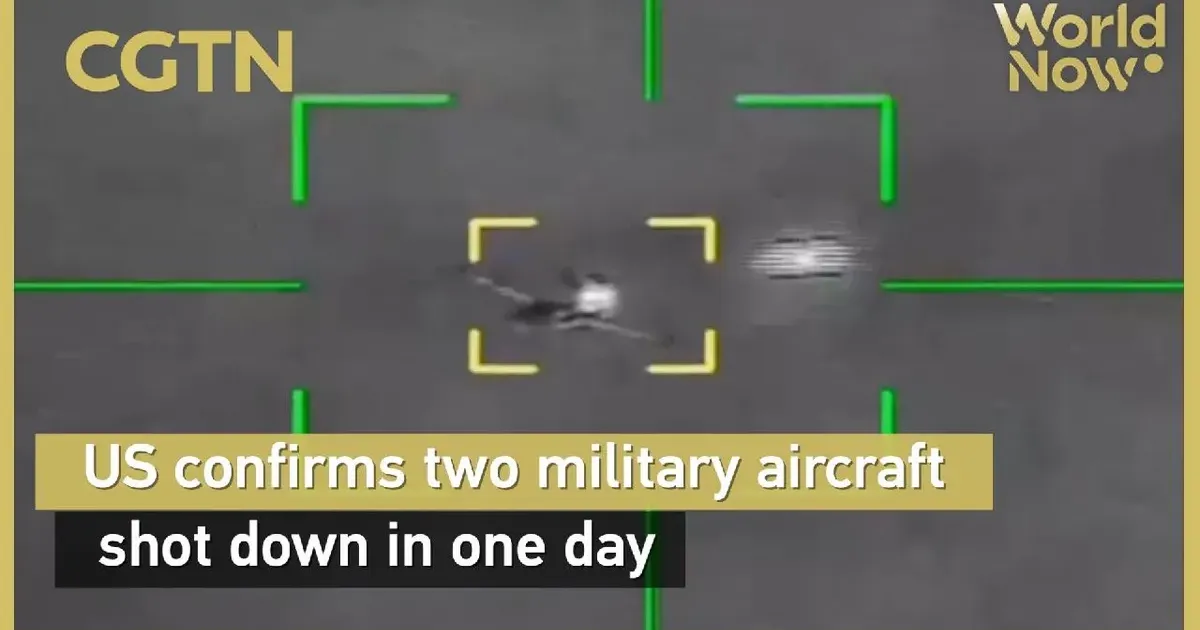
American military recovery teams launched an extensive search operation on April 4, 2026, to locate a missing pilot whose F-15E Strike Eagle crashed inside Iranian territory. Iranian air defense units successfully intercepted the dual-seat fighter jet during a combat mission in the southwestern region of the country, marking the first confirmed loss of a manned American aircraft within Iran's borders since hostilities began. Search efforts have become increasingly urgent as Islamic Revolutionary Guard Corps (IRGC) units also saturate the crash site to secure the American aviator.
Combat search and rescue assets mobilized immediately across the region to locate the wreckage and any signals from the pilot's survival equipment. Two Black Hawk helicopters involved in the initial extraction attempt sustained damage from Iranian small arms and anti-aircraft fire, forcing them to retreat to international airspace. Reports from the ground indicate that while the helicopters made it out safely, the intense volume of fire prevented them from landing near the main crash site.
This loss of a major air superiority asset occurs during the 36th day of a widening conflict that began on February 28. Beyond the strike on the F-15E, Iranian forces also targeted an A-10 Warthog fighter aircraft that was operating near the border. The A-10, known for its ground-attack capabilities, was hit by Iranian fire and subsequently crashed in neighboring Kuwait. Military officials confirmed the pilot of the Warthog ejected safely and was recovered by friendly forces.
US Fighter Jet Downed in Southwestern Iran
Specialized units from the IRGC began combing the rugged terrain near the crash site shortly after the F-15E Strike Eagle hit the ground. Local authorities in the southwestern provinces have coordinated with paramilitary groups to establish a perimeter around the impact zone. The regional governor publicly promised a commendation and financial rewards for any citizen who captures or kills the American pilot. Iranian state media have broadcast images of what appears to be wreckage, though the Pentagon has not yet verified the authenticity of the footage.
Israel's Channel 12 reported that the Israel Defense Forces (IDF) canceled several scheduled airstrikes near the search area. This decision aims to avoid any accidental engagement with American recovery teams operating covertly or under high-risk conditions. High-altitude surveillance drones continue to circle the province, attempting to pick up distress beacons or heat signatures that might indicate the pilot's movement. Washington now faces the prospect of its first prisoner of war since the conflict began on February 28.
Iranian Parliament Speaker Mohammad Baqer Qalibaf commented on the incident through a social media post, claiming the nature of the war has shifted. He argued that the American and Israeli objectives have been reduced from regime change to a desperate hunt for missing personnel. Qalibaf suggested the loss of the high-tech jet proves the resilience of domestic defense systems against sophisticated Western technology. The IRGC continues to move heavy equipment into the area to prevent any ground-based extraction by US special operations forces.
Defense Secretary Pete Hegseth and Air Superiority
Defense Secretary Pete Hegseth had previously stated that American and Israeli forces maintained total control of the skies over the Middle East. The downing of a Strike Eagle, which is one of the most capable multi-role fighters in the US arsenal, directly contradicts those assertions of absolute dominance. Pentagon briefings had suggested that Iranian radar and missile batteries were largely neutralized during the opening weeks of the campaign. The loss of an F-15E inside Iran and an A-10 over Kuwait indicates that substantial pockets of mobile air defense units are still operational.
President Donald Trump has not yet issued a specific statement regarding the missing pilot, though he has consistently defended the necessity of the strikes to prevent Iranian regional expansion. Military analysts suggest that the deployment of the F-15E in southwestern Iran was part of an effort to decapitate IRGC command structures. Instead, the loss of the aircraft provides Tehran with a significant propaganda victory and a potential bargaining chip in future negotiations. Intelligence suggests the pilot may be attempting to move toward a safer area on foot.
Pentagon officials have refused to provide details regarding the identity or specific unit of the missing crew member. Sources within the Department of Defense indicated that the second seat in the F-15E was occupied, but the status of the second crew member is equally uncertain. The Strike Eagle is designed for long-range, high-speed interdiction, making its loss deep inside hostile territory a logistical nightmare for rescue coordinators. Strategic planners are reviewing the flight paths of all ongoing sorties to reduce further risks from unexpected anti-air batteries.
Islamic Revolutionary Guard Corps Conducts Manhunt
Public sentiment in the United States has shifted sharply as the conflict drags on without a clear resolution. A new Reuters/Ipsos poll found that 66% of respondents believe the US should work to end its involvement in the Iran war quickly. The figure includes a substantial portion of voters who originally supported the strikes on February 28. Respondents cited the rising human cost and the lack of a defined exit strategy as their main concerns. The disappearance of a pilot inside Iran is likely to worsen these feelings of unease among the American electorate. Financial markets have also reacted to the news of the downed fighter and the failed rescue attempt. Oil prices rose following the reports of the Black Hawk helicopters taking fire, as traders weighed the possibility of a further escalation that could close the Strait of Hormuz. Defense stocks saw moderate volatility as the effectiveness of current air superiority platforms was called into question by the Iranian successes. The administration faces growing calls from both sides of the aisle in Congress to provide a more transparent assessment of the military's progress.
Anti-war protests have been reported in several major US cities and across the UK, with demonstrators demanding an immediate ceasefire. Many participants pointed to the Reuters/Ipsos data as proof that the current policy lacks a democratic mandate. The loss of the F-15E provides a concrete focal point for these grievances, highlighting the vulnerability of American personnel in a conflict many feel is unnecessary. Administration officials continue to insist that the strikes are a matter of national security, but the messaging is struggling to compete with the reality of a missing service member. The status and whereabouts of the missing F-15E crew member have not been made public.
Pilot Search Narrows Iran War Options
The pilot search is now both a military mission and a political clock. Every hour increases pressure on commanders while limiting how much risk they can accept in hostile airspace.