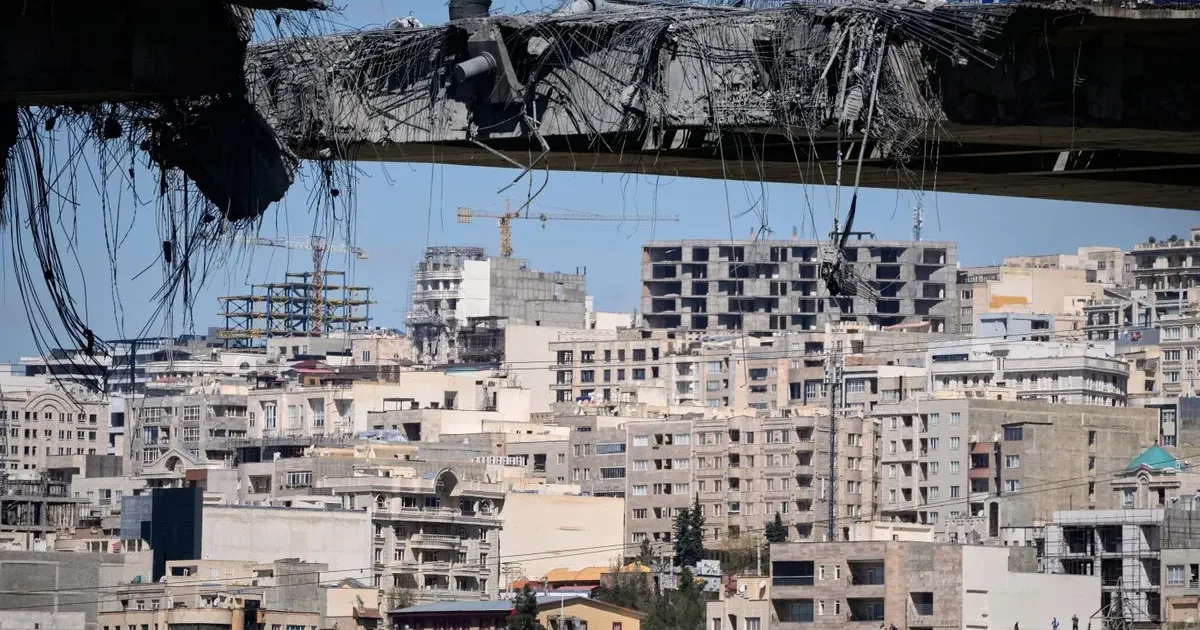
Bushehr officials reported on April 4, 2026, that a projectile struck the immediate vicinity of the country's main nuclear facility. One security guard died during the detonation, which occurred near the perimeter of the Bushehr Nuclear Power Plant. Preliminary data from the Iranian atomic agency indicates that the strike caused significant damage to a support building located outside the main reactor containment structure. Iranian authorities confirmed this incident represents the fourth targeted attack near the facility during the current military escalation between Iran and regional adversaries.
Radiation monitoring stations surrounding the Persian Gulf coastline have not yet reported elevated levels of atmospheric isotopes. Engineering teams began assessing the structural integrity of the affected support building minutes after the explosion. This site is a key hub for technical personnel and administrative operations necessary for the daily functioning of the 1,000-megawatt reactor. Local media reports suggest the projectile originated from a high-altitude platform, although the specific weapon system remains unidentified. Military analysts noted that the accuracy of the hit indicates sophisticated guidance technology.
Security Guard Killed in Bushehr Perimeter Strike
Casualties from the morning strike were restricted to a single member of the facility's internal security detail. Iranian state media identified the deceased individual as a veteran officer assigned to the outer screening zone. No reactor technicians or Russian consultants sustained injuries during the event. Proximity to the reactor hall raised immediate concerns among international observers about the potential for a catastrophic containment breach. Safety protocols initiated an automatic lockdown of the main control room while personnel accounted for all staff members on site.
Subsequent inspections revealed that the projectile impacted a reinforced concrete section of the secondary infrastructure. Debris from the explosion scattered across the restricted zone, temporarily blocking access to the cooling water intake systems. Security footage captured the moment of impact, showing a high-velocity object piercing the roof of the administrative annex. Emergency crews extinguished a small fire within the debris field by 10:00 a.m. local time. Officials maintained that the core of the VVER-1000 reactor remained fully operational throughout the crisis.
Support Building Damage and Radiation Monitoring
Nuclear experts from Rosatom, the Russian state nuclear energy corporation, are assisting their Iranian counterparts in a full damage assessment. These technical specialists have resided at the plant for years to manage the complex maintenance cycles of the Russian-built hardware. Reports from the site indicate that the affected support building contained essential secondary cooling monitoring equipment. Replacement parts for these systems must be sourced through specialized channels due to ongoing trade restrictions. Damage to the administrative wing has hampered communication between the plant and the central dispatch in Tehran.
Tehran maintains that the strike was an intentional effort to disrupt the national power grid rather than a navigational error. IAEA inspectors monitoring the site have requested immediate access to the impact zone to verify that no safeguards were bypassed. While the physical barrier of the reactor was not breached, the psychological effect on the workforce is substantial. Workers at the plant reported hearing a distinct double-thud, characteristic of a penetrator warhead followed by a secondary explosive charge. The facility provides power to millions of residents in southern Iran.
Rosatom CEO Condemns Nuclear Site Shelling
Russian leadership reacted swiftly to the reports of kinetic activity near the nuclear site. Alexey Likhachev, the CEO of Rosatom, issued a statement expressing grave concern over the safety of the global nuclear infrastructure. Likhachev pointed out that the international community has reached a dangerous threshold where civilian power plants are no longer treated as off-limits during conventional warfare. Moscow has historically viewed the Bushehr project as a flagship of its civil nuclear export program. Destruction of the plant would involve a multibillion-dollar loss for the Russian energy sector.
Diplomatic tension between Moscow and the West intensified as details of the strike reached the Kremlin. Russian officials have long argued that the plant is purely for civilian energy production and operates under strict IAEA supervision. Several previous attempts to sabotage the facility via cyber warfare were documented by cybersecurity firms throughout the 2020s. This latest kinetic strike, however, indicates a move toward direct physical destruction. Likhachev urged the United Nations to establish a demilitarized zone around all nuclear sites in the Middle East.
"The United States and Israel have completely erased their former reputation in the field of nuclear non-proliferation, as well as nuclear and physical security, demonstrating that they themselves recognize no norms or restrictions," Russian Foreign Ministry spokesperson Maria Zakharova said.
Russian Foreign Ministry spokesperson Maria Zakharova accused Western powers of abandoning the foundational principles of international law. She claimed that the targeting of the Bushehr facility constitutes a direct threat to the environmental security of the entire Persian Gulf region. Zakharova emphasized that the silence of European capitals regarding the attack undermines the global non-proliferation regime. Her rhetoric suggests that Moscow may reconsider its own cooperation on nuclear security protocols if the strikes continue. The ministry characterized the situation as approaching a critical line where a radiological disaster becomes inevitable.
Global markets reacted to the news with a sharp increase in crude oil prices. Traders fear that a retaliatory strike on regional energy infrastructure could lead to a total shutdown of the Strait of Hormuz. International maritime authorities issued warnings to tankers operating in the vicinity of the plant, advising increased vigilance. Previous naval exercises in the area have failed to deter drone and missile incursions. The IAEA has not yet scheduled an emergency board of governors meeting, despite the fatalities at the site. Technical logs from the reactor show that the cooling pumps remained powered by the auxiliary diesel generators for three hours during the initial emergency phase.
Bushehr continues to operate at 40 percent capacity while repairs proceed on the support building. Iranian engineers are working around the clock to restore the main data links to the national energy ministry. Security around the plant has been reinforced with additional surface-to-air missile batteries and electronic jammer units. This deployment seeks to create a defensive bubble over the reactor to prevent a fifth successful strike. Military sources in the region believe that the frequency of these attacks is designed to force a complete shutdown of the facility. Production at the site provides roughly 2 percent of the national electricity supply.
Bushehr Strike Raises Nuclear Safety Stakes
The Bushehr strike raises concern because even a limited hit near nuclear infrastructure can create wider safety fears. Investigators now have to separate military damage, plant operations and radiation risk with unusual care.