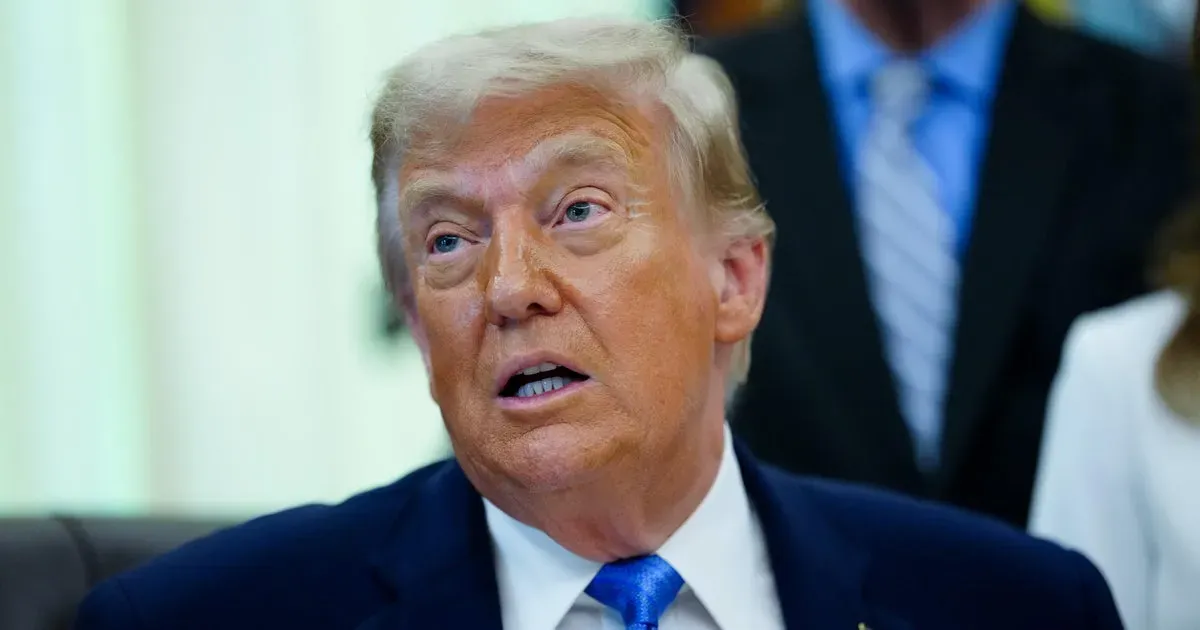
President Donald Trump's decision to delay signing a bipartisan housing bill has turned an affordability measure into a leverage fight over voting rules. The shift is politically striking because the housing package had cleared Congress with broad support and was expected to give the White House a rare cross-party policy win. By June 24, 2026, the delay had made housing policy part of a larger fight over election rules.
The Guardian reported that Trump canceled a planned signing event for legislation aimed at lowering housing costs and expanding supply.
The bill had been promoted as a response to high rents, limited inventory and the difficulty many families face when trying to buy a first home.
Instead of signing it immediately, Trump tied the moment to his demand for the SAVE America Act, a separate voting measure focused on proof-of-citizenship requirements and election rules.
On June 24, 2026, that linkage turned a housing ceremony into a test of how far the president is willing to pressure Congress on an unrelated priority.
Housing Policy Becomes A Bargaining Tool
Housing affordability is one of the few issues where lawmakers in both parties can often find shared language. Local zoning, construction delays, mortgage pressure and rental costs affect voters across partisan lines, even when parties disagree on the best solution.
That is what makes the delay risky. A bill that could have been framed as a practical response to household pressure is now being read through the lens of Trump's election agenda. The president may see leverage, but opponents will argue that he is holding a broadly popular housing measure hostage. For Republican lawmakers from high-cost states, that framing is uncomfortable because constituents may care more about rent, down payments and construction bottlenecks than about the procedural strategy behind a separate voting bill.
A bipartisan housing bill becomes harder to sell as relief when the signing is tied to a separate fight over voting rules.
The move also complicates Republican messaging. Lawmakers who voted for the bill can still support Trump's voting push, but they now have to explain why a housing measure they backed should wait for a separate Senate fight with uncertain prospects.
The SAVE Demand Raises The Stakes
SAVE America Act politics have already produced court and congressional fights around citizenship checks, voter registration and mail voting. Trump has framed the issue as urgent, while critics say the proposal would create new barriers for eligible voters and federalize parts of election administration.
The housing delay gives that fight a new pressure point. By linking the bill signing to SAVE, Trump is asking Republican senators to treat the voting bill as a precondition for action on affordability, even though the two policy areas do not depend on each other.
A recent court ruling blocking a Trump voter-check push showed how quickly the administration's election agenda can run into legal resistance. That context makes the current delay more than a scheduling dispute.
It also gives Democrats a simple counterargument: voters facing rent increases or a difficult home search are being asked to wait while the White House fights over election rules. Whether that message sticks will depend on how long the delay lasts and whether Republicans can force a quick resolution.
Pressure Moves to the Senate
The immediate audience is the Senate Republican conference. Trump is expected to keep pressing senators to advance SAVE, but the chamber's rules and Democratic opposition make the path difficult unless the bill changes or supporters find procedural leverage.
Legislative leverage can work when the hostage issue and the demand are close enough for lawmakers to bargain. Here, the distance between housing supply and voting rules may make the tactic harder to defend, especially for members from states where affordability is already a top complaint.
The White House may still sign the housing bill later and claim that the pressure campaign kept attention on election integrity. But the immediate cost is confusion for state housing agencies, builders, lenders and local officials who expected a clear federal signal after months of negotiations. The delay has already changed the story around the legislation. A rare bipartisan housing package is now part of a larger fight over presidential leverage, congressional discipline and whether policy wins can survive being folded into Trump's broader political agenda. Housing advocates will watch the calendar closely because a symbolic delay can become a practical one if agencies, lenders, builders and local governments are left waiting for implementation guidance. The longer that uncertainty lasts, the easier it becomes for critics to argue that affordability was treated as a bargaining chip rather than an urgent household problem. That argument is likely to resonate in high-cost suburbs, fast-growing Sun Belt cities and rural markets where new construction has lagged demand and household budgets are already stretched by insurance, interest rates, utility costs, property taxes and the higher deposits required to move into scarce rental units nationwide.