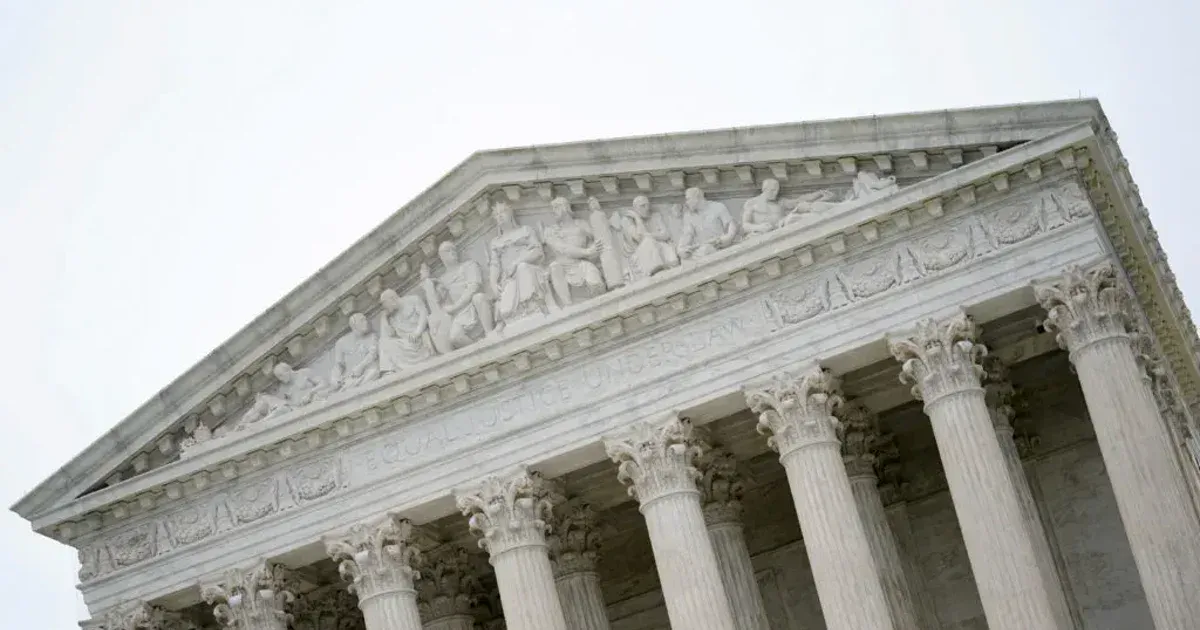
The Supreme Court has closed off a damages path for a former Louisiana inmate whose dreadlocks were cut by prison officials despite his Rastafari faith, leaving a narrower remedy for religious rights violations behind bars.
The ruling focused on the Religious Land Use and Institutionalized Persons Act, a federal law often called RLUIPA. On June 23, 2026, the justices held that the statute does not authorize money damages against individual state prison officials.
The case was brought by Damon Landor, who said he had grown his dreadlocks for nearly two decades as part of his religious practice. Prison officials cut them after he was transferred to a Louisiana facility, even though he had pointed to legal protection for his hair.
Rights Violation Without the Remedy Sought
The decision did not celebrate what happened to Landor. The legal question was narrower: whether Congress clearly allowed inmates to sue individual officials for damages under RLUIPA.
The court said it did not. That means Landor could not pursue the type of personal damages claim that his lawyers argued was necessary to deter officials from violating religious rights when an injunction would come too late.
The case turned on the difference between recognizing a rights violation and allowing damages after the harm is done.
That distinction matters in prison cases because religious injuries can be immediate and irreversible. Once hair is cut, a religious diet denied or a worship practice blocked during a short incarceration, later court orders may offer little practical relief.
Damon Landor argued that damages were essential because he was no longer in the same position once the violation occurred. Without a damages remedy, his lawyers said officials may face too little consequence for conduct that courts agree was unlawful.
Why the Statute Controlled the Outcome
RLUIPA was enacted to protect religious exercise for prisoners and people affected by land-use decisions. It allows lawsuits against government entities, but the dispute in Landor's case was whether it also reaches individual officials in their personal capacity.
The majority read the statute strictly. In its view, Congress did not provide the clear language needed to expose state officials to personal money judgments. That statutory reading overrode the moral force of Landor's claim.
The dissenting justices warned that the decision leaves prisoners with a weaker tool when rights are violated and there is no time for forward-looking relief. They viewed damages as a necessary check when officials knowingly disregard protected religious practice.
The result also reflects a recurring Supreme Court pattern. When Congress does not spell out a damages remedy clearly, the court is often reluctant to infer one, especially when state officials and sovereign immunity concerns are involved.
Prison Religious Liberty After Landor
The ruling does not eliminate prison religious liberty claims. Inmates may still seek injunctions, policy changes and relief against government entities where the law allows. But it makes after-the-fact accountability harder when the injury has already happened.
For prison systems, the decision may reduce damages exposure, but it does not remove the duty to accommodate sincere religious practice unless security or operational concerns justify limits. Cutting hair, denying diets or restricting worship can still trigger legal challenges.
For religious liberty advocates, the next fight may move to Congress. If lawmakers want individual damages under RLUIPA, the court's message is that they must say so directly.
The Landor case therefore leaves a hard practical gap. A prisoner may prove that officials violated a protected religious practice, yet still be unable to recover damages from the individuals who carried out the act. That gap will define the next round of prison religious rights litigation. The practical effect is strongest for short-term prisoners and former inmates, because they may not be able to obtain an injunction before the religious injury occurs. That timing problem was central to Landor's argument. If damages are unavailable, lawyers may have to rely on institutional suits, policy changes and faster emergency motions, none of which fully answers an injury that has already happened. The case will also affect how prison administrators train staff. A ruling that blocks individual damages does not give officials permission to ignore religious accommodation requests, but it changes the risk calculation after a violation. Departments that want to avoid litigation still need clear rules, documentation and review before cutting hair or denying religious practices. The harder problem is accountability when front-line officials act quickly and a prisoner has little chance to reach a judge first. Landor's case shows how a statutory protection can be real on paper while the remedy remains too narrow for a completed act. That gap is now the central issue for Congress, prison systems and religious liberty lawyers. The ruling therefore narrows the legal consequences for officials even when the underlying religious rights violation is not seriously disputed.