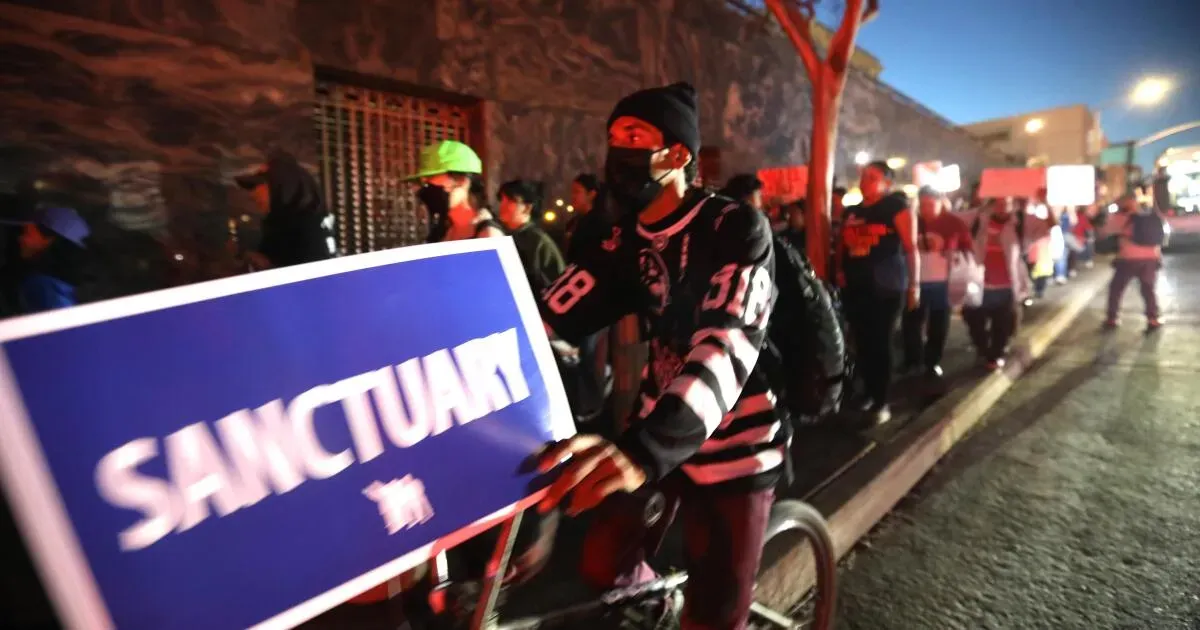
A federal judge has dismissed the Trump administration's lawsuit challenging Los Angeles' sanctuary city ordinance, handing the city an early win while leaving the Justice Department a chance to rewrite its case.
U.S. District Judge Fernando M. Olguin granted Los Angeles' motion to dismiss in a June 22, 2026, ruling and said the government's allegations were not enough to establish that the ordinance unlawfully discriminates against federal authority. The ruling keeps the city's policy in place while putting the burden back on federal lawyers.
The order gives the administration until July 3 to file an amended complaint, meaning the legal fight over local immigration limits is paused rather than finished.
The case targets a city ordinance that restricts how Los Angeles personnel and resources can be used to assist federal immigration enforcement, a policy city officials describe as a local-control measure rather than an attack on federal law. That distinction is central because the city is not claiming it can nullify federal immigration law; it is claiming it can decide how far municipal employees must go in helping enforce it.
What the Judge Found
The Justice Department argued that the ordinance violates the Supremacy Clause and the doctrine of intergovernmental immunity by singling out the federal government for adverse treatment. Olguin found the complaint did not yet plead enough facts to support that theory. The court did not bless every local rule or foreclose a future case; it said the Justice Department had not done enough in this complaint to show unlawful discrimination against federal authority.
That is a procedural ruling, but it carries political weight. The dismissal gives Los Angeles a public win at a time when the administration is trying to make sanctuary jurisdictions a symbol of resistance to federal immigration priorities. The Trump administration has made sanctuary policies a central target of its immigration agenda, while Los Angeles has framed the ordinance as a way to separate local services from federal deportation priorities.
The court did not decide that every part of the ordinance is immune from challenge. That nuance matters because DOJ can still narrow its focus to specific provisions, specific city practices or concrete examples of alleged interference. It said the current complaint was insufficient, leaving DOJ to sharpen its legal theory if it wants another round.
The dispute now sits beside other federal-local clashes, including the Minnesota subpoena ruling that checked DOJ immigration pressure.
Local Control Argument
Los Angeles officials welcomed the dismissal as a defense of the city's authority to decide how its employees, records and resources are used. The city's strongest argument is that it is not commanding federal agents to do anything; it is directing municipal workers and funds. City Attorney Hydee Feldstein Soto said the ordinance governs local operations rather than federal enforcement power.
The administration sees the same policy differently. Its lawsuit contends that Los Angeles goes beyond ordinary noncooperation and actively undermines immigration enforcement by blocking information-sharing and operational support.
That disagreement explains why sanctuary litigation is hard to resolve cleanly. A federal court has to separate political hostility from legal obstruction, and the answer often depends on the exact wording of the local ordinance and the facts DOJ can plead. Federal immigration law is supreme, but cities still control their own workforces, police priorities and public-service relationships. Sanctuary city policy lives in that gray area between federal power and local discretion.
Next Legal Step
The July 3 amendment deadline is the immediate clock. If DOJ files a stronger complaint, the case could move into another dismissal fight or eventually into discovery over how the ordinance works in practice.
For Los Angeles, the risk is that a revised complaint focuses on narrower provisions that are easier to frame as interference with federal operations. For DOJ, the risk is that a second dismissal would weaken the broader campaign against sanctuary policies and give other cities a stronger litigation template. For the administration, the risk is that another weak filing reinforces the view that sanctuary lawsuits are political pressure tools rather than carefully targeted legal claims.
The strategic point is that immigration federalism is being litigated one city and one ordinance at a time. Each ruling adds another piece to the question of how much pressure Washington can place on local governments without converting disagreement into commandeering. Even a dismissal without prejudice can matter because it sets the terms for the next complaint and tells other cities what arguments may survive first contact with a federal judge. If Los Angeles survives a revised complaint, the ruling could become a practical guide for cities trying to defend noncooperation policies without directly blocking federal agents. That would make the case useful far beyond California, especially for jurisdictions reviewing ordinances before the next federal enforcement push.