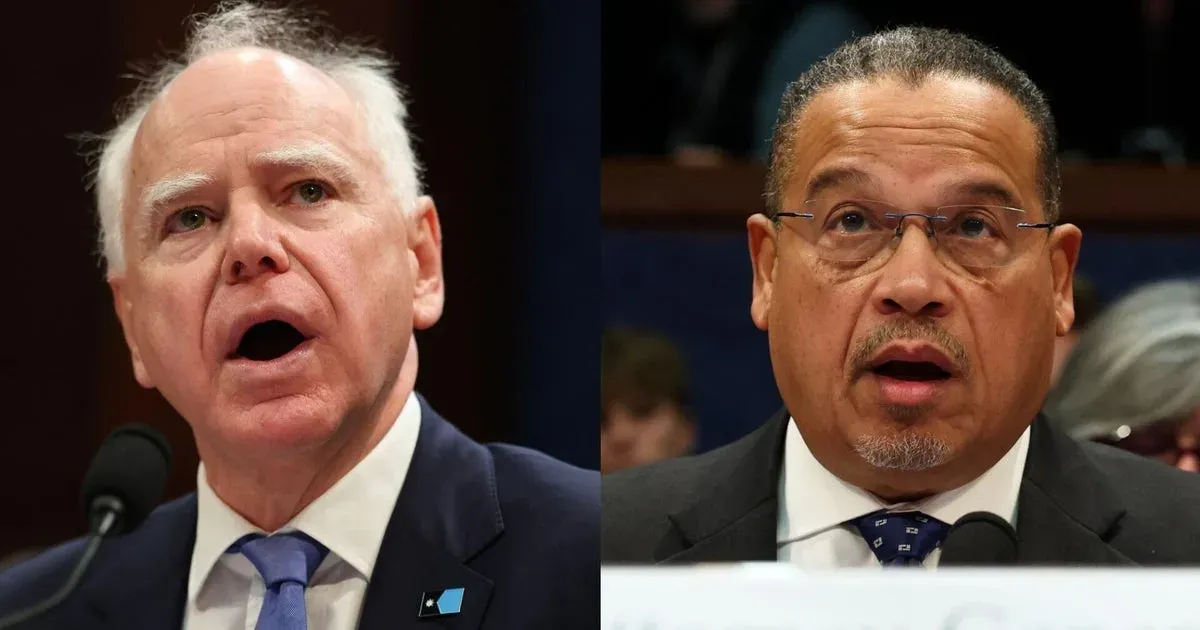
The ruling immediately limited a federal pressure campaign. It also gave state officials a stronger argument that immigration oversight cannot become an open-ended subpoena dragnet. A federal judge in Minnesota has blocked a set of Justice Department subpoenas aimed at state and local officials, turning an immigration-enforcement fight into a broader test of how far federal investigators can go against political opponents.
The order, unsealed on June 22, 2026, quashed six grand jury subpoenas that sought records from Governor Tim Walz, Attorney General Keith Ellison, Minneapolis Mayor Jacob Frey and other officials tied to Minnesota's response to a federal enforcement surge. It also gave other states a fresh legal template for challenging federal demands that look more political than evidentiary.
Chief Judge Patrick J. Schiltz said the record did not support the Justice Department's stated investigative rationale, according to the court order and reports from the Guardian and CBS-linked coverage.
The dispute grew out of Operation Metro Surge, a Trump administration immigration push in Minnesota that state and local officials criticized as coercive, politically targeted and designed to force cooperation with civil immigration enforcement. The administration has argued that local resistance can frustrate federal operations, while Minnesota officials say ordinary policy disagreement cannot justify a criminal-style dragnet for communications and records.
Why the Court Intervened
Grand jury subpoenas are usually hard to stop, which is why the ruling carries weight beyond Minnesota. The court found that the challenged subpoenas appeared designed to pressure officials into helping enforce civil immigration law, rather than to gather evidence in a clearly defined criminal investigation. That framing is important because grand jury secrecy and compulsory process give prosecutors enormous leverage even before any charge is filed.
The order said the department struggled to identify a concrete instance in which a Minnesota official or employee obstructed a federal officer because of a local policy. That finding matters because the subpoenas swept across high-level elected officials rather than narrowly targeting one alleged act of obstruction. A narrower request could have looked like an evidence dispute; this set looked, to the court, like an attempt to turn policy disagreement into investigative exposure.
The breadth helped turn the fight into a constitutional dispute. Minnesota argued that federal investigators were trying to punish officials for refusing to make state and local machinery serve a federal campaign, while the Justice Department said it was examining possible obstruction of federal operations.
Political and Legal Fallout
Walz, Ellison and Frey cast the ruling as a defense of local authority and judicial independence. The administration, meanwhile, still has every incentive to keep testing local resistance as it expands the immigration agenda, including the $70 billion mass deportation campaign.
The decision does not say local officials can obstruct federal agents. It leaves room for federal prosecution if officials hide evidence, direct employees to block agents or interfere with a specific operation. It says the Justice Department still needs a legitimate investigative basis when it uses grand jury tools against a state's political leadership, especially when the officials targeted are already public critics of the enforcement campaign.
That distinction is likely to shape future litigation. States with sanctuary-style policies will likely cite the order when federal demands reach elected officials rather than specific operational facts. The ruling does not immunize those policies, but it does force the federal government to explain why a subpoena is tied to evidence instead of using the burden of compliance as leverage. Federal lawyers, in turn, may try to build narrower records before seeking documents so that future subpoenas look less like political escalation and more like evidence collection. That adjustment could slow enforcement cases, but it may also make surviving subpoenas harder for states to challenge. The administration can still ask for records, bring specific cases and challenge local policies, but broad subpoenas tied to political pressure will now carry a clearer risk of judicial rejection.
Federalism Pressure
The order gives other states a template. If a federal demand appears to be built around public messaging rather than evidence, officials can point to Minnesota and argue that the investigation is coercive rather than criminal.
For the Justice Department, the problem is institutional as much as tactical. Subpoena credibility depends on courts believing that prosecutors are seeking evidence, not trying to discipline elected opponents through process.
The broader consequence is a sharper boundary fight between federal enforcement priorities and state-local discretion. The ruling also lands at a moment when immigration enforcement is not just an agency priority but a central political promise, which makes judicial limits on investigative tools more consequential for both sides. Immigration law is federal, but cities and states still control many records, employees and public-safety choices that federal agents want to leverage, making grand jury power a central battleground in the next phase. The ruling therefore gives both sides a clearer map: Washington can still enforce federal law, but it must separate criminal investigation from pressure campaign.