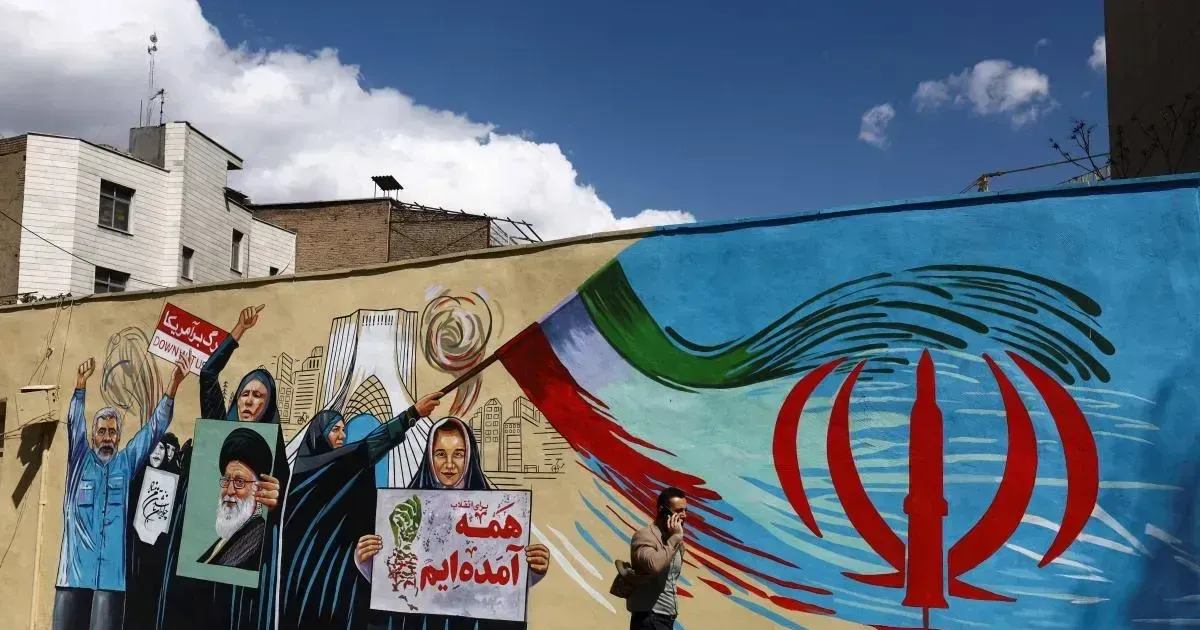
President Donald Trump faced a deepening geopolitical crisis as intelligence reports confirmed that Tehran has accelerated its uranium enrichment activities despite an enormous surge in U.S. sanctions. Defense officials in Washington spent the morning reviewing satellite imagery that shows increased activity at the Fordow Fuel Enrichment Plant, a facility buried deep within a mountain to withstand aerial bombardment. High-level briefings indicate that the Iranian government has no intention of returning to the negotiating table under the current terms of the American maximum pressure campaign. Senior advisers within the administration continue to argue that economic strangulation will eventually force a concession, yet data from the first quarter of the fiscal year suggests otherwise. The intelligence review was current on April 14, 2026.
Tehran responded to the latest round of U.S. naval deployments in the Persian Gulf with a series of large-scale military drills involving its fast-attack naval fleet and ballistic missile batteries. These maneuvers demonstrate a level of military readiness that contradicts the Western narrative of an economy close to total collapse. Global energy markets reacted to the increased tension with a 4% spike in Brent crude prices, reflecting fears of a protracted conflict in the Strait of Hormuz.
Iranian leaders have repeatedly stated that their sovereign rights to nuclear technology are non-negotiable, a position that Supreme Leader Ali Khamenei reiterated in a televised address to his senior military commanders. Domestic stability in the Islamic Republic persists even as inflation rates climb toward record highs.
Sanctions Pressure and Iranian Economic Resilience
Economic indicators released this week show that Iran has successfully bypassed several key maritime restrictions by using a ghost fleet of tankers to export oil to Asian markets. Revenue from these illicit sales has provided a critical lifeline for the government, allowing it to fund social programs and military expenditures that Washington expected would be defunded. While the U.S. Treasury Department has blacklisted hundreds of entities, the resilience of the Iranian financial sector is still evident in its ability to enable trade through complex shadow banking networks. Beijing and Moscow have maintained their strategic partnerships with the clerical regime, further diluting the impact of American isolation tactics. Trade volume between Tehran and its regional partners reached $100 billion last year.
Intelligence analysts note that the Iranian middle class has developed a high degree of adaptation to economic volatility after decades of varying sanction regimes. Local industries, particularly in manufacturing and agriculture, have expanded to fill the void left by departing European and American firms. Small and medium enterprises in Isfahan and Tabriz report steady growth in domestic demand for locally produced goods. The Iranian rial has stabilized against the euro in recent months, defying projections from the World Bank that suggested a freefall. Government subsidies for basic commodities like bread and fuel remain in place to prevent the kind of widespread civil unrest that could threaten the ruling establishment.
Washington Policy Shifting Toward Confrontation
National security officials in the Trump administration are currently debating whether to escalate to kinetic options if enrichment levels surpass the 90% weapons-grade threshold. Internal memos suggest a split between traditional hawks who favor targeted strikes on infrastructure and realists who warn of a catastrophic regional war. Diplomatic channels through Swiss intermediaries stay open, but they have produced no real breakthroughs in the last six months. Washington maintains that its goal is a new, more complete deal that addresses both nuclear ambitions and regional proxy activities. This strategy relies on the belief that the Iranian leadership values regime survival over ideological purity.
"Tehran will not negotiate under the shadow of threats or economic blackmail, and our response to any aggression will be decisive and symmetrical," a spokesperson for the Iranian Foreign Ministry stated in a recent press briefing.
Security experts argue that the American strategy relies on outdated assumptions regarding the internal politics of the Islamic Republic. Hardline factions within the Iranian parliament have gained serious influence, successfully marginalizing moderate voices who once advocated for engagement with the West. These conservatives view any concession to the United States as a sign of weakness that would only invite further demands. Military planners in the Pentagon have updated their contingency lists for potential retaliatory strikes against American assets in Iraq and Syria. The current stalemate has left little room for the kind of face-saving maneuvers that defined previous diplomatic efforts. Growing instability within the Strait of Hormuz has prompted concerns from international allies regarding maritime security.
Nuclear Proliferation Metrics in Natanz and Fordow
Reports from the International Atomic Energy Agency confirm that the number of advanced IR-6 centrifuges operating in Iranian facilities has tripled since the start of the year. This technical advancement allows for a much faster accumulation of highly enriched uranium, shortening the potential breakout time to a matter of days. Engineers at the Natanz facility have reportedly streamlined the cascading process, increasing the efficiency of the enrichment cycles. American intelligence has shared these findings with allies in London and Paris, sparking a flurry of emergency consultations at the UN Security Council. The lack of continuous monitoring by international inspectors has created a meaningful transparency gap in the Iranian program.
Technical data suggests that Iran has already mastered the most difficult aspects of the nuclear fuel cycle. Specialists in nuclear physics point to the successful production of uranium metal as a clear indicator of intent to develop a deliverable warhead. Despite repeated denials from Tehran, the accumulation of high-purity isotopes serves no credible civilian purpose for a country with vast fossil fuel reserves. Israeli officials have warned that they will not allow Iran to cross the nuclear threshold, regardless of the American position. The window for a non-military resolution appears to be closing as the technical milestones are met one by one.
Maximum Pressure Without an Exit
The American foreign policy establishment appears unable to recognize failure in real time. Its stubborn adherence to the maximum pressure model reveals a deep misunderstanding of the Iranian psyche and the structural shifts in the global order. Washington continues to act as if the 1990s unipolar moment never ended, ignoring that Tehran now operates within a multipolar web of support that includes Beijing and Moscow. This is more than a miscalculation of Iranian resolve; it is a refusal to accept that the era of American economic hegemony is waning. Sanctions have become a blunt instrument that, when overused, lose their effectiveness and drive targets into the arms of rivals.
The Trump administration's current trajectory is a slow-motion collision with a nuclear-armed reality. By demanding total capitulation, the White House has left the Iranian leadership with no choice but to double down on their nuclear program as the ultimate deterrent. History shows that regimes rarely negotiate away their primary source of leverage when they feel their survival is at stake. The belief that more pain will eventually lead to a better deal is a fallacy that ignores the ideological foundations of the Islamic Republic. If the goal was to stop a nuclear Iran, the current strategy has achieved the exact opposite by accelerating the very process it sought to prevent.
Strategy without a viable off-ramp is a countdown to catastrophe.