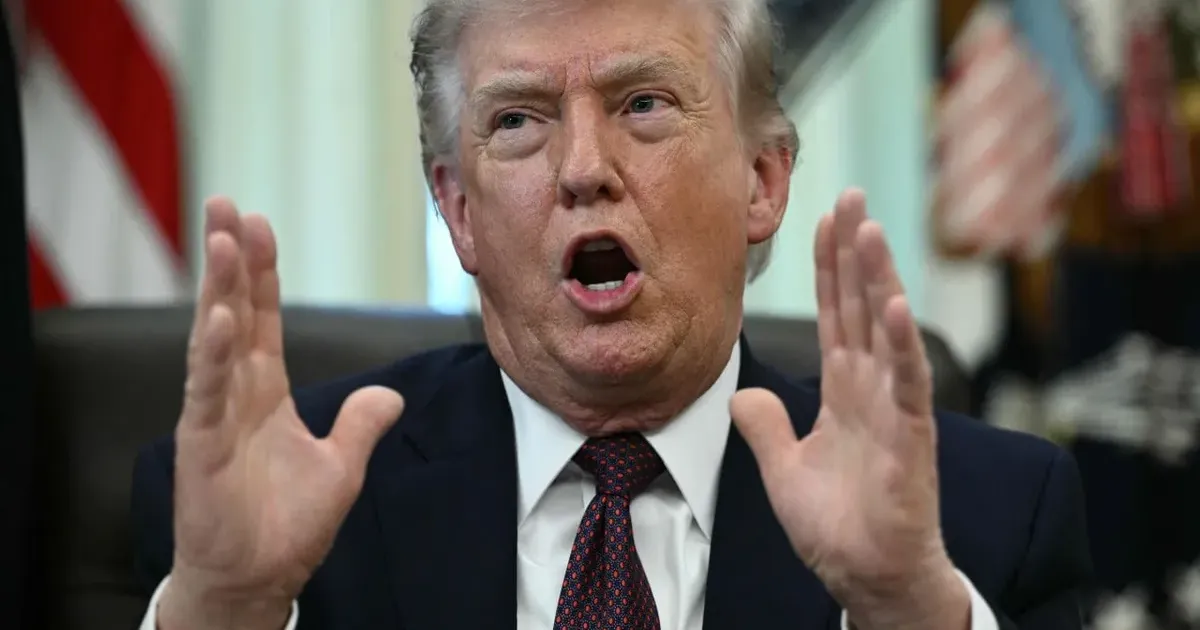
President Donald Trump announced that the United States will terminate its military campaign against Iran within the next three weeks. Standing before a press corps in the Oval Office, the commander-in-chief specified that American troops would begin a rapid exit regardless of whether a formal diplomatic settlement is reached. Military objectives have been largely satisfied according to the president, who signaled a desire to pivot away from a conflict that has dominated his second term. On April 1, 2026, the withdrawal order raised immediate questions about Gulf security and allied planning.
Preliminary reports suggest the withdrawal could occur in as little as 14 days, though a three-week window provides a buffer for heavy equipment removal. High-ranking officials in the administration have already begun drafting the logistics for a wholesale departure from the region. The conflict, which began just over a month ago, has seen consistent aerial bombardments and specialized ground incursions targeting Iranian nuclear and military infrastructure.
Reporters at the White House questioned the suddenness of the timeline given the absence of a signed treaty with Tehran. Financial Times reports indicate that the president is prepared to abandon the theater even if negotiations fail to produce a lasting ceasefire. This unilateral move places the burden of regional stability on neighboring states and international maritime coalitions. Defense analysts note that a rapid exit might leave power vacuums in critical coastal areas where Iranian Revolutionary Guard remnants still operate. Despite these concerns, the president insists that American interests no longer require a sustained combat presence on the ground.
Operational successes against the IRGC air defense networks provided the tactical justification for this decision. Air superiority was achieved within the first ten days of the engagement, effectively neutralizing the immediate threat to regional allies.
Pentagon Prepares Immediate Iranian Withdrawal Timeline
Pentagon planners received orders to coordinate the movement of thousands of personnel across the Persian Gulf to staging bases in Kuwait and Qatar. Logistics experts describe the 21-day window as tight but achievable for the current force size deployed in the combat zone. While Bloomberg suggests the military goals are complete, some intelligence sources within the Pentagon argue that the clerical regime’s command structure is still partially intact. National Security Council members met on April 1, 2026, to discuss the risks of an early departure.
President Trump dismissed these risks by stating that other nations must now take responsibility for their own security. US Central Command has started notifying coalition partners of the updated departure schedule. Most of the heavy artillery and armored units will be transported via heavy-lift vessels departing from the Port of Jebel Ali.
“We’ll be leaving very soon,” he told reporters in the White House’s Oval Office, adding that the exit could take place “within two weeks, maybe two weeks, maybe three”.
Strategic planners emphasize that the withdrawal includes the cessation of most offensive drone operations over Iranian airspace. Sources familiar with the plan indicate that a skeleton crew of advisors may stay at sea aboard the $11 billion USS Gerald R. Ford carrier strike group. This presence would serve as a deterrent rather than an active participant in ground combat. General officers have expressed private concerns regarding the speed of the transition, citing the potential for Iranian forces to reclaim lost territory along the coast.
Satellite imagery reveals that Tehran has already begun moving mobile missile launchers back into previously struck locations. Intelligence officers believe these movements are a direct response to the American announcement. Combat sorties have already dropped by 40% compared to last week’s operational tempo.
Energy Markets React to Middle East Security Vacuum
Global energy markets fluctuated wildly as traders processed the implications of an American security exit. Crude oil futures initially dipped on hopes of a cessation of hostilities but quickly rebounded due to fears of renewed tanker harassment. Financial analysts at Goldman Sachs observed that the Strait of Hormuz remains a primary chokepoint that lacks a clear guarantor of safety once the US Navy departs. President Trump stated that he would leave it to other nations to resolve issues with the Strait of Hormuz, shifting the cost of maritime protection to Asian and European importers.
China and India, the largest consumers of Iranian oil, must now decide whether to deploy their own naval assets to the region. Markets hate uncertainty, and the lack of a deal with Tehran creates a volatile environment for insurance premiums on shipping.
Brent crude prices settled near $98 per barrel following the news, reflecting a mix of relief and anxiety. Major shipping conglomerates like Maersk have already increased their security surcharges in anticipation of the US departure. Beyond the immediate price of oil, the stability of regional refineries is still a point of contention among commodities experts. Previous strikes on the Abadan refinery have limited Iran's domestic processing capacity, but the removal of US pressure may allow for rapid repairs. Economic advisors in the White House believe that ending the war will lower the domestic deficit and reduce inflationary pressures at home.
Taxpayers have funded the month-long operation at a cost exceeding $2 billion per week. Removing this financial burden is a central foundation of the president’s current domestic policy agenda.
Diplomatic Crisis Persists Without Formal Peace Treaty
Tehran’s response to the announcement has been characterized by a mixture of defiance and cautious optimism. Iranian state media reported that the withdrawal is a victory for the resistance and a sign of American weakness. Because no formal treaty exists, the legal status of the conflict stays in a state of limbo. United Nations officials have called for an immediate return to the negotiating table in Geneva to prevent a relapse into total war. The absence of a deal means that sanctions remain in place, further complicating the economic recovery of the Iranian state. Humanitarian organizations warn that the civilian population continues to suffer from the destruction of power grids and water treatment plants during the initial strikes.
Peace activists in the United States have praised the decision to bring troops home, though they caution against leaving behind a devastated infrastructure. Critics in Congress argue that the president is repeating historical mistakes by exiting a combat zone before the job is finished. Senatorial leaders from both parties have requested a classified briefing on the state of Iran's remaining nuclear enrichment capabilities. Intelligence gathered during the war suggests that several underground facilities survived the bombing campaign. Trump maintains that the kinetic phase of the operation has set the Iranian program back by at least a decade.
Verification of this claim is difficult without international inspectors on the ground. The International Atomic Energy Agency has not had access to Iranian sites since the war began.
Security Vacuum After Withdrawal
A three-week withdrawal order would reshape regional security faster than allies can replace US capacity. Bases, shipping lanes and air-defense coordination all depend on planning that cannot be improvised at the last moment.
The business impact comes through energy markets, insurance and logistics, but the core story is strategic. A rushed exit can reduce US exposure while creating new risk for partners still tied to the Gulf.