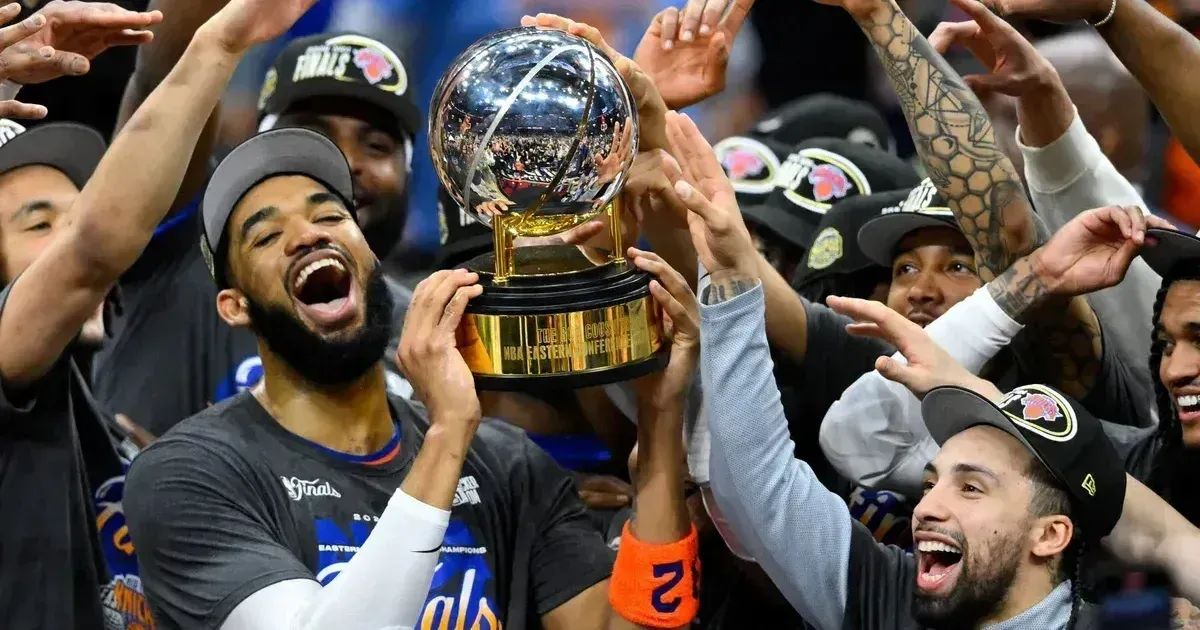
Donald Trump plans to attend the New York Knicks' NBA Finals game at Madison Square Garden, adding a political security layer to one of the city's biggest sports nights in decades. The appearance also forces city officials to balance championship logistics with the protection rules that follow the president. The visit is expected on June 8, 2026, as Game 3 brings national attention, heavy crowds and a charged atmosphere to Midtown Manhattan.
The Knicks' run has already created intense demand around the Garden, where fans are hoping the franchise can move closer to its first championship since 1973. Trump's presence means arena security will have to account for both a sold-out finals crowd and the arrival of a high-profile political figure.
Federal and local officials are expected to coordinate screening, motorcade access and street controls around Seventh Avenue. Fans should expect longer entry lines, tighter bag checks and possible traffic delays around Penn Station before and after tip-off.
Security at Madison Square Garden
The Secret Service and the NYPD typically expand perimeters when the president attends a high-capacity event. At Madison Square Garden, that work is more complicated because the arena sits above a major transit hub and beside some of the busiest pedestrian corridors in the city.
Businesses around the Garden are preparing for a surge in foot traffic, while commuters may see temporary closures or rerouted movement during the evening. The challenge for city officials is to keep the event moving without turning the arena district into a frozen security zone.
The Knicks have kept the focus on the court, but the guest list will inevitably become part of the broadcast and crowd reaction. A finals game in New York already carries national visibility; Trump's attendance adds another reason for cameras to track courtside arrivals before play begins.
Politics Meets a Finals Crowd
Madison Square Garden is accustomed to celebrity arrivals, but a Trump appearance during an NBA Finals game creates a different kind of public moment. Support, boos, protests outside the building and social media reaction could all become part of the night without changing the central fact that the Knicks are the main event.
For the city, the priority is practical rather than theatrical: move fans in, keep demonstrators separated from entry points, protect the motorcade route and avoid disruptions around Penn Station. That is a demanding assignment even before the emotional weight of a rare Knicks finals appearance is added.
The game will test how smoothly New York can handle a championship crowd and a politically polarizing visitor at the same time. If the plan works, the security presence will be visible but not dominant, allowing the arena's focus to return to basketball once the opening tip arrives.
The timing also matters for ordinary fans. A finals crowd already brings premium ticket prices, packed restaurants and dense train traffic around the Garden; the president's arrival adds more checkpoints and less flexibility for anyone arriving late. Security teams will have to separate the motorcade route from arena entry lines while keeping Penn Station movement open enough for commuters who are not attending the game. That balancing act is why the visit has become a city operations story as much as a sports story. The safest outcome for New York is a night where the extra precautions are obvious but controlled, the crowd response stays inside normal arena boundaries and the Knicks' finals moment remains the main story after tip-off.