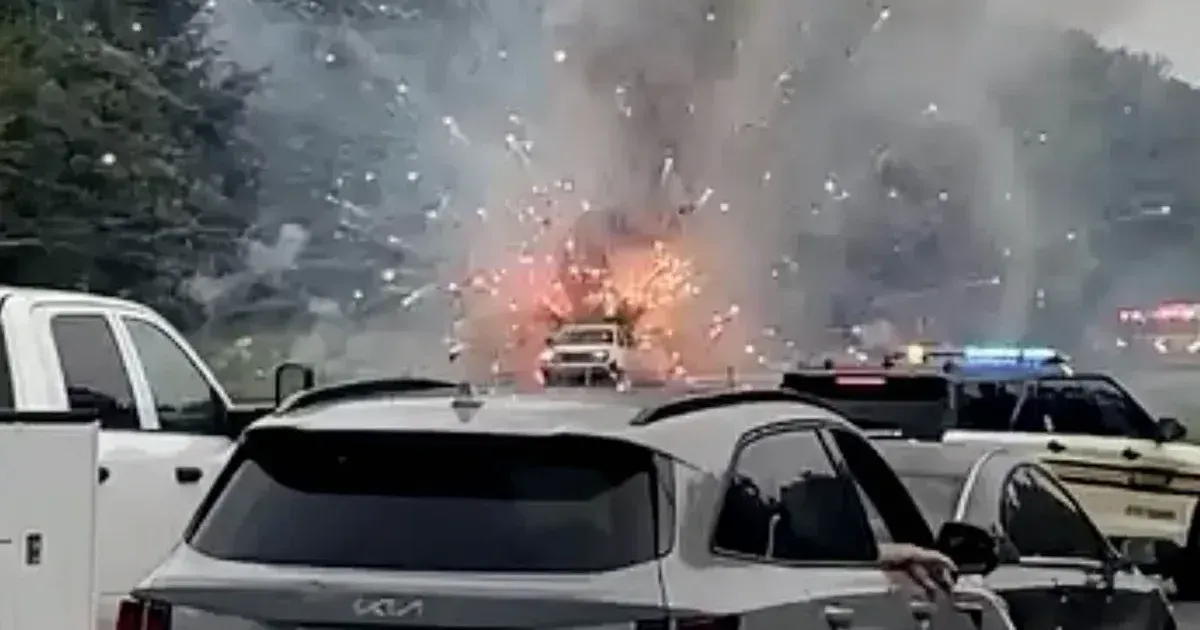
A trailer carrying fireworks caught fire on a Tennessee interstate and sent pyrotechnics shooting across the roadway as motorists slowed at a distance. The blaze showed how quickly consumer fireworks become a transport hazard once heat reaches packed cargo. The incident happened on June 6, 2026, near Chattanooga, turning a highway fire into a brief but hazardous roadside display that forced officials to keep traffic away from the burning cargo.
Authorities said the vehicle was on Interstate 75 near the Ooltewah area when the trailer became involved in flames. Fireworks inside the cargo area ignited in bursts, sending sparks and small rockets from the shoulder while smoke drifted across the scene. The location mattered because northbound interstate traffic had limited room to maneuver once emergency vehicles, smoke and debris narrowed the usable roadway.
Video from passing drivers showed why responders treated the fire as more than a routine vehicle emergency. No initial injuries were reported, but fireworks can launch unpredictably once heat reaches the cargo, creating a risk for drivers, firefighters and anyone standing too close to the shoulder.
Highway Fire Response
The Tennessee Highway Patrol and local emergency crews established a perimeter and diverted traffic as explosions continued. Firefighters typically avoid moving close to a fireworks load during active discharge because unexploded shells and high-velocity debris can injure responders even after the main flames appear to slow.
Crews waited for the trailer to cool before cleanup teams moved in to remove debris from the shoulder and travel lanes. Investigators are expected to review the vehicle, cargo and transport conditions to determine whether a mechanical failure, tire issue, brake heat or another ignition source started the fire. That review can include the wheel wells, axle assembly, cargo packaging and driver timeline, because heat buildup often begins before a driver sees flames.
The response also required road checks after the flames were out. Intense heat from trailer fires can damage pavement, and loose pyrotechnic material must be treated as a hazard until disposal crews confirm it is inert, which can keep lanes closed longer than a normal roadside fire.
Video Captures the Hazard
Bystander footage made the scene look like an accidental fireworks show, with bursts rising from ground level beside an active highway rather than from a controlled launch area. The visual effect drew attention online, but officials treated the fire as a transport safety incident from the start.
The Tri-Community Volunteer Fire Department said the trailer's fireworks became involved in the blaze, causing repeated explosions during the incident. The highway reopened only after emergency crews contained the scene, cleared debris and confirmed that no active fireworks remained on the roadway, a reminder that consumer fireworks can become a serious cargo hazard long before they reach a store, event site or private celebration. For carriers, the incident underscores why summer fireworks shipments require secure packaging, careful vehicle inspection and rapid communication with dispatchers when heat, smoke or tire trouble appears on the road. For drivers caught nearby, the safest response is distance: fireworks can travel at odd angles once a cargo fire breaks containment.
Because the trailer was carrying pyrotechnics rather than ordinary goods, the safest response was patience. Responders had to assume that some items could remain live after the visible fire faded, and that assumption shaped the lane closures, the cleanup sequence and the decision to keep bystanders away until the scene was fully checked. That slower approach also protects cleanup workers who may not know which fragments are spent and which still contain active powder. The practical lesson for motorists is simple: a fireworks cargo fire may look like a spectacle, but it should be treated like an active hazard until responders safely reopen the road completely. The cleanup timeline also matters for carriers that move seasonal cargo through interstate corridors. A delayed reopening can strand drivers, force detours and create secondary crash risks when traffic backs up near a blocked shoulder.