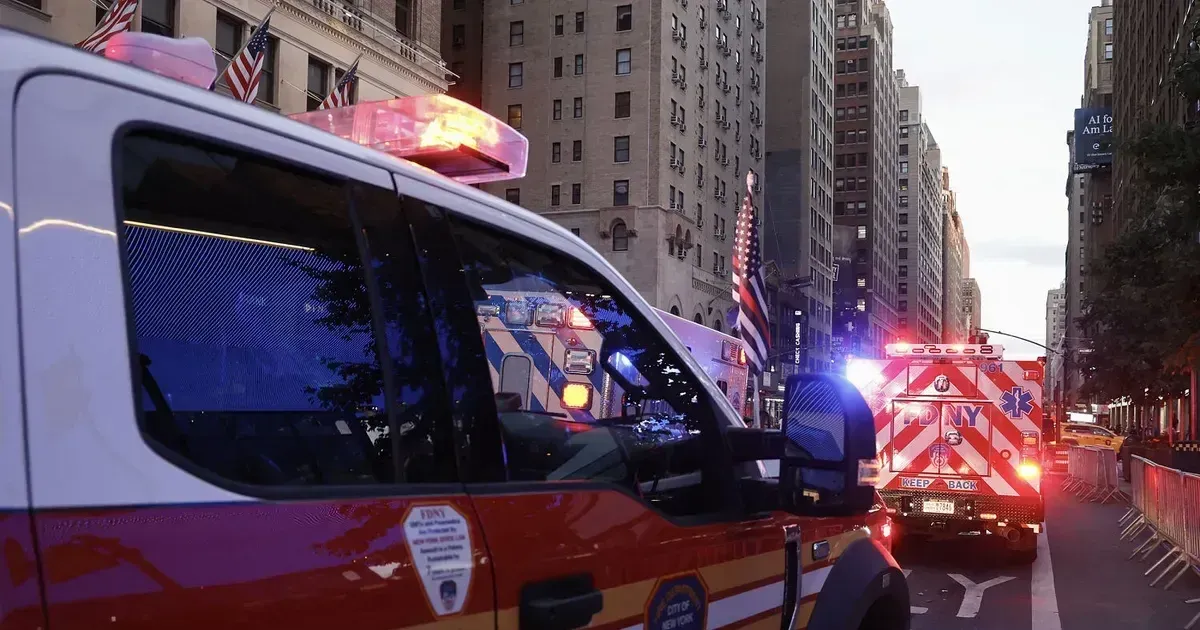
Amtrak police took a suspect into custody Sunday evening after a violent confrontation left six people wounded at one of the busiest transportation hubs in the United States. Emergency responders arrived at the intersection of West 33rd Street and Seventh Avenue at 7:02 p.m. to find multiple victims suffering from knife wounds near the station entrance. This act of violence occurred on June 7, 2026, marking a meaningful breach of safety within the subterranean corridors of the Manhattan transit complex.
First responders from the Fire Department of New York arrived minutes after the initial reports of a man wielding a knife. Medical teams prioritized the extraction of six civilians from the crowded terminal area. According to departmental records, one victim suffered serious injuries, two sustained moderate wounds, and three others were treated for minor lacerations. The rapid deployment of medical assets prevented the situation from deteriorating into a mass casualty event during the high-traffic Sunday evening commute.
Medical personnel transported five patients to Bellevue Hospital for urgent stabilization and treatment. One victim remains in critical condition at the facility. A sixth patient, who sustained less severe injuries, was taken to NewYork-Presbyterian/Weill Cornell Medical Center for further observation. Sources familiar with the early stages of the investigation indicated the suspect may have been experiencing homelessness at the time of the attack, though officials have not confirmed a specific motive for the stabbing spree.
Multiple witnesses described a chaotic scene as commuters fled the West 33rd Street corridor. Security footage from the transit hub is currently being reviewed by investigators to determine the exact sequence of the attack. While the New York Police Department initially responded to the perimeter, the internal investigation is being led by the Amtrak Police Department due to the location of the primary crime scene.
Transit Security and Jurisdictional Oversight
Amtrak police officers established a secure perimeter around the affected terminal sections within minutes of the first emergency call. This swift apprehension of the suspect allowed for the partial resumption of train services, although serious delays persisted throughout the night. The coordination between federal transit police and city emergency services highlights the complex security layers required to protect a facility that serves hundreds of thousands of daily passengers.
"The suspect has been apprehended and an investigation is underway," Amtrak said in a statement released shortly after the incident.
Records indicate that Penn Station operates under a patchwork of law enforcement jurisdictions including Amtrak, the Long Island Rail Road, and the Metropolitan Transportation Authority. Conflicts regarding patrol zones and response times have long been a point of debate among transit advocates. Recent initiatives to increase police presence in the station were designed to deter exactly this type of random violent encounter. Investigators are now focused on how the suspect was able to initiate a multi-victim attack in a zone traditionally heavily patrolled by armed officers.
Surveillance data from the station entrance may provide clarity on whether the suspect was a known individual within the transit system. Officials have not yet released the name of the individual in custody or the specific charges he will face in Manhattan Criminal Court. Instead of releasing preliminary theories, the Amtrak Police Department stated that the investigation remains active as detectives interview the surviving victims and recover the weapon used in the attack.
Political Response to Manhattan Transit Violence
Mayor Zohran Mamdani addressed the stabbing late Sunday night through a formal briefing. Mamdani, who has frequently advocated for alternative safety measures in the subway and rail systems, described the event as horrific and unacceptable. The mayor confirmed he is working closely with transit authorities to assess current security protocols and identify potential gaps in the protection of commuters.
Public safety remains a central theme for the current city administration. Critics of the city's approach to transit security often point to the intersection of mental health crises and violent crime in major hubs. While the mayor expressed gratitude for the first responders, he emphasized that the city must address the root causes of such violence to prevent future tragedies. The administration has not yet announced any immediate changes to police staffing levels at Penn Station in response to this specific event.
New York transit hubs have historically faced heightened security during periods of social or political tension. Security analysts note that the geography of Penn Station, with its numerous exits and deep underground levels, presents unique challenges for rapid response teams. Despite these hurdles, the apprehension of the suspect happened without further injury to bystanders or law enforcement personnel. One victim remains in the intensive care unit as doctors work to manage life-threatening injuries sustained during the initial moments of the assault.
Penn Station Attack Tests Layered Transit Security
The stabbing at Penn Station exposes the persistent vulnerability of high-density transit nodes to unpredictable, localized violence. While large-scale counter-terrorism measures are powerful, the threat of a single individual with a bladed weapon is far more difficult to reduce through traditional surveillance or gate security. The incident will likely reignite the debate over the involuntary removal of mentally ill individuals from transit hubs, a policy that Mayor Mamdani has navigated with caution during his tenure.
Success in this case will be measured by how effectively Amtrak and the NYPD synchronize their data sharing to prevent similar actors from operating in the shadows of the terminal. If the investigation confirms the suspect had prior contacts with social services or law enforcement within the transit system, it will increase pressure on the city to implement more aggressive intervention strategies. The political stakes are high, as any perception of declining safety in Penn Station could impact the broader economic recovery of the Midtown Manhattan business district.
Transit volume is the lifeblood of the city's tax base, and violent events of this nature create a psychological barrier for suburban commuters who are already weighing the benefits of remote work against the risks of physical travel.