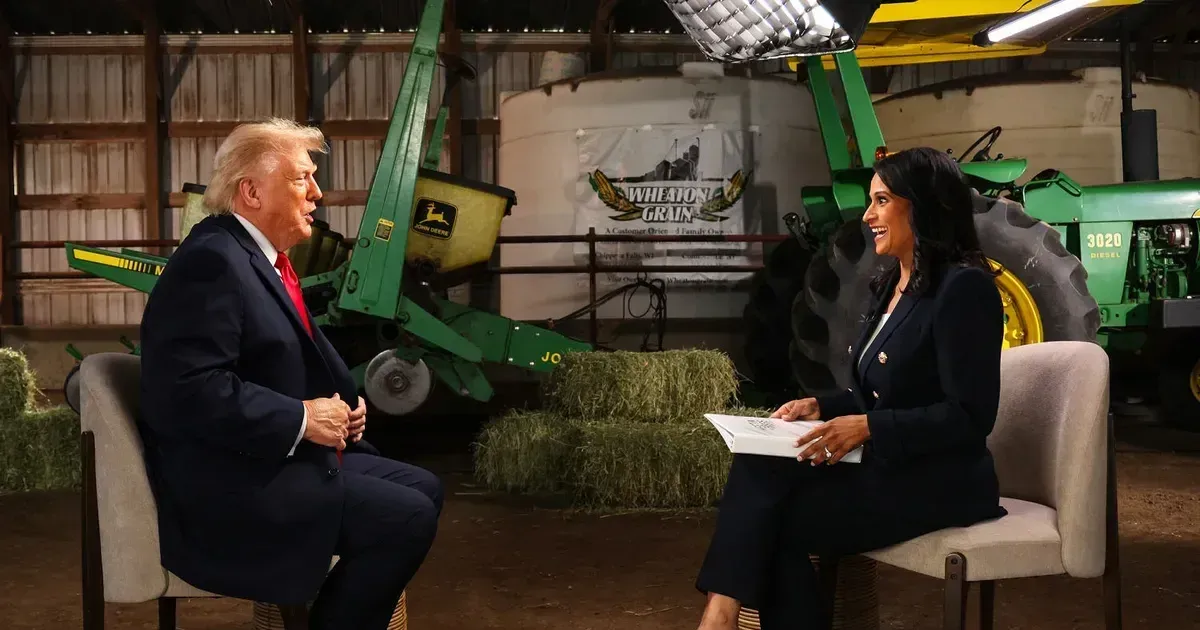
Donald Trump exited a scheduled interview with NBC News after a confrontation regarding his assertions about the California primary results. The interview clash turned a vote-counting dispute into a broader test of media discipline and campaign grievance politics. The interaction, led by Kristen Welker for the program Meet the Press, covered a broad range of national security and economic topics before the sudden conclusion. The June 5, 2026, exchange turned sharply after disagreements over the integrity of the West Coast primary, which remains undecided, prompted the president to leave the set in what witnesses described as a tense departure.
Television cameras captured the final moments of the exchange as the conversation turned toward state-level voting processes. While California officials continue to tally ballots in several high-profile races, the president stated that the results had been manipulated to his disadvantage. Welker responded with a six-word challenge that questioned the evidence behind his claims, leading to an immediate breakdown in the dialogue. Trump contended that the delay in counting suggested a lack of transparency, a point he has repeated since the polls closed earlier this month.
'I am telling you, what is happening in California is a rigged situation, and everyone knows it,' Trump said before standing up and ending the recording session.
Before the walk-out, the interview addressed the ongoing military tensions involving Iran. Trump argued that his current posture toward Tehran is necessary to prevent further regional instability. He asserted that previous administrations allowed the Iranian government to expand its influence without sufficient pushback. He also indicated that his team is preparing new sanctions packages to restrict energy exports from the region, citing a need to preserve global shipping lanes and maritime security.
Clash Over California Primary Results
Primary elections in the most populous U.S. state have become a focal point for the White House as final tallies remain outstanding. State election officials in Sacramento have attributed the delay to the high volume of mail-in ballots that require signature verification. Trump dismissed these explanations, suggesting that the time required to finalize the count invited fraud. Welker pointed out that no evidence of systemic manipulation has surfaced, a rebuttal that triggered the president's decision to storm off the set.
Journalistic standards for live interviews often involve real-time fact-checking, which the president has frequently criticized as biased. The confrontation in this June 2026 session followed a pattern of similar disagreements between the executive branch and national news outlets. Reporters present at the filming noted that the atmosphere shifted rapidly once the topic of election integrity emerged. Trump stayed for less than forty minutes of the planned hour-long session.
Voters in California have expressed frustration with the pace of the count, but non-partisan observers maintain that the process follows established legal protocols. The president persists in his belief that the extended timeline serves a political agenda. He contended during the interview that Republican candidates were leading in early returns only to see their margins shrink as more ballots were processed. This specific narrative has fueled internal party debates regarding the future of mail-in voting across the country.
Anti-Weaponization Fund and Foreign Policy
National security policy occupied the early portion of the transcript, specifically the creation of a new anti-weaponization fund. This initiative aims to redirect federal resources to investigate what the administration describes as the politicization of government agencies. Trump stated that the fund is essential to protect citizens from overreach by the Department of Justice and other investigative bodies. He argued that the current structure of federal law enforcement lacks sufficient oversight from the executive branch.
Economic data also featured prominently in the discussion, with the president defending his recent tariff proposals. He claimed that the domestic manufacturing sector has seen growth because of protectionist measures enacted earlier in his term. Although some analysts point to rising consumer prices, the administration maintains that long-term industrial strength outweighs short-term inflationary pressure. Trump argued that his policies have forced international competitors to negotiate more favorable trade terms for American businesses.
Iranian military maneuvers in the Persian Gulf have recently increased the urgency of the president's foreign policy rhetoric. During the interview, he refused to rule out further kinetic action if Iran continues to disrupt commercial traffic. He stated that the Defense Department has already positioned additional assets in the region to serve as a deterrent. He contended that his approach is the only way to ensure that Tehran respects international maritime boundaries.
The Walkout Turns Conflict Into the Message
The executive branch's recent budget priorities reveal a distinct shift in how federal oversight is funded. The emphasis on the anti-weaponization fund suggests a move to formalize political grievances within the federal bureaucracy. By allocating specific capital to investigate other agencies, the administration is building a parallel oversight structure that could bypass traditional congressional committees. The strategy effectively institutionalizes the president's distrust of the established legal framework, creating a permanent mechanism for challenging internal government findings.
Direct confrontation with media figures over election results continues to serve as a primary communication tool for the White House. The decision to walk out of a major network interview provides a specific visual of defiance that connects with the president's core supporters. Rather than engaging in a detailed debate over ballot-counting mechanics, the administration chooses to highlight the conflict itself. The approach prioritizes the narrative of a contested system over the procedural realities of state-led election administration. The political impact of these tensions likely will shape the legislative agenda for the remainder of the summer session.