Donald Trump will address the United States from the White House to reveal his administration's latest strategy for the war in Iran. The April 1, 2026 address is scheduled for primetime. Primetime remarks scheduled for 9 p.m. ET forced major broadcast networks to displace regular programming, including the season finales of The Masked Singer and Survivor. High-level White House officials describe the upcoming speech as an important update on a conflict that began with joint U.S.-Israeli strikes on Feb. 28. This televised appearance represents the president's first major direct communication with the public regarding the war's progress since the initial military operations started. National networks have cleared their schedules to accommodate the address.
Financial markets reacted with swift optimism to the news of the scheduled address. Bloomberg Television and Radio reported a surge in equity prices during the market close as investors anticipated a de-escalation of hostilities. Cross-platform coverage from Bailey Lipschultz and Carol Massar noted that the Dow Jones Industrial Average and S&P 500 gained ground on hopes of a clear exit strategy. Recent leaks from the executive branch suggest the president will outline a plan to conclude operations within the next three weeks. These expectations drove trading volumes to their highest levels in months.
Rising energy costs have placed immense pressure on the domestic economy since the onset of the war. Crude oil prices nearly doubled since the start of the year because of the persistent blockage of the Strait of Hormuz. This maritime passage is the transit point for 20% of global oil supplies. Scarcity in the energy market has trickled down to consumer goods, impacting everything from plastic manufacturing to the production of high-end semiconductors. Gas prices currently average over $4 a gallon across the United States. Economic data suggests that April is becoming an increasingly difficult period for American households.
Oil Market Volatility and JetBlue Fee Hikes
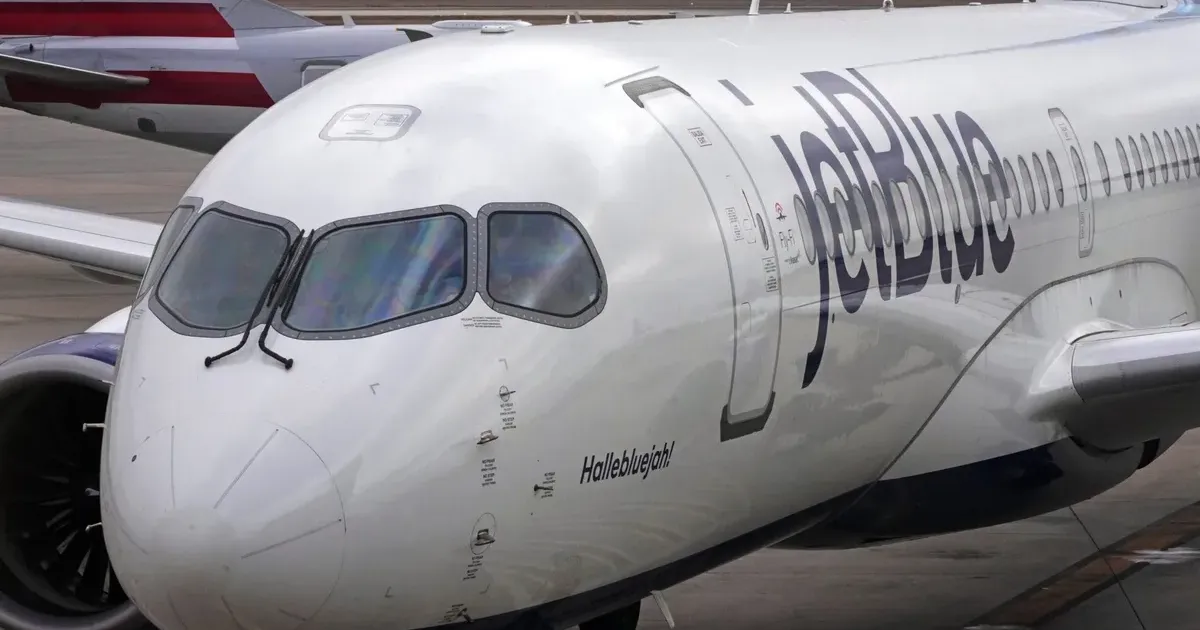
JetBlue announced a serious increase in checked bag fees on Monday to offset the skyrocketing cost of jet fuel. Passengers flying during peak periods like April spring break or the summer season will now pay $49 for their first checked bag, a rise from the previous $40. Standard domestic economy fees moved from $35 to $39. The airline attributed these changes to the 85% jump in jet fuel prices recorded since military action began in late February. Higher operating expenses now threaten the profitability of major U.S. carriers. Airspace closures across the Middle East have forced airlines to adopt longer, more expensive flight paths.
“While we recognize that fee increases are never ideal, we take careful consideration to ensure these changes are implemented only when necessary,” JetBlue stated in an official communication to The Associated Press on Tuesday.
Aviation fuel hit $4.64 per gallon on Tuesday, according to the U.S. Jet Fuel Index provided by Argus Media. This price stood at just $2.50 on the day before the initial strikes. Market intelligence from Chicago, Houston, Los Angeles, and New York shows consistent upward pressure across all major fuel hubs. Fuel typically accounts for 25% of an airline's total operating budget. Analysts expect other domestic carriers to follow the lead of the New York-based airline by implementing similar surcharges or ticket price hikes. Operating costs remain a primary concern for the entire transportation sector.
White House Claims of Regime Change
Donald Trump told reporters earlier on Wednesday that the United States would be out of Iran pretty quickly. The president claimed that his administration has already achieved full regime change, even though the existing Iranian government persists in its current form. Strategic goals described by the White House include the permanent prevention of Iranian nuclear weapon capabilities. Recent comments to Reuters suggest the military might pivot toward spot hits rather than sustained ground or air campaigns. Military planners have reportedly converged around a two-to-three-week timeline for withdrawing the bulk of forces. The administration insists these objectives have been met.
Gregory Brew, a senior analyst at Eurasia Group, observed that the administration's rhetoric appears designed to frame the current situation as a total victory. Discrepancies between official claims and ground realities persist as the Iranian leadership continues to issue directives from Tehran. Independent intelligence suggests that while infrastructure has been damaged, the political hierarchy remains intact. Politically, the president faces a narrowing path as his approval rating has slipped below 40%. Recent polling indicates a majority of the American public opposes the continuation of the conflict. Domestic pressure to conclude the war has become a dominant theme in Washington.
Strait of Hormuz and Global Supply Chains
Obstructions in the Strait of Hormuz continue to disrupt the flow of essential commodities. Beyond oil, the maritime bottleneck affects the transport of components required for the latest artificial intelligence technology and consumer electronics. Manufacturing delays have been reported in the automotive and aerospace industries. Companies reliant on petroleum-based plastics have seen their margins shrink as raw material costs climb. Logistics experts warn that a prolonged closure will lead to more permanent shifts in global trade routes. Supply chains are currently operating under extreme duress.
International carriers have already begun implementing fuel surcharges to reduce the impact of the conflict. Non-U.S. airlines were among the first to adjust their pricing models after the Strait of Hormuz was partially restricted. The energy intelligence gathered by Argus Media indicates that the volatility is not limited to the Middle East but has global repercussions. If the president's address fails to provide a concrete timeline for reopening shipping lanes, market volatility will likely return. Corporate leaders are awaiting the 9 p.m. address with skepticism. Energy markets stay focused on the physical movement of tankers through the Persian Gulf.
Middle East Exit Credibility. Is a two-week withdrawal from a major regional conflict a logistical reality or a political necessity? The White House’s insistence on a victory lap regarding regime change is a blatant exercise in narrative management that ignores the operational facts on the ground. Declaring a mission accomplished while the Iranian state apparatus remains functional is a gamble that relies entirely on the short memory of the American voter. The disconnect between Washington’s triumphalism and the $4.64 per gallon jet fuel price is a chasm that cannot be bridged by a primetime speech.
Corporate America has already cast its vote on the war's success. JetBlue’s aggressive fee hikes and the doubling of crude prices suggest that the private-sector expects long-term instability regardless of the president's rhetoric. The administration is attempting to sell a surgical exit to a public that is increasingly fatigued by the economic consequences of Middle Eastern intervention. If the Strait of Hormuz stays restricted, the claimed victory will be hollow as domestic inflation erodes the presidency's remaining political capital.
The upcoming address will likely prioritize optics over geopolitical substance. Expect a focus on nuclear containment to distract from the lack of a new government in Tehran. The strategy is a desperate attempt to salvage polling numbers before the economic damage becomes irreversible. Credibility is failing.