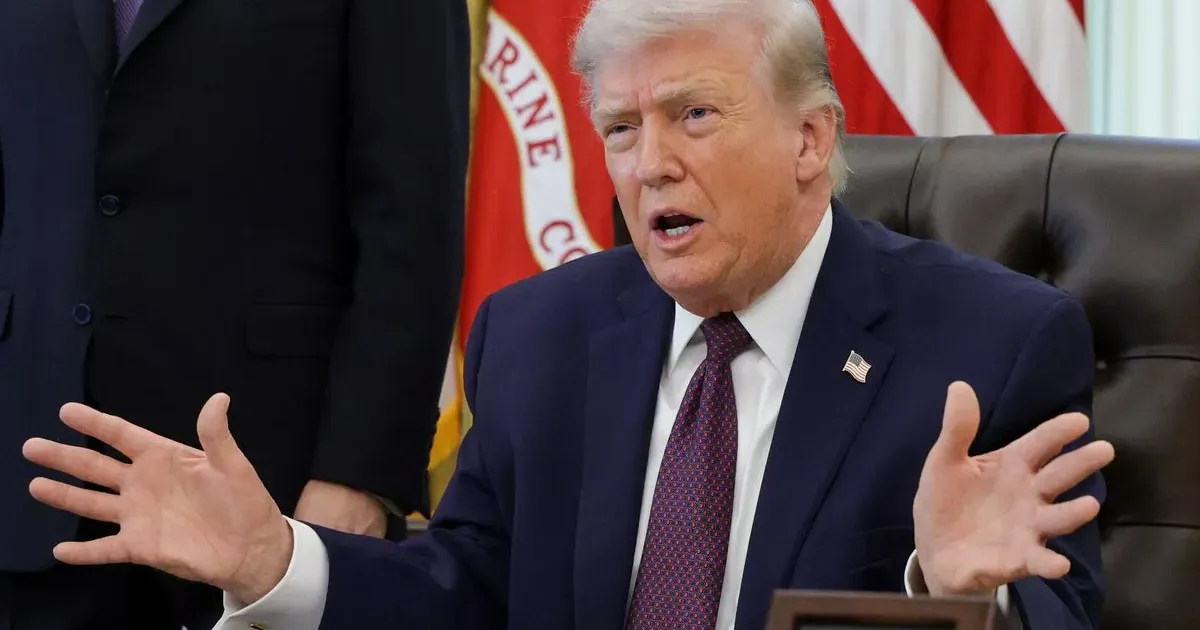
Donald Trump announced that the United States military could cease operations against Iran within three weeks. On April 1, 2026, speaking from the White House, the president suggested that Tehran does not need to agree to a formal peace treaty or diplomatic settlement before American forces begin their withdrawal. Military analysts in Washington expressed immediate skepticism regarding the timeline, noting that the five-week conflict continues to disrupt global energy markets. Tehran continues to launch drone and missile strikes against regional infrastructure despite the threat of expanded American aerial bombardment.
President Trump described the current conflict as a short-term engagement that has already achieved its primary objectives. While previous administrations insisted on comprehensive nuclear and ballistic missile deals as prerequisites for de-escalation, the current executive branch is signaling a departure from that requirement. Pentagon officials have not yet released a formal exit plan to match the two to three week window. Previous estimates from the Department of Defense suggested a much longer engagement would be necessary to degrade Iranian capabilities in the Persian Gulf.
Confusion surrounding the administration's goals persists as statements from various departments provide conflicting narratives. France 24 reported that the president's remarks highlighted shifting and at times contradictory messages about how the war might end. Intelligence reports suggest that the Iranian Revolutionary Guard Corps remains operational and capable of retaliatory strikes. Commanders on the ground have reported no reduction in hostilities during the last forty eight hours of combat.
Trump Sets Rapid Timeline for Iran Military Exit
Military strategy appears to have shifted toward a unilateral cessation of hostilities rather than a negotiated settlement. President Trump told reporters that Iran did not have to make a deal as a requirement for the conflict to wind down. Conventional diplomatic wisdom suggests that withdrawing without a formal agreement could leave a power vacuum in the region. National security advisors are reportedly divided on whether this quick exit strategy secures American interests or merely pauses the violence. Current deployment levels involve over fifty thousand personnel across several operational theaters.
Critics of the plan argue that the rapid timeline ignores the logistical reality of moving heavy equipment out of active combat zones. Iran currently maintains a sophisticated air defense network that has successfully intercepted several American drones since the start of the war. Iranian officials have not responded to the president's timeline with any promises of their own. Military operations continue to focus on coastal batteries and naval assets along the southern coast of Iran.
NATO Alliance Faces Dissolution Threat over Lack of Support
Donald Trump has linked the Iranian conflict to the future of the NATO alliance, claiming that European partners have failed to provide adequate military support. He referred to the North Atlantic Treaty Organization as a paper tiger during a press conference on Wednesday. Specifically, the president targeted the maritime capabilities of his closest allies. Sources at The Independent confirmed that the president specifically questioned the effectiveness of the British fleet in current naval operations.
President Trump claims the alliance is a paper tiger and the UK doesn’t even have a navy.
London has defended its naval contributions, citing the presence of several destroyers and support vessels in the region. British officials noted that their fleet is currently engaged in protecting commercial shipping from Iranian fast-attack craft. Tensions between Washington and European capitals have reached a peak not seen in decades. Several member states have refused to commit ground troops to a conflict they view as a regional dispute instead of a collective defense obligation.
The threat to withdraw from the alliance comes at a moment when European security feels increasingly fragile. United Kingdom officials expressed frustration with the characterization of their naval strength, pointing to ongoing modernization efforts. NATO Secretary General Mark Rutte has attempted to mediate the dispute, though the White House remains firm in its criticism. American funding for the alliance accounts for the largest share of the organization's total budget.
Strategic Contradictions in Washington Foreign Policy
Foreign policy experts struggle to reconcile the president's desire for a quick exit with his aggressive rhetoric toward allies. While one segment of the administration focuses on reducing the American footprint, another part of the executive branch continues to demand increased military spending from Europe. Economic data suggests the war has already cost the United States billions in direct military expenditure and lost trade. Fuel prices in the United States have climbed by twenty percent since the start of the five week war.
Tehran maintains a defiant stance despite the president's claims of a nearing conclusion. Iranian leadership has publicly stated that they will not be intimidated into concessions by what they call American aggression. The absence of a formal diplomatic channel complicates any effort to ensure that a withdrawal does not lead to a new round of escalations. Diplomatic missions in the region have reported that the Iranian public has rallied around the central government since the airstrikes began.
Hormuz Blockade Persists Despite White House Optimism
The Strait of Hormuz remains the central focal point of the military engagement. Iran currently maintains what CBS News describes as an iron grip on the narrow waterway, through which twenty percent of the world's oil supply passes. Efforts to break the blockade have met with meaningful resistance from Iranian naval mines and coastal missile batteries. Shipping insurance rates for tankers in the Persian Gulf have reached record highs in the last month.
Global markets have reacted with volatility to the president's conflicting signals about the war's duration. Oil traders expressed concern that a quick American withdrawal without a security guarantee for the strait could lead to a permanent closure of the shipping lane. Iranian naval forces continue to harass commercial vessels that do not comply with their transit regulations. The price of Brent Crude remains above one hundred dollars per barrel.
American naval commanders have warned that clearing the strait of mines and subsurface threats will take longer than the president's three week estimate. Specialized minesweeping vessels must operate under constant threat of shore-based artillery. Still, the White House insists that the pressure campaign has reached its peak. Military planners have not yet confirmed if the withdrawal includes the carrier strike groups currently positioned in the Arabian Sea.