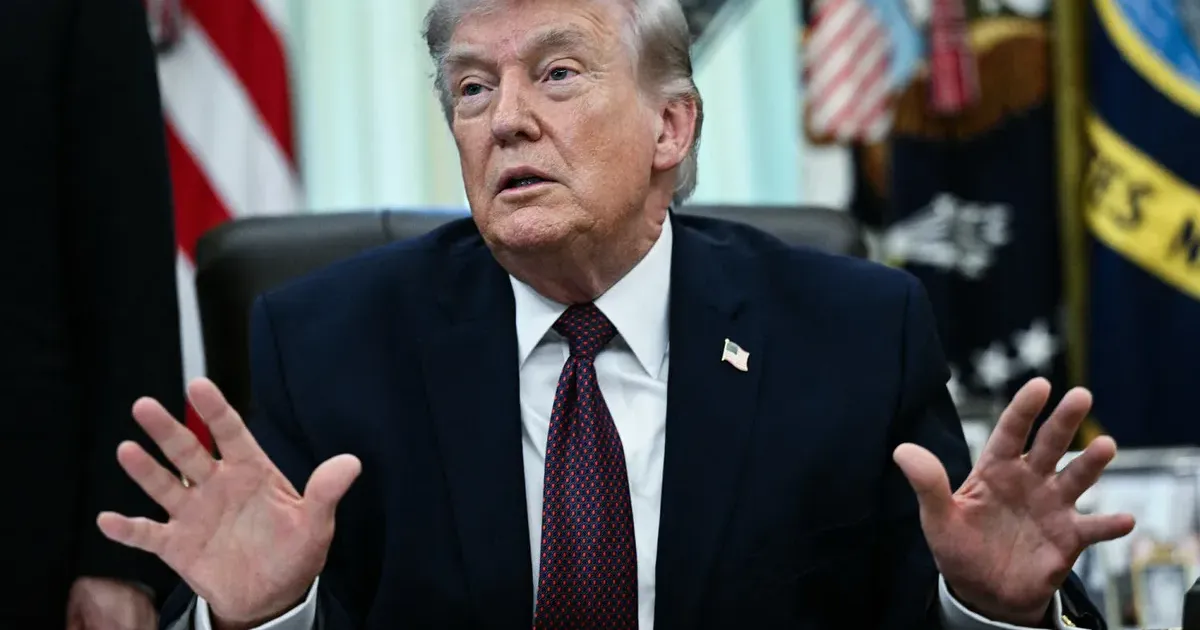
Donald Trump is preparing a national address as the Iran war enters a more dangerous phase and the White House weighs a ground operation around nuclear sites. The briefing follows weeks of airstrikes, energy disruption and growing allied unease over the campaign. White House Press Secretary Karoline Leavitt said the president would give the public an April 1, 2026 update on the conflict at 9 p.m. Eastern Time.
Plans for the address coincide with a meaningful hardening of the administration's stance on Iranian nuclear infrastructure. Defense officials are currently evaluating a complex proposal to insert elite ground forces into Iranian territory to seize and remove stockpiles of highly enriched uranium. Military planners suggest such an operation would place American personnel deep behind enemy lines for several days of extraction work. Specialized logistics teams would be tasked with securing and transporting the radioactive materials under heavy fire.
Special Operations Teams Target Iranian Uranium Deposits
Presidential advisers see the extraction of uranium as a necessary step to prevent Tehran from achieving breakout nuclear capability. If the mission proceeds, it would mark the first meaningful deployment of American boots on the ground since the current conflict began more than four weeks ago. Casualties are expected to be high given the density of Iranian air defenses around nuclear hubs. These installations are often buried deep within mountain ranges or under layers of reinforced concrete.
Security at these facilities is reportedly intense. Ground units would face not only regular military units but also remnants of the Revolutionary Guard who have retreated to these strategic strongholds. Success depends on total air superiority and the surgical precision of extraction teams. Coordination with regional intelligence assets would be essential for navigating the subterranean complexes.
Washington maintains that neutralizing the nuclear threat is the primary objective of the campaign. Some officials suggest that a successful removal of enriched uranium could pave the way for a rapid withdrawal of American forces. President Trump previously indicated he expects the United States to leave Iran soon after specific military objectives are met. Whether the removal of uranium constitutes the final milestone for withdrawal remains a point of internal debate.
Wall Street Backs Military Action Despite Market Risks
Jamie Dimon, chairman and CEO of JPMorgan Chase, offered a forceful defense of the war during a recent interview at the bank's headquarters at 270 Park Ave in Manhattan. Dimon argued that the Iranian government has been a malign actor for nearly half a century and that confronting the regime was long overdue. Western powers have tolerated proxy wars for too long in his view.
Market instability and rising energy costs are acknowledged side effects of the ongoing hostilities. Dimon conceded that the conflict creates short-term risks for the global economy and oil prices. He emphasized that the long-term benefit of neutralizing Tehran would outweigh the current financial turmoil. Institutional investors have expressed concern over the duration of the blockade in the Persian Gulf.
"Having those folks, their [grip] on the Strait of Hormuz and funding all these proxy wars, why the Western world put up with these proxy wars for 45 years is kind of beyond me," Jamie Dimon said.
High energy prices are already hitting consumers as kerosene and jet fuel costs reach record levels. Global trade through the Strait of Hormuz persists in a state of paralysis due to an Iranian blockade. Wall Street leaders like Dimon view this disruption as a necessary price for a more stable regional order. Trading volumes in energy futures have spiked as volatility reaches multi-year highs.
European Allies Reject American Requests for Airspace
Tensions between Washington and its traditional partners in Brussels have reached a boiling point over the refusal of several nations to support the war effort. France recently closed its airspace to aircraft transporting military supplies to Israel, a move that drew a sharp rebuke from the White House. Trump responded by calling the French government very unhelpful and warning that the United States would remember the decision. This strain on the transatlantic partnership has complicated military logistics for the Pentagon.
Resistance is spreading beyond Paris. Italy, Poland, Spain, and Switzerland have also implemented flight bans or refused to allow the use of their domestic military bases for the campaign. These nations argue that the war was initiated unilaterally and lacks a clear mandate under international law. Madrid specifically cited the lack of a United Nations Security Council resolution as a primary reason for its non-participation.
A spokesperson for the Elysee Palace expressed astonishment at the American president's recent criticisms. French officials contend they have been consistent in their position since the start of the war. They maintain that their sovereign territory cannot be used as a staging ground for a conflict they did not authorize. Diplomatic cables suggest that several other European capitals are considering similar restrictive measures.
Retaliatory rhetoric from the White House suggests a serious change in how the administration views its obligations to allies. Trump told European leaders that if they cannot secure jet fuel because of the Hormuz blockade, they should learn to fight for themselves. He bluntly advised them to go get their own oil rather than relying on American intervention. The administration has hinted at a reduction in intelligence sharing with non-cooperative partners.
War Powers and Energy Pressure
Can a superpower maintain global hegemony while simultaneously alienating its wealthiest allies and most critical trade partners? The Trump administration seems intent on proving it can, yet the math rarely favors the isolationist. By threatening to abandon Europe to its own energy insecurities, Washington is effectively dismantling the security architecture that has served American interests for eighty years. U.S. foreign policy is now operating as a transactional enterprise, choosing conflicts based on executive preference while ignoring the collective defense obligations that once defined the West.
Jamie Dimon's support for the conflict reveals a dangerous alignment between the military-industrial complex and the highest levels of finance. When the CEO of the nation's largest bank dismisses short-term economic ruin in favor of a theoretical geopolitical correction, it signals that Wall Street has priced in the cost of human lives and global instability. They are betting on a total victory that has eluded every other Western intervention in the Middle East over the past three decades. Peace in the region is a secondary concern to the preservation of dollar-denominated energy dominance.
The extraction of enriched uranium through special operations is a desperate attempt to salvage a clear victory from a muddled and unpopular war. If these teams fail or are captured, the president will face a hostage crisis that could dwarf the 1979 disaster. The administration is essentially betting the entire presidency on a high-risk commando raid that most of the world considers an illegal provocation. This is not leadership; it is a high-stakes gamble played with other people's children. America is walking into a trap of its own making.