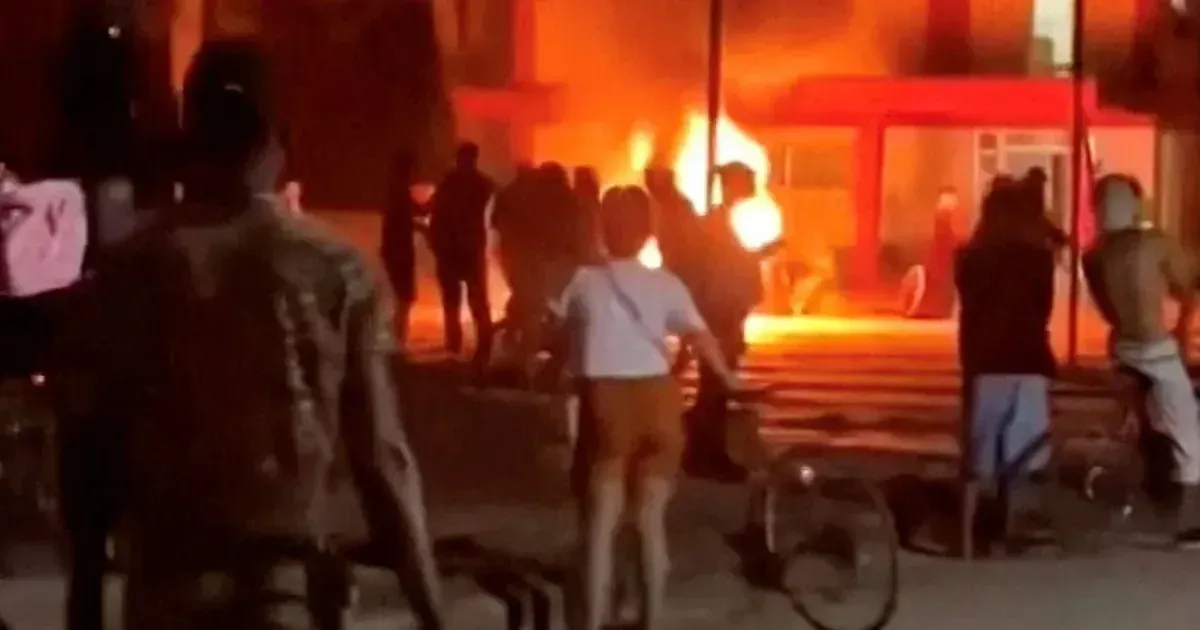
Donald Trump signaled a potential shift in military focus toward the Caribbean on March 16, telling reporters that his administration is prepared to take necessary steps regarding the ongoing crisis in Cuba. This statement came shortly after a rare public riot rattled the communist-led nation, suggesting that his recent military focus on Iran has not distracted him from regional security concerns. Reports from Havana indicate that the government is simultaneously attempting to stave off economic collapse by inviting its most vocal critics to invest. Oscar Perez-Oliva Fraga, the Cuban economic czar, revealed in an interview with NBC News that the island will now allow its nationals living abroad to own businesses and invest in the local private sector. Policy shifts this drastic are aimed at the wealthy Cuban diaspora in cities like Miami, representing a move to inject foreign currency into a failing system. The offer arrives at a time of extreme tension between Washington and Havana. Direct foreign investment from Cuban nationals has long been a taboo subject for the Communist Party. Oscar Perez-Oliva Fraga insisted that the new regulations are intended to modernize the economy, yet the timing suggests a response to the growing internal dissent that recently boiled over into the streets. Meanwhile, the White House has characterized these economic gestures as too little and too late. $11 billion in potential investment capital sits in South Florida, but whether those individuals will trust the Havana regime remains a point of deep skepticism. Intelligence reports suggest the recent riots were sparked by chronic food shortages and persistent electrical blackouts.
Trump Turns Attention to Cuba
Havana officials are now struggling with the worst economic downturn since the Special Period of the 1990s. The move to allow Miami-based investment marks a departure from decades of Marxist orthodoxy that enforced state control over all means of production. By opening the door to the diaspora, the Cuban leadership hopes to create a buffer against the crippling effects of the long-standing U.S. embargo. Foreign reserves have dwindled to record lows, making the procurement of essential goods nearly impossible for the state-run distribution system. Investors in South Florida remain wary of the legal structure surrounding these proposed businesses. For instance, the Cuban government has not yet clarified if these investors will be allowed to repatriate profits or if they will be forced to keep their earnings within the domestic banking system.
Havana Opens Door to Exile Capital
Washington has responded to the economic overtures from Havana with increased hostility and threats of direct action. The previous administration had toyed with the idea of easing certain travel restrictions, a policy that Donald Trump has methodically dismantled. Trump told Sky News that the U.S. would keep all options open.
Cuban nationals living abroad in places such as Miami will be allowed to invest in the private sector and own businesses in their homeland.
The State Department has ramped up its language regarding the Cuban government's handling of the recent protests. Officials in Washington argue that the Havana regime is using the promise of economic reform to distract from its crackdown on political dissidents. While the economic czar speaks of business opportunities, police units in Havana have been seen patrolling neighborhoods with increased frequency. Security forces arrested dozens of individuals following the riots, according to local human rights observers. Riots on the island are no longer isolated incidents but appear to be part of a broader pattern of dissatisfaction among the youth. Even the Cuban government maintains that these disturbances are orchestrated by foreign agents seeking to destabilize the revolution. Donald Trump has used these claims to justify a hardline approach, stating that the U.S. is prepared to increase pressure if Havana expands its crackdown.
Stability in the Caribbean is now a secondary concern for a president who just concluded a major campaign in the Middle East. The Treasury Department is investigating whether any existing sanctions would prohibit Miami residents from taking advantage of Havana's new investment offer. Legal experts believe that the Helms-Burton Act could still prevent such transactions, regardless of the changes made by Cuban authorities. Oscar Perez-Oliva Fraga has yet to address how his plan will bypass U.S. federal law.
Private sector growth has been a slow and painful process in Cuba, often hampered by bureaucratic red tape and ideological shifts. At the same time, the number of small businesses, known as pymes, has grown to several thousand over the last few years. These entities provide a lifeline for citizens who can no longer rely on the state for basic services. The inclusion of the diaspora could theoretically scale these operations to a level that provides meaningful relief to the general population.
The conflict remains a struggle between the survival of the Communist Party and the demands of a modern global economy. Donald Trump seems intent on forcing a collapse rather than allowing a managed transition to a mixed economy. Capitalism is no longer a dirty word in Havana when the alternative is total collapse. Future developments will depend on whether the Miami community chooses to engage with a regime they have spent generations trying to topple. Oscar Perez-Oliva Fraga continues to hold meetings with potential participants despite the looming threat of U.S. intervention.
Cuba Pressure Mixed Security and Money
Vultures are circling Havana, and for the first time in sixty years, the Cuban government is handing out the carving knives. The decision by Oscar Perez-Oliva Fraga to invite Miami capital back to the island is not a gesture of reconciliation but a confession of bankruptcy. It is a cynical ploy to use the wealth of the very people the regime once exiled to subsidize its own survival.
Why should a successful business owner in Miami risk their hard-earned capital on a regime that could seize their assets on a whim? History shows that the Cuban Communist Party only embraces the market when its back is against the wall, only to retreat into central planning the moment the pressure eases. Donald Trump is correct to remain skeptical, even if his language leans toward the bellicose. The United States must not allow Havana to use the diaspora as a financial life raft while maintaining its authoritarian grip.
If the Cuban leadership truly wants investment, they should start with the ballot box, not the checkbook. Anything less than a total overhaul of their political system makes any investment a donation to the very machinery of oppression that created the crisis. Havana is desperate, and Washington should let that desperation reach its natural conclusion.