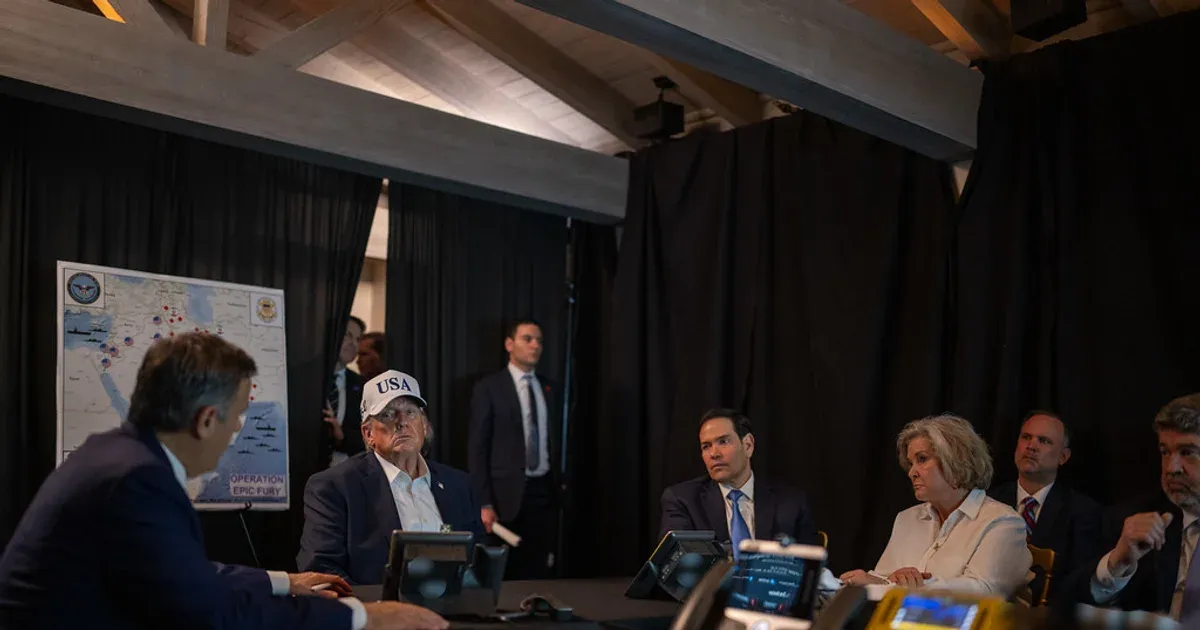
Donald Trump’s Iran threat moved the conflict debate from military pressure to civilian-risk law. Critics in Washington said targeting utilities, bridges or other non-military infrastructure would sharply escalate the confrontation. Senate Minority Leader Chuck Schumer framed the comments as evidence of dangerous tactical restraint problems. On April 6, 2026, Trump intensified his rhetoric against Tehran by threatening destruction of infrastructure inside Iran. Senate Minority Leader Chuck Schumer led the domestic opposition, describing the president as a man acting without tactical restraint. Schumer argued that targeting civilian utilities violates enduring international norms designed to protect non-combatants. Legal analysts noted that the Geneva Conventions strictly prohibit the destruction of objects essential to the survival of the civilian population.
Tehran responded by maintaining a blockade of the Strait of Hormuz, a critical maritime passage for global energy supplies. Trump addressed the blockade directly in his expletive-riddled communication. Crude oil markets reacted to the escalating threats with immediate volatility as traders weighed the possibility of a total shutdown of the Persian Gulf shipping lanes.
Congressional Critics Denounce Trump Over Infrastructure Threats
Legislative leaders in the United States spent much of Monday debating the legality of the president's stated military objectives. Schumer told reporters that the commander-in-chief was ranting like an unhinged madman. He emphasized that the proposed strikes on bridges and power grids would likely alienate European allies who remain wary of a total regional collapse. White House officials defended the rhetoric as a necessary component of maximum pressure. They contended that Iran must feel the weight of its decisions regarding maritime access. Military planners have reportedly prepared options for surgical strikes that aim to minimize civilian casualties while disabling Iranian industrial capacity.
International observers expressed concern that such strikes would trigger a humanitarian crisis within major Iranian cities. Power outages would cripple hospitals and water filtration systems. This scenario would force millions of civilians into neighboring countries.
“Open the Fuckin’ Strait, you crazy bastards, or you’ll be living in Hell.”
Trump posted those words on Sunday evening, marking a new low in diplomatic communication between the two nations. His advisors later clarified that the president remains committed to a peaceful resolution if Tehran complies with US demands. Iranian officials have not yet issued a formal response to the specific threat against their power grid.
Global Aviation Networks Struggle with Rising Jet Fuel Costs
Aviation markets mirrored this geopolitical instability as energy prices surged to their highest levels in three years. Shanelle Kaul reported for CBS News that skyrocketing jet fuel costs are forcing global carriers to implement emergency surcharges. Travelers across the United States and United Kingdom are facing ticket price increases of up to 40 percent on long-haul routes. Major airlines including British Airways and Delta have already adjusted their flight paths to avoid Iranian airspace entirely. Rerouting adds hours to travel times and consumes considerably more fuel per journey. Fuel prices hit a peak of $140 per barrel during early trading on Monday morning.
Industry experts predict that several smaller budget carriers may face insolvency if the conflict persists through the summer travel season. Operational costs have outpaced revenue projections for the first quarter. Airlines are currently burning through cash reserves to maintain essential routes between London and Singapore. Cargo carriers also reported delays in the shipment of consumer electronics and medical supplies. Shipping insurance premiums for vessels entering the Persian Gulf have quadrupled since the five-week war began. Every major logistics firm has issued warnings about potential supply chain breaks.
Strait of Hormuz Blockade Triggers Economic Volatility
Energy security dominates the current strategic discussion in Washington and London. Iranian naval forces have successfully obstructed the passage of oil tankers through the narrowest point of the Strait of Hormuz. Control over this waterway gives Tehran meaningful leverage over the global economy. United States Navy vessels currently maintain a presence in the Gulf of Oman. Commanders are awaiting orders to begin escorting commercial ships through the contested zone. Trump indicated that any interference with American vessels would result in immediate retaliation against Iranian military assets.
Markets in Asia saw a sharp decline in manufacturing output as energy-intensive factories slowed production. Japan and South Korea rely heavily on the oil that passes through the Hormuz choke point. Strategic petroleum reserves in those nations are currently at 60 percent capacity. Economically, the pressure is mounting on both sides to find a face-saving exit. Global investors moved capital into safe-haven assets such as gold and Swiss francs throughout the morning. The Dow Jones Industrial Average dropped 800 points in the opening hour of trading.
Diplomatic Channels Signal Possible Monday Peace Agreement
Negotiations continue behind closed doors despite the aggressive public posture of the American president. Trump told US media on Monday that there is a good chance for a deal to emerge within the next 24 hours. Swedish diplomats are reportedly acting as intermediaries between the two warring governments. Iranian leadership has demanded the lifting of all sanctions before reopening the Strait of Hormuz. Washington maintains that the blockade must end before any economic relief is granted. Both sides are currently engaged in a game of brinkmanship that threatens to spiral into a broader regional conflict.
Progress in the talks depends on whether the Iranian Supreme Leader accepts the terms of a temporary ceasefire. US officials have offered a phased reduction in naval presence in exchange for guaranteed maritime security. Protesters in several Iranian cities have called for an end to the war as food prices climb. Evidence of a breakthrough may appear in the form of a joint statement from the United Nations Security Council later this evening. Diplomats from China and Russia have urged restraint from both parties. The next twelve hours will determine the path of global energy prices for the remainder of the year.
Civilian Targeting Risk
Geopolitical brinkmanship rarely functions as a predictable lever in the complex machinery of Middle Eastern conflict. President Trump is currently betting the stability of the global economy on a high-stakes social media move designed to shock Tehran into submission. His threats against civilian infrastructure are a departure from traditional American military doctrine, which emphasizes the protection of non-combatants to maintain moral authority.
Critics of this approach often overlook its psychological intent. Trump understands that the Iranian regime is vulnerable to internal unrest if the power grid fails and the economy collapses. By threatening bridges and plants, he is signaling to the Iranian populace that their leadership cannot protect basic necessities. This tactic is ruthless but historically consistent with the president's preference for unconventional pressure.
Schumer is correct to worry about war crimes. However, his focus on the rhetoric ignores the reality that the Strait of Hormuz blockade is an act of war itself. Tehran has already crossed the red line by strangling global commerce.
A Monday peace agreement is the only logical outcome for two nations that cannot afford a total war. Trump needs a win to stabilize the markets, and Tehran needs to keep its lights on. Expect a deal that satisfies no one but stops the bleeding.