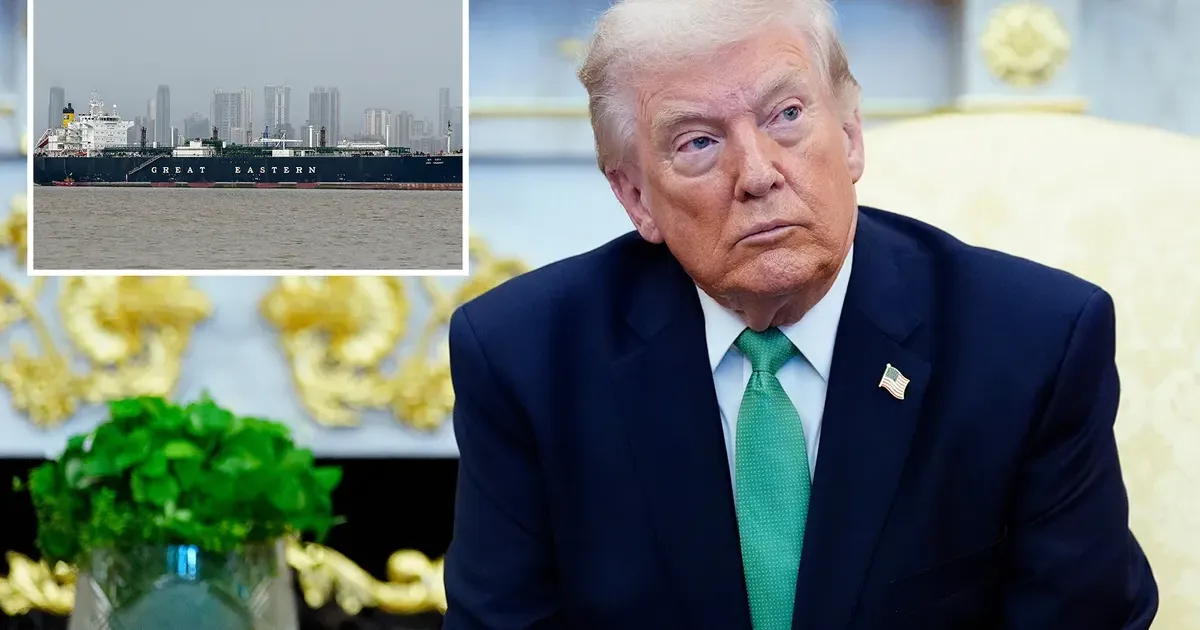
On April 4, 2026, Donald Trump warned leaders in Tehran that Iranian forces must reopen the Strait of Hormuz within 48 hours or face military retaliation. Writing on Truth Social, the president declared that the window for negotiations regarding the current naval blockade is nearly closed. Public statements from the White House suggest a shift toward kinetic intervention if maritime traffic through the critical waterway does not resume by the weekend. This ultimatum arrives after a ten-day period of escalating rhetoric and stagnant diplomatic channels. Iranian officials have not yet issued a formal response to the specific timeframe, though state media in Tehran maintains that the blockade is a defensive measure against Western sanctions.
Military advisors in Washington confirmed that naval assets in the Persian Gulf are on high alert. No specific movement of carrier strike groups has been confirmed, but officials at the Pentagon refused to provide a specific target list. The rhetoric mirrors previous standoffs where the administration used short-term deadlines to force concessions from adversarial regimes. Every hour the strait stays closed adds to the global maritime backlog now affecting thousands of commercial vessels.
Trump Issues 48-Hour Ultimatum via Truth Social
Presidential communication on April 4, 2026, bypassed traditional diplomatic cables in favor of social media platforms. Trump reminded his audience that he had previously granted a ten-day grace period for a deal to be reached. Failure to reach an agreement or clear the shipping lanes will result in what he described as a severe military consequence.
"Remember when I gave Iran ten days to MAKE A DEAL or OPEN UP THE HORMUZ STRAIT. Time is running out," Trump posted on Truth Social.
Naval intelligence reports indicate that Iranian fast-attack craft and mine-laying vessels remain positioned across the narrowest sections of the waterway. Shipping insurance rates for tankers in the region have increased by 400 percent since the start of the month.
Intelligence briefings suggest the Iranian Revolutionary Guard Corps maintains a firm grip on the chokepoint. Tactical analysts believe the blockade consists of both physical barriers and the threat of land-based anti-ship missiles. The United States Fifth Fleet is operating in the Gulf of Oman, just outside the restricted zone. Defense contractors in the US saw share prices rise in early trading following the 48-hour announcement.
Iran Blockade of Strait of Hormuz Strains Global Oil
Global energy markets reacted with volatility to the news of a hard deadline. Brent crude futures jumped sharply as traders calculated the risk of a full-scale conflict in the Middle East. Analysts at several major banks warned that a 48-hour window provides little time for the complex logistical maneuvers required to de-escalate a naval standoff. Energy supplies destined for Asian and European ports remain trapped behind the Iranian naval line. Local gas prices in the United States reached a three-year high on the morning of April 4, 2026.
Logistical data shows that approximately 20 percent of the world's liquid petroleum passes through the Strait of Hormuz. Alternative routes, such as pipelines across Saudi Arabia, cannot accommodate the full volume of traffic normally handled by the strait. Several shipping conglomerates have already rerouted vessels around the Cape of Good Hope, adding weeks to transit times and millions in fuel costs. Retailers in London and New York are bracing for supply chain disruptions affecting everything from plastics to chemicals. Daily oil flow through the region typically averages 21 million barrels.
European governments are struggling to manage the domestic fallout of the energy spike. In Madrid, the finance minister of Spain joined four other European counterparts to demand a new fiscal strategy for the continent. These leaders are urging the European Union to implement a bloc-wide windfall tax on energy companies. Proponents of the tax argue that energy producers are reaping unfair profits while households face crippling utility bills. The Spanish government insists that the revenue from such a tax must be used to subsidize low-income families during the blockade.
Across the Atlantic, European finance ministers warned that the war-related price surge could fuel long-term inflation. The finance ministers of Spain, Italy, and Greece argue that the current market dynamics are unsustainable for the Eurozone. Public protests over heating costs have already broken out in several major cities including Barcelona and Berlin. European Union officials in Brussels have scheduled an emergency summit to discuss the tax proposal and the broader security situation. Five nations signed the formal request for the windfall tax implementation on April 4, 2026.
Military Escalation Threats Target Tehran Leadership
Strategic command centers in the United States are preparing for multiple scenarios if the deadline passes without an Iranian retreat. Tactical options include targeted strikes on Iranian naval bases and coastal missile batteries. National security officials emphasized that the objective is the restoration of free navigation rather than regime change. Tehran, however, views the threats as an infringement on their territorial waters. Diplomatic missions from neutral countries have attempted to mediate, but the 48-hour clock limits the possibility of a brokered settlement. The Pentagon has moved additional air assets to bases in Qatar and the United Arab Emirates.
Regional allies are monitoring the situation with varying degrees of public support. Saudi Arabia and the United Arab Emirates have increased their own naval patrols to protect offshore oil infrastructure. Security experts suggest that any military action would likely begin with a cyber offensive to disable Iranian radar and communication networks. Tehran's defensive posture includes a fleet of midget submarines capable of operating in the shallow waters of the Gulf. Satellite imagery from April 4, 2026, shows increased activity at Iranian airfields near the coast.
Hormuz Ultimatum Raises Diplomatic Pressure
The 48-hour demand increases pressure on Tehran while leaving little time for diplomacy to work. Shipping markets will react less to the words than to whether vessels can move safely through Hormuz.