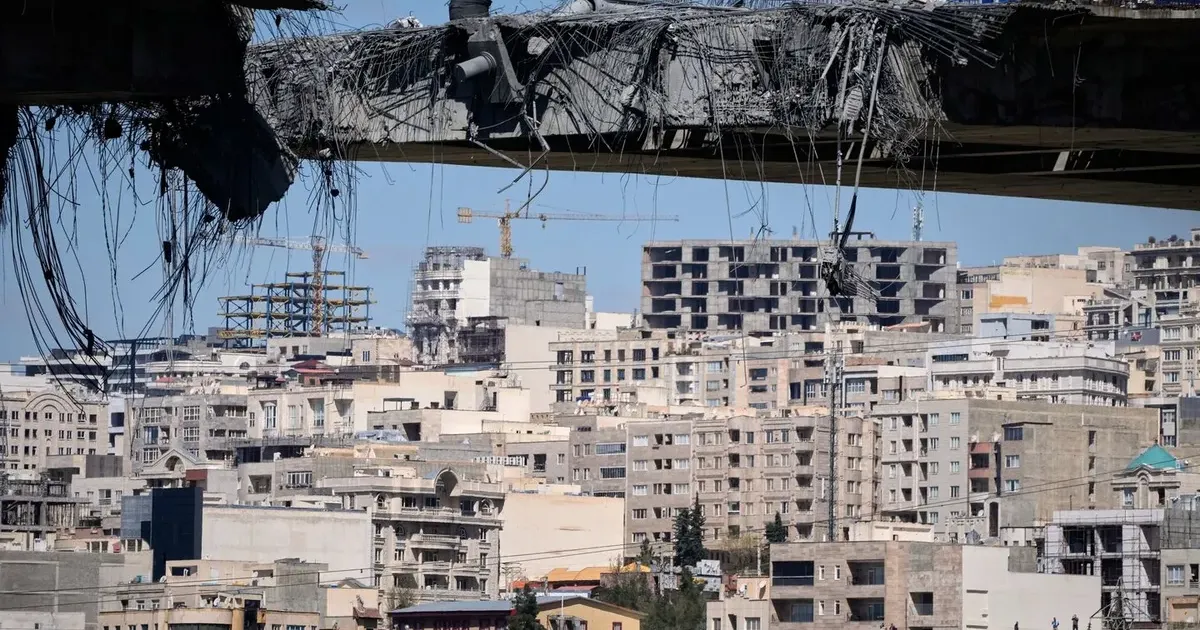
Pentagon officials confirmed on April 4, 2026, that special operations units are scouring southwestern Iran for a missing F-15 co-pilot. Recovery teams successfully extracted the pilot shortly after the crash on Friday, but the second crew member remains unaccounted for within hostile territory. Iran has mobilized local militias to locate the American officer after the shoot-down involving a US F-15 Strike Eagle. Iranian state media broadcasts have urged citizens in the rural southwestern provinces to report any sightings of the airman.
Authorities in Tehran offered a specific financial reward to any civilian who assists in the capture of the US serviceman. The missing officer, whose name has been withheld pending family notification, was participating in a mission associated with Operation Epic Fury. Military planners describe the search area as rugged and difficult to monitor from high altitudes. Search aircraft continue to loiter over the region despite the threat of active anti-aircraft batteries. The pilot who was rescued Friday is receiving medical evaluations at a regional US military installation.
Search Mission Developments in Southwest Iran
Search and rescue coordinates center on a remote mountainous stretch where the F-15 went down. Environmental conditions in this part of Iran present significant hurdles for night-vision equipment and ground movement. Dense cloud cover during the early hours of April 4, 2026, hindered satellite surveillance of the crash site. US special operations forces are reportedly operating under strict rules of engagement while moving through the contested zone. Iranian military units have increased their presence in the Khuzestan province to prevent a clandestine extraction.
Small teams of the Islamic Revolutionary Guard Corps were seen establishing checkpoints along major transit routes leading away from the suspected landing zone. Initial reports from the crash site indicated that the ejection seats functioned as intended. Ground sensors detected a secondary emergency beacon signal late Saturday evening. This signal was brief and could not be triangulated with precision. Command centers in Qatar are monitoring all electronic emissions coming from the search sector. The terrain consists of jagged limestone ridges and deep ravines that provide ample cover for an individual attempting to evade capture.
Tehran Offers Bounty for Captured US Serviceman
State broadcasters in Tehran began airing descriptions of the missing co-pilot shortly after the shoot-down occurred. The Pentagon monitors these broadcasts to assess the level of local involvement in the search. Rewards for information leading to the capture of the pilot have been posted in village centers and on social media platforms. High-ranking Iranian officials characterized the search as a matter of national sovereignty and a chance to humiliate the US military. Civil defense units in the region received orders to search every barn and abandoned structure in the vicinity of the Zagros foothills.
Villagers were warned that harboring the airman would be treated as an act of treason against the state. Historical precedents for such bounties suggest that the risk of betrayal by locals is a major concern for the US Air Force. Intelligence analysts believe the missing serviceman is trained in survival, evasion, resistance, and escape protocols. These protocols emphasize avoiding contact with the local population at all costs. Iranian officials claim to have recovered pieces of flight gear near a riverbed but have not provided photographic evidence. The bounty offered by the government is equivalent to several years of average local wages.
Defense Secretary Pete Hegseth has championed a shift toward what the administration calls a warrior culture within the armed forces. Operation Epic Fury represents the first major test of this ideological pivot in a high-stakes combat environment. Critics of the administration argue that the emphasis on virility and masculinity over technical proficiency creates unnecessary risks. Secretary Hegseth has repeatedly criticized previous efforts to diversify the military, claiming such initiatives weakened combat readiness. Proponents of the new strategy suggest that a more aggressive posture is necessary to deter Iranian aggression.
The administration has frequently used video game aesthetics to promote the conflict to a domestic audience. Internal Pentagon memos indicate a desire to move away from the bureaucratic cautiousness of previous decades. Combat footage from the opening salvos of Operation Epic Fury has been released with high-energy soundtracks to boost recruitment. Some senior military officers have voiced private concerns about the potential for overextension. The loss of an F-15 and the potential capture of a crew member have forced a temporary pause in certain offensive air operations. Secretary Hegseth maintains that the military must be prepared for the realities of modern warfare without the distraction of social engineering.
Social media platforms have become a hub for young service members to express their anxieties about the escalating conflict. A trend known as MilitaryTok features soldiers and airmen sharing their reactions to deployment orders in real time. While some posts align with the administration's macho rhetoric, others highlight a deep sense of trepidation among the rank and file. One viral video showed a young soldier expressing regret over his enlistment as his unit prepared for transport. This internal dissent contrasts sharply with the official messaging coming from the White House.
High-ranking officials have dismissed these online expressions as the product of a small minority. Nevertheless, the prevalence of such content suggests a disconnect between leadership and the younger generation of troops. Commanders have reportedly been instructed to monitor the social media activity of their subordinates more closely. The administration views the cultivation of a warrior mindset as essential for the success of long-term engagements. Some personnel have used humor and snark to cope with the possibility of being sent behind enemy lines.
These digital footprints provide a rare glimpse into the morale of the forces tasked with executing Operation Epic Fury. The Pentagon has not yet issued a formal policy regarding the use of social media by active-duty members during the current crisis.
Satellite imagery shows a substantial buildup of Iranian hardware around the search perimeter. Electronic warfare units are attempting to jam Iranian communications to prevent the coordination of local search parties. Logistics officers face the difficult task of supplying teams deep inside enemy territory. Every hour the airman remains on the ground increases the likelihood of capture. Weather patterns in the Zagros Mountains can shift rapidly, grounding aircraft without warning. The military has authorized the use of $10,000 in emergency funds for local assets who might provide practical intelligence.
Analysts at the Defense Intelligence Agency are working around the clock to identify potential hiding spots based on the pilot's training. The search remains the top priority for the US Central Command.
Missing Airman Raises Recovery Risk
The missing airman case shows how quickly a combat loss becomes a recovery crisis. The Pentagon has to find the service member without turning the search itself into another vulnerable target.