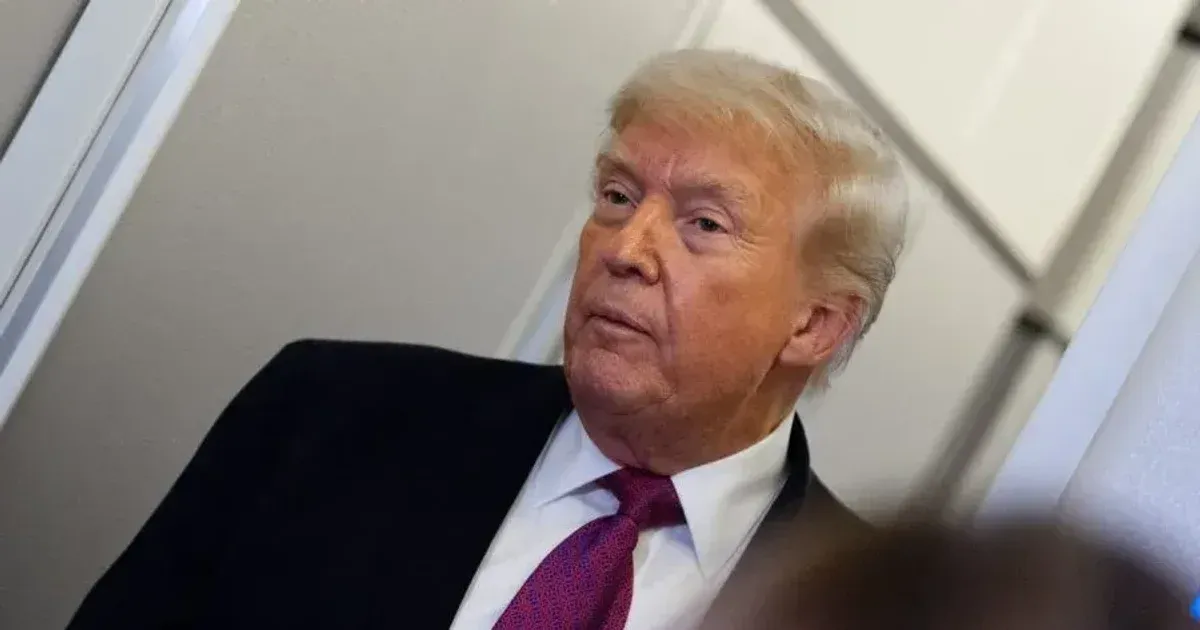
Trump's Wednesday deadline for Iran raised the stakes around renewed military action. The threat matters because voters are already skeptical of another escalation. On April 18, 2026, President Donald Trump issued a final ultimatum to Tehran as a fragile ceasefire reaches its breaking point. Trump warned late Friday that the United States is prepared to restart its bombing campaign if Iranian leadership fails to meet a set of specific demands by next week. Speaking with reporters on board Air Force One, the president made it clear that military action is the primary alternative to a negotiated settlement. These comments were delivered to NewsNation, which recorded the interaction during the president’s flight between campaign stops.
Trump told the network that if no deal is reached by the Wednesday deadline, the U.S. will drop bombs again. This threat comes seven weeks into an active conflict that has seen joint U.S.-Israeli strikes hit several high-value targets across Iran. While the administration describes the operations as a success, the president’s rhetoric has intensified ahead of the ceasefire expiration. Negotiations currently involve complex requirements for nuclear inspections and the cessation of regional proxy support.
Tehran has not yet issued a formal response to the latest ultimatum. Sources within the State Department indicate that diplomatic channels are still open, but the window for a peaceful resolution is closing fast. Trump indicated that he has little patience for further delays. He told NewsNation that the Iranian government knows exactly what is required to avoid further military engagement.
Trump Demands New Terms Before Wednesday Deadline
Presidential aides have spent the last 24 hours clarifying the scope of the potential strikes. National security officials suggest the next wave of bombardment would target infrastructure that escaped damage during the initial February raids. Military planners in the Pentagon are reportedly updating target lists to include command and control centers. Trump maintains that his administration has already achieved major military objectives, yet he insists that a permanent agreement is necessary to end the hostility.
Iran continues to demand the lifting of all economic sanctions before it will commit to the new terms proposed by Washington. Neither side has blinked in this high-stakes game of chicken. Intelligence reports indicate that Iranian forces have used the ceasefire to reposition air defense batteries. This move has only hardened the resolve of White House hawks who believe the temporary peace was a tactical mistake by Tehran.
Negotiations remain stalled on the issue of long-range missile development. Washington insists that any new treaty must include strict limits on Iran’s ballistic capabilities. Iranian negotiators have historically viewed these systems as a non-negotiable component of their national defense. The Wednesday deadline is the final cutoff for these talks before the U.S. resumes its kinetic operations.
Polling Data Reveals Deep Voter Skepticism
Voters are not sharing the president’s enthusiasm for continued military action. A new poll released by POLITICO and Public First shows that only 38% of Americans back the current strikes. This figure is a meaningful challenge for a president who campaigned on a promise to end foreign entanglements. Support for the war has failed to grow despite several televised addresses by the president explaining the strategic necessity of the conflict.
A majority of respondents in the survey stated that the war does not serve the interests of the American people. Skepticism is particularly high among independent voters who helped secure Trump’s 2024 victory. Many of these individuals now question whether the administration has a coherent long-term strategy for the region. Public First researchers noted that a plurality of Americans are not confident that the president has clear objectives in his confrontation with Iran.
Nearly half of all respondents believe the president is spending too much time on international affairs. These voters would prefer to see the executive branch focus on domestic challenges like inflation and border security. Data shows that 29% of Trump’s own 2024 voters share this sentiment. The internal dissent within the Republican base could have serious implications for the upcoming midterm elections.
Economic Fallout Strains Republican Campaign Messaging
Rising energy costs are becoming a primary concern for the GOP as the conflict drags on. Gas and oil prices have seen sharp increases since the first joint U.S.-Israel strikes were launched. These price hikes are rippling through the food supply chain, causing grocery bills to climb for the average American family. Republican strategists worry that these economic pressures will drown out their preferred messaging on tax cuts and deregulation.
Michigan is a primary battleground where this discontent is most visible. Voters in the industrial Midwest are particularly sensitive to fluctuations in fuel prices and manufacturing costs. Republican strategist Jason Roe recently weighed in on the political risks facing the party. He noted that the president’s current policy is a sharp departure from his previous campaign rhetoric.
“I think the biggest problem is, first, this war was not pre-sold. [Trump] campaigned against these kinds of policies and these kinds of actions and reversed himself on a dime, and so the American people were not conditioned to prepare.”
Jason Roe’s assessment reflects a growing anxiety among party insiders. They fear that the war is pulling the president away from helping anxious Republicans sell their economic message. If voters associate the Trump administration with high gas prices and international instability, the GOP could face a difficult path in November. Michigan voters, in particular, remain wary of new military commitments in the Middle East.
Strategic Shifts Contrast with Campaign Promises
Trump built his 2024 campaign on a foundation of isolationism and the “America First” doctrine. He frequently criticized previous administrations for what he described as reckless nation-building and endless wars. Current events show a president who is now deeply involved in one of the most volatile regions on earth. The shift has alienated a segment of his core supporters who expected a more restrained foreign policy.
Supporters of the strikes argue that the geopolitical situation changed and required a forceful response. They believe that Iran’s recent provocations left the White House with no choice but to act. The administration’s supporters point to the successful degradation of Iranian drone facilities as proof that the military campaign is working. Critics, however, argue that these tactical wins have not translated into a strategic victory. Economic data from the Department of Labor shows that inflation remains a persistent threat to the domestic recovery. Energy prices rose 4.2% in the last month alone. The increase is directly tied to the uncertainty in the Persian Gulf shipping lanes. Shipping companies have started rerouting vessels around the Cape of Good Hope to avoid potential Iranian retaliation. Every extra mile traveled adds to the final cost of consumer goods. Washington and Tehran are running out of time to find a middle ground. If the Wednesday deadline passes without a signed agreement, the world will likely see a meaningful escalation in aerial warfare. The president has made his position clear from the cabin of Air Force One. He believes that only the threat of overwhelming force will bring Iran to the table.
Wednesday Deadline Raises Strike Risk
History rarely rewards leaders who campaign on peace but govern through escalating naval blockades and aerial bombardment. Donald Trump is currently trapped in a classic interventionist paradox of his own making. By threatening to “drop bombs again” if a Wednesday deadline is missed, the president has tied his political credibility to a binary outcome that he cannot entirely control. If Tehran refuses to budge, he must either launch a costly new phase of the war or suffer a public humiliation that would shatter his strongman persona. The POLITICO polling data reveals the precariousness of this gamble. A mere 38% approval for military action is a death sentence for any incumbent’s domestic agenda. When 29% of a president's own base believes he is too focused on foreign affairs, the internal structural integrity of the MAGA movement begins to fray. The American public has no appetite for another decade-long entanglement in the Middle East, regardless of the target’s identity. High gas prices are the ultimate political acid, and they are currently dissolving the GOP’s lead in key battlegrounds like Michigan. Trump’s aggressive stance is a tactical error disguised as strength. He is attempting to force a diplomatic breakthrough with a blunt instrument while his domestic support base is shouting for him to put it down. The disconnect will likely culminate in a midterm disaster for Republicans if the ceasefire collapses next week. The administration is overextended.