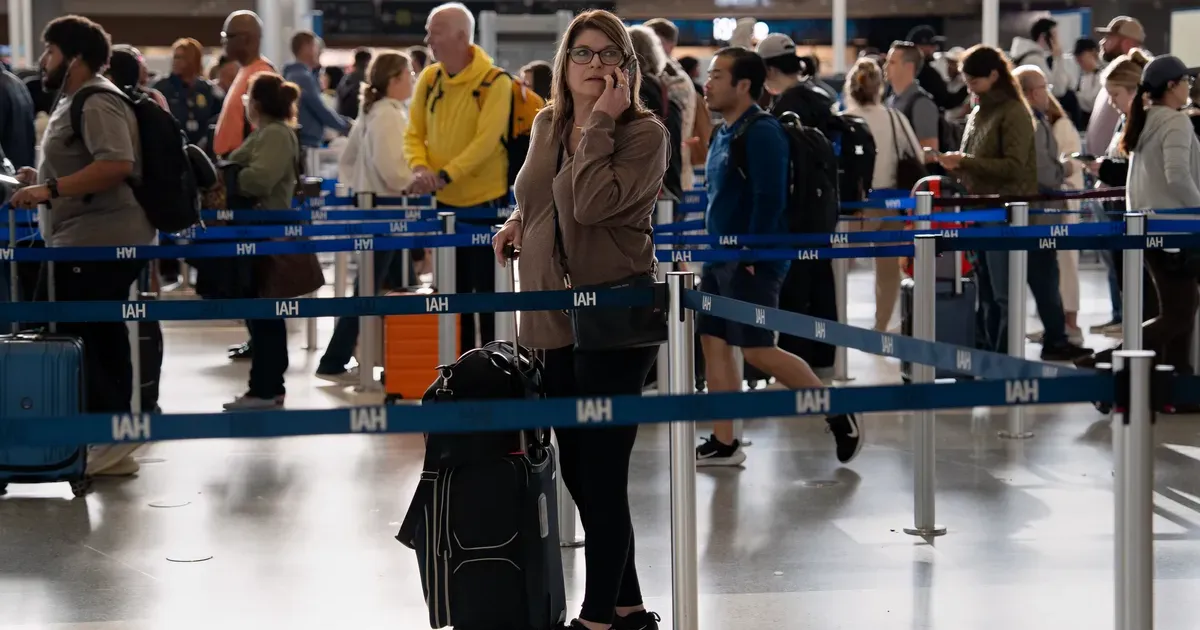
Donald Trump's March 27, 2026 memorandum to pay Transportation Security Administration employees was an emergency answer to an airport problem that had become too public to ignore. It helped relieve pressure at airports including Houston's George Bush Intercontinental, where long security lines had turned a Department of Homeland Security funding fight into a daily travel failure.
The memo did not end the shutdown. It did not settle the fight over immigration enforcement funding. It did something narrower and politically urgent: it directed DHS and the Office of Management and Budget to find legally usable money so TSA officers could receive compensation and benefits that would have accrued without the funding lapse.
Use funds that have a reasonable and logical nexus to TSA operations.
That phrase was the core of the workaround. The White House wanted to move money quickly while presenting the action as tied to TSA operations and consistent with appropriations law. The line helped the administration act, but it also exposed the unresolved legal and political question: if the money could be moved this way, why had airport workers and passengers already absorbed weeks of damage?
Houston Made The Shutdown Visible
Shutdowns often stay abstract until a basic public system begins failing in front of voters. Houston made the DHS dispute visible. Reports from George Bush Intercontinental described security waits stretching for hours, closed or strained checkpoints and travelers trying to build entire days around uncertainty at screening.
The problem was not just inconvenience. TSA officers had missed pay, callouts rose, resignations increased and morale weakened. Airports depend on trained staff showing up on schedule. Once enough officers lose confidence that pay will arrive, the system begins to slow even before any formal lane closure becomes permanent.
The Memo Bought Operational Relief
Paying TSA workers was essential because airport screening cannot be improvised. A checkpoint needs trained officers, lane managers, canine teams where available, supervisors, airline coordination and passenger flow that matches departure banks. A promise of future back pay may not be enough when rent, fuel, childcare and food bills are due immediately.
The memo gave the administration a way to stabilize staffing and shorten lines in some places. Houston's later improvement showed that pay flow and operational confidence can change airport conditions quickly. But recovery was never going to be instant everywhere. Passengers who expect chaos arrive earlier, which can keep lines heavy even after staffing improves. Officers who have already quit cannot be replaced overnight.
The Legal Workaround Was Not A Budget Deal
The legal issue did not disappear because the immediate airport pressure eased. Congress controls appropriations. Executive agencies can move within lawful authorities, but they cannot permanently replace a funding bill with a memo. The White House language about a logical connection to TSA operations was so carefully chosen.
Supporters called the action necessary to protect travel and national security. Critics questioned whether the administration was stretching authority after lawmakers failed to pass a broader DHS settlement. Both arguments can be true in part: the memo addressed a real emergency, and the emergency existed because the political branches let an essential workforce become leverage.
The DHS Fight Stayed Alive
The shutdown dispute was bigger than TSA. The fight over DHS funding centered on immigration enforcement, including disagreements over ICE, border operations, oversight and limits on federal enforcement tactics. Paying screeners did not resolve that fight. It moved the most visible pain point out of the airport terminal and back into congressional negotiation.
The distinction is important. A government can temporarily protect one group of workers while leaving the structure of the shutdown intact. The public may see shorter lines and assume the crisis is over, but other DHS employees, contractors and programs can remain trapped in the same funding gap.
Security Lines Should Not Be Leverage
The TSA memo relieved an immediate failure while leaving the funding conflict alive. Airports cannot run on the hope that unpaid federal workers will keep reporting indefinitely. Congress cannot treat security lines as bargaining pressure without punishing the public first.
Trump gained a short-term political win by getting money to screeners and easing a problem travelers could see. But the deeper failure belongs to a funding process that let a core security function become hostage to a wider immigration fight. If DHS funding remains a recurring standoff, the next airport crisis is already built into the system. It will only need another missed paycheck to appear.