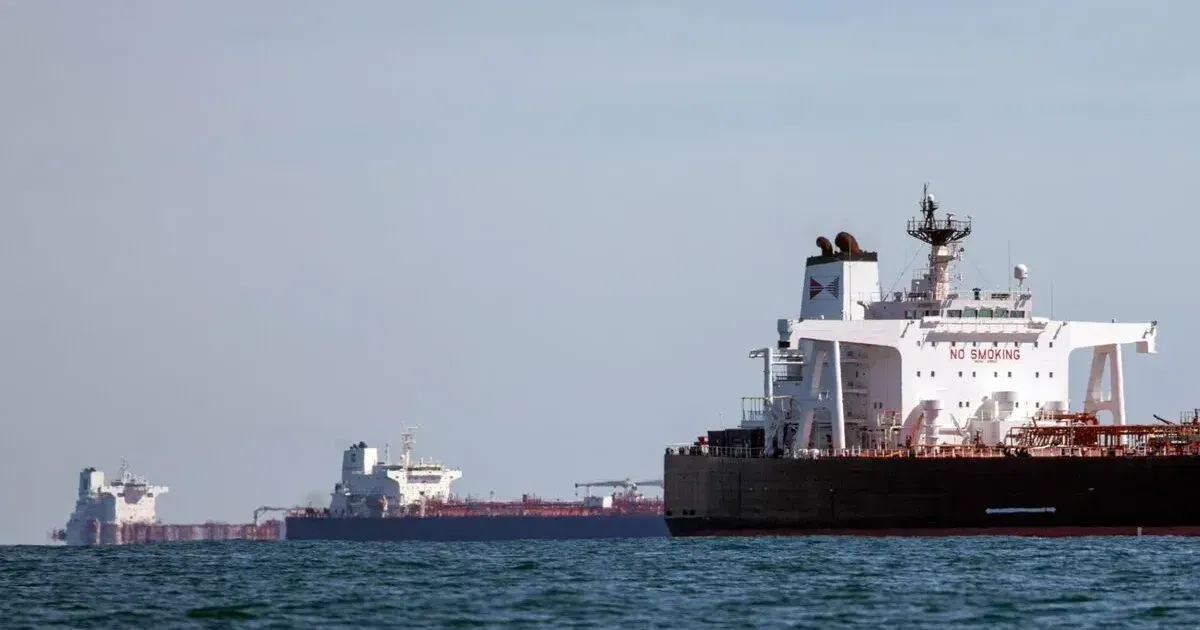
Dubai harbor masters are watching the horizon with increasing anxiety as commercial activity in the world's most essential energy artery grinds to a halt. Heightened regional tensions have driven commercial vessel traffic through the Strait of Hormuz to near-historic lows, leaving only a few courageous or desperate operators to brave the waterway. Iran has escalated its maritime aggression in direct response to military actions by Israel and the United States. Tanker traffic through Hormuz has fallen sharply, prompting Trump to demand allied escorts for ships moving through the world's most important energy chokepoint. Energy markets are reeling from the instability, but the disruption has also created a vacuum that major global powers are now being asked to fill. Vessels have largely abandoned the corridor, which typically handles a fifth of the world's daily oil consumption. Satellite tracking data shows that only a handful of oil and liquefied petroleum gas tankers transited the strait in the last 24 hours. One notable reappearance was a Saudi Suezmax tanker, which recently signaled its position off the coast of Mumbai after traveling through the danger zone. Another vessel carrying LPG was spotted heading toward India, one of the few nations still receiving steady shipments despite the blockade. Insurance premiums have skyrocketed, forcing most shipowners to anchor their fleets in safer waters.
Hormuz Traffic Falls Under Pressure
Donald Trump recently addressed the maritime crisis through a Truth Social post, demanding that international allies shoulder the burden of security. He identified China, France, Japan, South Korea, the United Kingdom, and other nations as primary beneficiaries of Persian Gulf energy who are now failing to protect their own interests. His administration argues that the United States should no longer serve as the sole guarantor of safety for ships that are not even flying the American flag. This demand indicates a shift in U.S. naval strategy toward a policy of shared responsibility and burden-sharing among energy-dependent nations.
Hopefully China, France, Japan, South Korea, the UK, and others, that are affected by this artificial constraint, will send Ships
Beijing has yet to respond officially to the suggestion of a joint naval task force. China remains the largest importer of crude oil through the strait, making its current hesitation a point of contention for Washington officials. European nations have expressed caution, fearing that a large naval buildup could further provoke Iranian forces stationed along the coast. Yet the pressure to act grows as the economic cost of the shipping drought begins to show in higher fuel prices across the continent. France and the UK have maintained a limited presence in the region, though their current deployments are considered insufficient to provide a full convoy system.
Trump Calls for Allied Escorts
Risk is the only currency that matters in the current market.
Shipowners who typically operate in the region are now diverting their fleets around the Cape of Good Hope. This detour adds thousands of miles and millions of dollars in fuel costs to every journey, but many companies view it as a necessary trade-off to avoid potential seizure or missile strikes. Iranian Revolutionary Guard vessels have been observed patrolling the narrowest points of the strait, occasionally shadowing tankers that deviate from the established shipping lanes. The lack of a unified naval response has left individual captains to decide whether to run the gauntlet or remain idle. For most, the decision is to wait.
Some tankers continue to move in the shadows with their transponders turned off. These ghost ships represent a significant portion of the remaining traffic, attempting to evade Iranian surveillance through electronic deception. Industry analysts at Bloomberg have tracked these vessels using synthetic aperture radar to confirm their movements. The few tankers that remain visible on public tracking systems are often those with government-backed insurance or those belonging to owners with a high tolerance for operational hazards. The resulting drop in transparent traffic has made the energy market more opaque and susceptible to sudden price shocks.
Shipping Profits and Risks Diverge
Defying the general trend of caution, the Greek shipping firm Dynacom has continued to send its oil tankers through the strait. The company recently dispatched a second tanker into the unstable region, making it one of the few Western-owned entities to ignore the warnings issued by maritime security agencies. George Prokopiou, the veteran shipowner behind the firm, has a long history of operating in high-risk environments where others fear to tread. His decision to continue transits suggests a calculated gamble on Iranian intentions and the strength of existing security protocols. This refusal to halt operations is a gamble that carries major political and financial implications.
Other Greek owners have largely held back their vessels, preferring to wait for a formal escort system or a de-escalation of hostilities. Dynacom's move has sparked a debate within the shipping industry about the ethics and risks of maintaining trade during an active conflict. Some competitors argue that such actions provide Iran with leverage, while others believe that keeping the lanes open is essential for global economic stability. Freight rates for ships willing to enter the Gulf have surged to record levels. These premiums provide a strong financial incentive for owners who can secure the necessary crew and insurance coverage.
Conflict in the Persian Gulf has reached a boiling point. While most of the world watches the crisis with dread, a secretive tycoon from South Korea is seeing his fortune expand. The war in Iran has supercharged the earnings of his expansive tanker fleet, as the scarcity of available ships drives spot rates into the stratosphere. His companies have strategically positioned their vessels to take advantage of the chaos, often being the only ones available to transport emergency fuel supplies to Asian markets. The war has turned a Korean shipping magnate into an energy powerhouse. He has avoided the public eye for years, but the scale of his recent profits has drawn the attention of international regulators and competitors.
Market analysts note that the tycoon's fleet consists of older vessels that are already fully depreciated, allowing him to operate with lower overhead than modern conglomerates. His ability to secure niche insurance through non-traditional markets has allowed him to bypass the restrictions that have grounded much of the global fleet. His tankers are often the ones delivering LPG to India and crude to refineries in East Asia. The windfall reflects a broader trend where secretive, agile players are outmaneuvering traditional shipping giants during times of geopolitical upheaval. His success highlights the growing divide between risk-averse corporate fleets and opportunistic private owners.
Maritime Security Cannot Be Free
American naval power has subsidized global trade for seventy years while nations like China and France reaped the benefits without the bill. The era of the American taxpayer funding a global protection service for foreign-owned tankers must come to an abrupt end. If Beijing and Seoul want the oil that flows through the Strait of Hormuz, they should be the ones putting their destroyers in the line of fire. It is a grotesque imbalance of power when the United States is expected to provide the security for a supply chain that primarily fuels its geopolitical rivals.
The reluctance of these nations to send their own ships reveals a parasitic relationship that has long defined international maritime law. We should be skeptical of any diplomatic solution that does not involve a major shift in the financial and military responsibility for these waterways. If the shipping lanes are truly an artificial constraint as the administration claims, then the nations feeling the squeeze should be the first to break the pressure.
The world is watching to see if these so-called superpowers have the stomach for a real fight or if they will continue to hide behind the American flag while their economies thrive on protected oil. Only those who defend the trade should be allowed to profit from it.