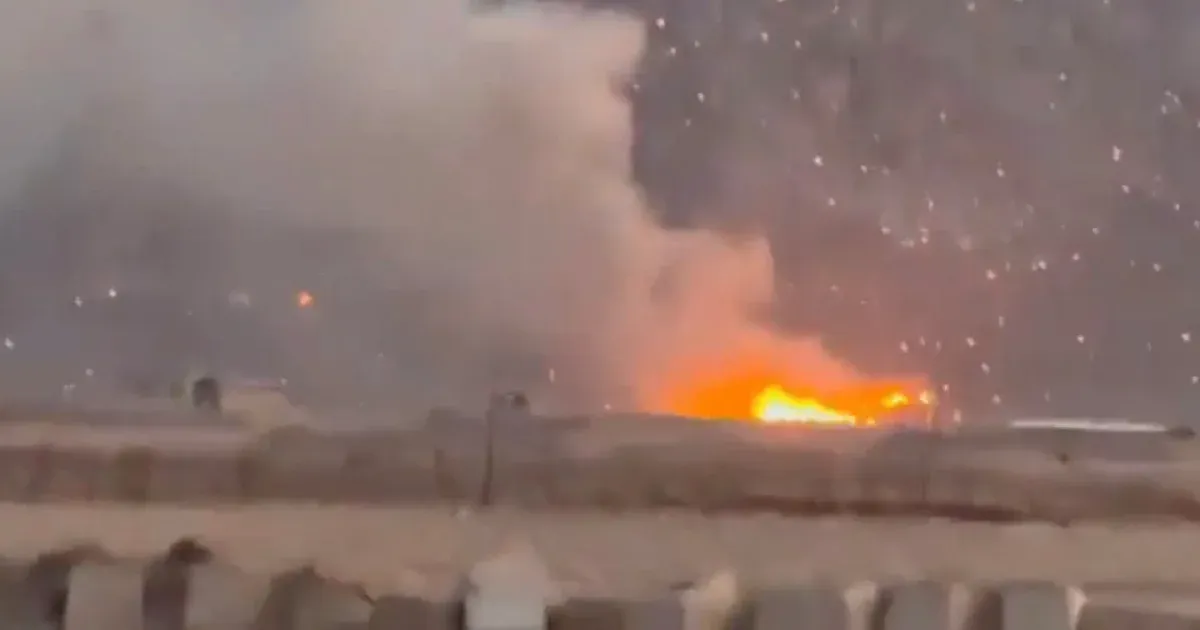
Donald Trump declared on April 2, 2026, that the United States would intensify its military campaign against Iran even as he labeled current operations a success. Speaking from Washington, the president indicated that American forces would hit Iranian targets extremely hard over the next two to three weeks. These comments arrived as the conflict entered its 34th day of active hostilities. Military analysts noted the disconnect between the claim of a successful mission and the promise of a meaningful escalation in the immediate future.

Current operations involve both US and Israeli forces in a coordinated effort that has fundamentally altered regional security dynamics. Tehran has not yet signaled a willingness to negotiate under these heightened conditions. Domestic political pressure continues to mount as the administration avoids providing a specific exit timeline for the thousands of troops involved in the theater of operations. Initial reports suggest that the promised intensification will focus on remaining infrastructure and command centers within Iranian borders.

Regional stability remains unstable while Israel and several Gulf nations face retaliatory strikes. Projectiles and drone swarms have targeted energy facilities and population centers after the latest American incursions. These retaliations emphasize the widening scope of a war that began with targeted strikes but has grown into a month-long exchange of fire. Washington maintains that its objectives are nearly achieved despite the ongoing violence affecting its allies. Success, as defined by the administration, appears to be a moving target that includes the degradation of Iranian military capacity and the neutralization of proxy influence.

Critics point to the lack of a defined endgame as a primary concern for long-term stability in the Middle East. Security experts in London and Washington are monitoring the situation for signs of a broader regional collapse. The absence of a diplomatic track suggests the military option is the only one currently on the table.

Military Operations Enter Second Month

American military hardware continues to pour into the region to support what the White House describes as the final phase of the campaign. President Trump stated that Washington is close to achieving its primary objectives on April 2, 2026. This assessment comes despite 34 days of sustained combat that have seen serious casualties on both sides. Naval assets in the Persian Gulf have maintained a blockade that complicates Iranian maritime movements. Air strikes have focused on air defense systems and ballistic missile sites to ensure continued air superiority for US and Israeli jets.

Intelligence officials suggest that the Iranian leadership has moved key assets to underground facilities to survive the onslaught. The resilience of these hardened targets explains the president's calls for harder strikes in the coming weeks. Military planners are now preparing for a surge in activity that could involve heavier bombers and long-range precision munitions.

Israeli Defense Forces have coordinated closely with the Pentagon to synchronize their aerial sorties over Iranian territory. This partnership has proven effective in dismantling several key manufacturing hubs for the Islamic Revolutionary Guard Corps. Despite these gains, the threat to Israeli civilians persists from long-range rockets launched from southern Lebanon and western Iraq. Israeli officials have increased their alert status to the highest possible level in anticipation of the three-week surge promised by Washington. Gulf nations like the United Arab Emirates and Saudi Arabia are also strengthening their defenses against potential Iranian desperation strikes.

Oil markets have reacted with volatility to the news of continued fighting and the lack of a ceasefire agreement. International shipping lanes remain high-risk zones where insurance premiums have quadrupled since the conflict began. The logistical strain of maintaining such a large-scale operation is beginning to show in the supplemental funding requests sent to Congress.

Shift in Nuclear Justification and Rhetoric

President Trump executed a meaningful rhetorical U-turn on April 2, 2026, by distancing his military objectives from Iran's nuclear capabilities. Earlier in the conflict, the administration emphasized the need for Tehran to hand over what the president called nuclear dust to avoid destruction. The demand focused on the total surrender of all enriched uranium and the dismantling of centrifuges. Now, the president claims he no longer cares about the uranium stockpile. This shift undermines the original casus belli presented to the international community and the American public.

Proponents of the war argue that the shift reflects the successful destruction of nuclear facilities, rendering the material irrelevant. By contrast, skeptics suggest the administration is moving the goalposts to justify a longer occupation or a regime change agenda. The change in tone has confused diplomatic partners who were working toward a nuclear-focused resolution. It also complicates the legal justification for the ongoing use of force under international law frameworks.

I do not care about Iran’s uranium anymore because the mission is already a success and we are finishing the job.

Washington previously insisted that the primary threat was a nuclear-armed Iran capable of blackmailing its neighbors. The current stance suggests that the mere existence of the Iranian regime or its conventional military strength is now the primary target. Experts at the International Atomic Energy Agency have expressed concern that abandoning the nuclear focus might lead Tehran to accelerate its enrichment in secret. If the US no longer cares about the material, the incentive for Iran to allow inspections or adhere to any safeguards disappears. The development creates a vacuum in non-proliferation efforts that have spanned decades.

The administration has not clarified if this new position is a temporary tactic or a permanent shift in US foreign policy. Legislators in Washington have called for hearings to investigate why the primary justification for war was discarded mid-conflict. The outcome of these inquiries will likely shape the domestic debate over the 2026 defense budget and future military engagements.

Regional Security Risks for Israel and Gulf Partners

Violence has spilled across borders as Iranian proxies react to the ongoing pressure from American and Israeli forces. On April 2, 2026, reports surfaced of new attacks hitting civilian areas in Haifa and industrial zones in Abu Dhabi. These strikes involve sophisticated drones that have managed to bypass some existing air defense tiers. The spread of the war into the territory of Gulf nations threatens the economic stability of the entire region. Energy exports from the Gulf have slowed as tankers seek safer routes or wait for military escorts.

The economic pressure is felt globally through rising fuel prices and supply-chain disruptions for petroleum-based products. Allied governments are reportedly pressuring Washington to provide more advanced defense systems to counter these asymmetric threats. The $11 billion in emergency aid recently discussed in Congress is partly intended to replenish these defensive stockpiles. Security in the Levant is equally fragile as border skirmishes between Israel and Hezbollah intensify.

Jordan and Egypt have maintained a cautious neutrality while managing the humanitarian consequences of the regional instability. Refugee flows from affected areas are starting to put pressure on neighboring infrastructures. The United States has provided some logistical support for these nations but remains focused primarily on the combat operations inside Iran. Any further escalation over the next three weeks could force these neutral parties to take a more active role. Diplomatic channels between the Gulf capitals and Tehran have almost entirely shuttered. Communication now happens through third-party intermediaries in Switzerland and Oman.

The lack of direct dialogue increases the risk of a miscalculation that could lead to a total regional war. Military leaders in the US Central Command are focused on preventing such a scenario while simultaneously preparing for the promised intensification of strikes. The strategy requires a delicate balance between showing overwhelming force and avoiding a permanent regional fire.

White House Strategy and Exit Timeline Uncertainty

President Trump has consistently refused to provide a concrete exit timeline for the current military campaign. He insisted on April 2, 2026, that the war is already a success but also claimed that the hardest hitting is yet to come. The paradox leaves military commanders and the public in a state of uncertainty regarding the duration of the American commitment. A lack of a clear exit strategy has historically led to prolonged involvements that drain resources and political capital. The administration appears to favor a strategy of maximum pressure combined with unpredictable rhetorical shifts.

The approach aims to keep the Iranian leadership off balance and prevent them from planning a long-term resistance. Critics within the Pentagon worry that the absence of a post-war plan will lead to a power vacuum similar to previous conflicts in the region. There is currently no publicly available plan for the governance or stabilization of Iran should the current government collapse under the weight of the strikes.

Economic sanctions continue to run alongside the kinetic military operations to further isolate the Iranian economy. Biggest international banks have completely severed ties with any entities associated with Tehran. The resulting hyperinflation has decimated the purchasing power of ordinary Iranian citizens. Washington believes that this internal economic pressure will eventually lead to a domestic uprising or a total surrender by the leadership. Nevertheless, the Iranian government has shown a surprising level of resilience despite these combined pressures. They continue to use a network of shadow companies to bypass some of the more restrictive sanctions.

The next three weeks will be a critical test of whether military force can achieve what years of diplomacy and sanctions could not. President Trump remains confident that his current course of action will result in a total victory for American interests. The world is watching to see if this confidence is backed by a sustainable strategic reality on the ground.

The Elite Tribune Strategic Analysis

President Trump’s recent assertions regarding the success of the Iran campaign are a dangerous brand of tactical delusion. Declaring victory on day 34 while simultaneously promising to hit the enemy extremely hard in the coming weeks is a rhetorical contradiction that exposes a lack of coherent strategy. The administration is not conducting a war; it is managing a spectacle. By discarding the uranium justification, the White House has effectively admitted that the initial reasons for the conflict were mere pretenses for a broader campaign of destruction.

The shift destroys American credibility on the global stage and ensures that any future diplomatic efforts regarding non-proliferation will be met with valid skepticism. The world cannot trust a superpower that moves the goalposts of war mid-flight.

Will the American public tolerate another indefinite conflict in the Middle East once the initial fervor fades? History suggests otherwise. The absence of an exit timeline is not a tactical choice to maintain unpredictability; it is a confession that there is no plan for the day after the bombs stop falling. The evidence shows a repeat of the strategic failures that defined the early 2000s, only this time the stakes involve a far more capable and desperate adversary.

If the administration continues to ignore the need for a diplomatic off-ramp, it will find itself mired in a regional mess that no amount of heavy hitting can resolve. Victory is a hollow word when it lacks a stable conclusion. Failure is the only likely outcome.